When you picture “finance,” you might think of Wall Street, complex charts, and stock tickers. For decades, the industry’s primary color was the black of a balanced ledger. Today, that’s changing. The most important color in finance is, without a doubt, green.
We are standing at the intersection of two powerful forces: a technological revolution (Fintech) and an existential necessity (sustainability). The climate crisis is no longer a distant problem; it’s an immediate economic reality. And to solve it, we need to move trillions of dollars.
But how? How do we fund a solar farm, track a company’s real carbon footprint, or empower an individual to invest their retirement savings in a way that actually helps the planet?
The answer is Green Fintech.
This isn’t just a niche trend. It’s the beginning of a fundamental rewiring of the global financial system. The sustainable finance market is already valued at over $4.18 trillion and is projected to skyrocket to $28.71 trillion by 2033.
This is not just a guide to a new financial sector. This is a map to the future of money. In this deep dive, we’ll cover what “Green Fintech” is, the revolutionary technologies making it possible, the massive opportunities for investing in eco-Friendly financial solutions, and—most importantly—how you can navigate the very real risks of “greenwashing” to make a real impact.
What is Green Fintech? (And What It’s Not)
Before we dive in, let’s clear up the jargon. It’s simple.
Green Fintech is the use of financial technology to support and advance environmental sustainability.
It’s the engine that powers green finance. If “Green Finance” is the goal (funding a sustainable world), “Green Fintech” is the high-tech toolkit that gets us there. It takes the old, clunky systems of banking and investing and makes them transparent, accessible, and laser-focused on positive environmental outcomes.
Green Fintech vs. Sustainable Finance vs. ESG
You’ll hear these terms used interchangeably, but they’re not the same. Understanding the difference is your first step to becoming a smart green investor.
- ESG (Environmental, Social, Governance): This is a set of criteria used to measure a company’s sustainability and ethical impact. The “E” (Environmental) is where Green Fintech focuses its energy.
- Sustainable Finance: This is the broad umbrella that includes all financial activities (investing, lending, etc.) that consider ESG factors. It includes Social (e.g., labor rights) and Governance (e.g., anti-corruption) factors, not just “Green.”
- Green Fintech: This is the technology that specifically powers the “E” in ESG. It’s the app on your phone, the AI algorithm, and the blockchain ledger that makes green finance possible at scale.
Why Now? The Tsunami of Demand
Green Fintech isn’t rising in a vacuum. It’s a direct response to a “perfect storm” of global trends:
- Consumer Demand: A new generation of investors and consumers wants their money to reflect their values. They are actively ditching banks that fund fossil fuels and seeking out products with a positive impact.
- Regulatory Pressure: Governments worldwide are waking up. With new rules like the IFRS S1 and S2 standards, companies are facing mandatory climate and sustainability disclosures. This creates a massive market for “RegTech” (Regulatory Technology) to manage and report this data.
- Financial Imperative: Investors finally realize that “climate risk” is “financial risk.” A company built on a high-carbon model is a risky long-term bet. Sustainability is no longer just “nice to have”; it’s a core pillar of a sound financial strategy.
The Core Components: How Green Fintech is Changing the World
Green Fintech isn’t one single thing. It’s an ecosystem of different technologies and applications. Let’s break down the most important ones you’ll encounter.
1. Green Digital Payments & Sustainable Banking
This is the Green Fintech you can touch and feel. It’s about changing our daily relationship with money.
Carbon Footprint Tracking
The old way: You get a credit card statement that just shows dollars and cents.
The Green Fintech way: You have an app that shows you the estimated CO2 impact of every single purchase you make in real-time. This technology, often integrated via APIs, transforms your bank account from a simple ledger into a personal sustainability tool.
- Real-World Example: Klarna has integrated a “Conscious Shopping” feature that provides shoppers with emissions data on their purchases, helping to educate and influence spending habits.
Eco-Friendly Cards & Banking
Neobanks (digital-only banks) are leading this charge. They offer bank accounts and debit cards with a green promise.
- Real-World Example: Treecard, a debit card made from sustainable cherry wood, dedicates 80% of its transaction-fee profits to planting trees. Aspiration is a popular US-based neobank that offers “fossil-fuel-free” banking, guaranteeing your deposits are not used to fund oil or coal projects.
2. Green Investments & Wealth Management (Democratizing Impact)
This is the category that’s exploding. For the first time, everyday people can easily participate in investing in eco-friendly financial solutions that were once reserved for massive institutions.
Sustainable Robo-Advisors
These are AI-driven investment platforms that automatically build and manage a portfolio for you based on your financial goals and your values. You can tell it, “I want to invest for retirement, but only in companies with strong environmental records,” and the algorithm does the rest.
Green Crowdfunding Platforms
These platforms cut out the middleman entirely. They allow you to invest directly in specific, vetted, green projects, like a new solar energy installation in Africa or a sustainable agriculture project in Asia.
- Real-World Example: Trine is a Swedish platform that connects retail investors with solar energy projects in emerging markets. You can invest as little as €25 to help fund a project and earn a financial return.
3. The “Engine Room”: AI, Blockchain, and Big Data
This is the “tech” in “Fintech.” These back-end technologies are the real game-changers, solving the biggest problem in sustainability: data and trust.
AI for ESG Risk Analysis
A company can claim it’s green in its glossy annual report, but is it? AI algorithms can now scan unstructured data—satellite imagery, news reports, social media, and even sensor data from IoT devices—to find the truth.
An AI can, for example, analyze satellite photos to see if a company is actually reforesting an area it claimed to, or if its factories are emitting pollutants. This moves ESG data from “self-reported” to “verified.”
Blockchain for Unmatched Transparency
This is arguably the “killer app” for Green Fintech. Blockchain, the technology behind cryptocurrencies, is a distributed, immutable ledger. In simple terms: it’s a public record book that cannot be secretly changed.
This has two revolutionary uses:
- Digital Green Bonds: When you buy a traditional green bond, it’s hard to track if your money actually built the promised solar farm. With a tokenized green bond on a blockchain, you can trace the flow of capital with 100% transparency.
- Carbon Credit Markets: The old carbon credit market was rife with fraud and “double-counting” (selling the same “one ton of C02 reduced” to two different buyers). By putting carbon credits on a blockchain, each credit becomes a unique, traceable digital asset, making the market verifiable and trustworthy.
4. Green RegTech & Reporting
As of 2025-2026, mandatory ESG reporting is the new reality. This is a huge headache for companies. Green RegTech (Regulatory Technology) is the B2B software that helps companies automatically track, manage, and report their environmental data to regulators, saving them time and protecting them from penalties.
The Multi-Trillion Dollar Opportunity: Investing in Eco-Friendly Financial Solutions
This is where you come in. The transition to a green economy is the single greatest investment opportunity of our lifetime. But how do you, as an individual or business, get started?
Why Invest? Beyond Just Feeling Good
Let’s be clear: this isn’t charity. This is smart investing.
- Massive Market Growth: As mentioned, this market is growing at a staggering CAGR of over 21%. Getting in now is getting in on the ground floor.
- Risk Mitigation: Companies that don’t adapt to the green economy face “transition risk.” Their high-carbon assets could become worthless, their operations could be shut down by regulators, and their customers will leave them. Green investments are a hedge against this risk.
- Attracting Talent & Customers: The modern workforce and consumer base demand sustainability. Companies that lead in this area attract the best talent and the most loyal customers.
Steps to Guide: How You Can Start Investing Today
You have more options than ever. Here’s a breakdown from simplest to most advanced.
Step 1: The Retail Investor (Your Bank Account & Retirement)
- Your Bank: Does your bank fund fossil fuels? A simple search can tell you. If so, your first “investment” can be moving your checking and savings accounts to a green neobank or a credit union with a clear sustainability mandate.
- Your Retirement: Check your 401k, IRA, or pension. Most providers now offer “ESG-focused” or “Socially Responsible” funds. This is the easiest way to align your largest asset with your values.
Step 2: Direct Investments (Stocks & Bonds)
- Green Stocks: You can invest directly in publicly traded companies that are “pure-play” green solutions. Think renewable energy producers (like First Solar), clean-tech innovators, or sustainable water management companies.
- Green Bonds: These are bonds (loans) issued by a government or corporation for a specific environmental project. When you buy a green bond, you are directly funding things like green buildings, renewable energy, or clean transportation.
Step 3: Pooled Investments (ETFs & Funds)
This is the most popular method. Instead of picking single stocks, you buy a “basket” of them.
- Green ETFs: Look for Exchange-Traded Funds with tickers like “CLNE” (Clean Energy) or “SRI” (Socially Responsible Investing). These funds bundle hundreds of green companies together.
- Negative vs. Positive Screening: Understand the fund’s strategy.
- Negative Screening: Excludes “bad” industries (tobacco, coal, weapons). This is the oldest method.
- Positive Screening: Includes the “best-in-class” companies. It selects the most sustainable company in each sector (e.g., the tech company with the best C02 record).
- Impact Investing: This is the most advanced. It only includes companies whose core mission is to create a positive, measurable environmental impact.
Step 4: The High-Impact Investor (REITs & Crowdfunding)
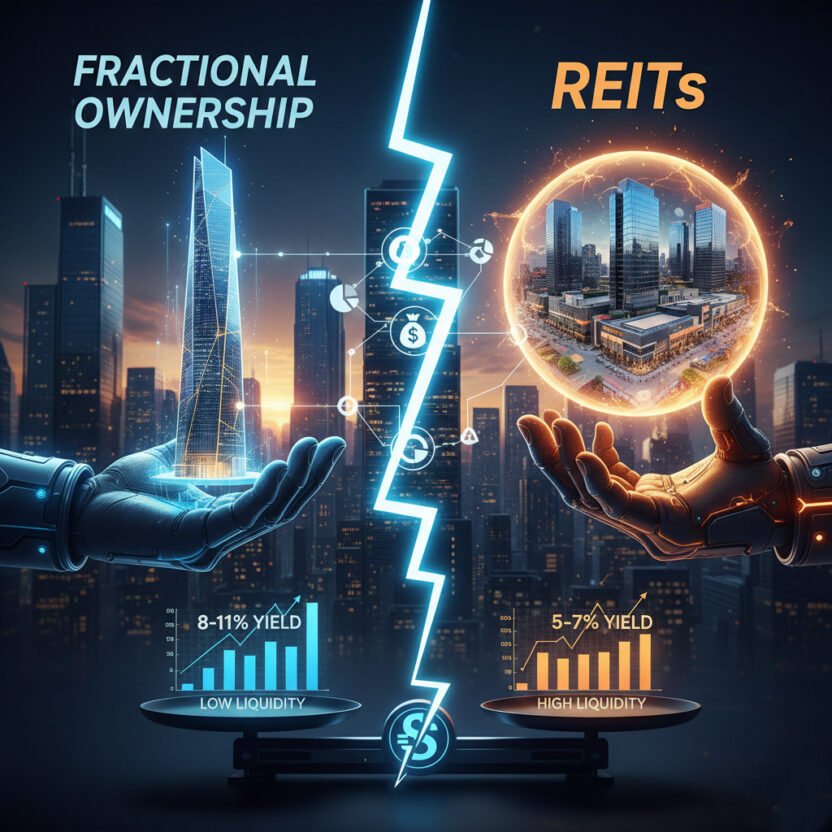
- Green REITs: A Real Estate Investment Trust (REIT) invests in property. A “Green REIT” focuses on a portfolio of buildings with high environmental certifications, like LEED (Leadership in Energy and Environmental Design).
- Crowdfunding Platforms: For those with a higher risk tolerance, platforms like Trine or Kickstarter’s sustainability section let you be a venture capitalist, funding the next big green idea.
The Elephant in the Room: Challenges & The “Greenwashing” Epidemic
It’s not all sunshine and solar panels. The single biggest threat to this entire sector is greenwashing.
The Great Deception: What is Greenwashing?
Greenwashing is the act of misleading consumers and investors about a company’s or product’s environmental benefits.
It’s a marketing spin that makes a company appear green while its underlying business is not. Examples are everywhere:
- A fossil fuel company running ads about its tiny investment in algae biofuels.
- A clothing brand launching one “conscious” clothing line made of recycled plastic, while 99% of its business relies on polluting fast fashion.
- An investment fund labeled “ESG” that is filled with companies that have terrible environmental records.
This is a massive problem. It erodes consumer trust and, worse, it diverAss funding from real solutions to fake ones.
How Green Fintech is Fighting Back
This is where Green Fintech truly shines. It’s the antidote to greenwashing.
If greenwashing thrives on vague claims and hidden data, Green Fintech defeats it with radical transparency and verifiable data.
- AI as the “Lie Detector”: As mentioned, AI algorithms can cross-reference a company’s marketing claims with real-world data (like satellite imagery of their factories) to flag inconsistencies.
- Blockchain as the “Public Ledger”: You can’t fake a transaction on a blockchain. When an impact is “tokenized” (e.g., a carbon credit), it becomes a unique, verifiable asset. This makes claims of “carbon neutrality” auditable by anyone.
Other Hurdles to Overcome
Beyond greenwashing, the industry faces a few key hurdles:
- Standardizing Data: We have an “apples to oranges” problem. There is no single, global standard for what “green” means or how to measure it. This is what regulators are racing to fix.
- Regulatory Patchwork: The rules in Europe are different from the rules in the US, which are different from those in Asia. This makes it hard for global fintechs to scale.
- The Digital Divide: We must ensure that these high-tech solutions are inclusive and don’t leave developing nations or non-tech-savvy populations behind.
The Future of Finance is Green: What to Expect in 2026 and Beyond
The rise of Green Fintech is not slowing down. Here are three trends that will define the next few years.
Trend 1: “Embedded Green Finance” Becomes Standard
Soon, you won’t even think of it as “Green Fintech.” It will just be… finance.
- Your accounting software will automatically calculate your business’s carbon footprint.
- Your e-commerce platform will offer a “green shipping” option at checkout by default.
- Your corporate credit card will automatically track and categorize your company’s T&E (Travel & Entertainment) emissions.
- This “embedded” sustainability, powered by APIs, will become a standard, non-negotiable feature of all financial software.
Trend 2: The Rise of the “Personalized Impact Portfolio”
Robo-advisors are just the beginning. The future, powered by AI, is hyper-personalization. You won’t just pick an “ESG fund.” You’ll be able to log into your investment app and say:
“I want to build a portfolio that has a 7% target return, a low-risk profile, and focuses only on companies involved in ocean-based carbon capture and sustainable agriculture in South America. And I want to exclude any company with a labor-rights violation.”
The AI will then build and manage that portfolio for you.
Trend 3: Regulation Finally Catches Up
The “Wild West” days of greenwashing are ending. By 2026, mandatory, standardized, and auditable climate reporting (based on standards like IFRS) will be the norm for most large companies.
This will be the single biggest catalyst for the sector. When every company is forced to show its real environmental data, the “greenwashers” will be exposed, and the true green leaders will attract a tidal wave of capital.
Conclusion: The Green Revolution is a Financial One
The rise of Green Fintech is more than just a new investment category. It is the central nervous system for the largest economic transition in human history. It’s the set of tools we are building to direct capital, measure impact, and hold power to account.
For decades, the financial system has been agnostic at best, and an accelerant at worst, to the climate crisis. Now, thanks to the fusion of technology and a new sense of purpose, that is finally changing.
For investors, the opportunity is twofold: a chance to be part of a multi-trillion dollar growth story and a chance to fund a livable, sustainable future.
The ultimate question Green Fintech asks is a personal one: What is your money funding?
For the first time, we all have the tools to answer that question.
FAQs
What is the simplest definition of Green Fintech?
Green Fintech is the use of technology (like mobile apps, AI, and blockchain) to create, offer, and manage financial products and services that have a positive environmental impact. Think of it as tech that makes “green” investing and banking easier.
Is Green Fintech a profitable investment?
Like any sector, it carries risks, but the overall market is projected to grow exponentially (from ~$4T to ~$28T by 2033). Many studies show that companies with strong ESG performance (which Green Fintech supports) often outperform their peers long-term, as they are better managed and face fewer “transition risks” (like new carbon taxes or regulations).
How can I, as a small investor, spot greenwashing?
Be skeptical of vague claims. Look for specifics and data. If a fund is “green,” download its holdings report. Do you see companies in there that don’t seem green? Look for third-party certifications (like B-Corp status) and platforms that use AI or blockchain for verification, as they are inherently more transparent. If it sounds too good to be true, dig deeper.
What’s the difference between a green bond and a green ETF?
A green bond is a debt instrument (a loan) you give to an entity for one specific, pre-defined project (like building a wind farm). You get your money back with interest. A green ETF is an equity instrument (ownership) that holds stocks in many different green companies. The ETF gives you diversified exposure to the entire green sector, while the bond gives you exposure to one specific project.
Do I need to be a tech expert to use Green Fintech?
Absolutely not. The entire point of Green Fintech is to make sustainable finance easier and more accessible. These technologies (AI, blockchain) run in the background. For the user, it’s as simple as using a well-designed mobile app or investment dashboard. If you can use a regular banking app, you can use a Green Fintech app.