Finance and Tax Guide

Author name: Yuvraj Vihol

Yuvraj Vihol is a professional accountant based in Ahmedabad, Gujarat, India, with more than 2 years of hands-on experience in GST compliance, ITR filing, TDS/TCS management, and business accounting.He founded Finance and Tax Guide to simplify complex tax and accounting topics for Indian small businesses, entrepreneurs, and individual taxpayers.His expertise includes: • GST Registration and Return Filing • Income Tax Return (ITR) Filing • TDS and TCS Compliance • Business Bookkeeping • Financial Accounting • Tax Planning for Small BusinessesEvery article published on Finance and Tax Guide is based on practical accounting experience and current Indian tax laws to provide accurate, easy-to-understand financial guidance.

Crypto Tax
Tax

US Crypto Tax vs. India’s 30% VDA Tax: The 2026 Regulatory

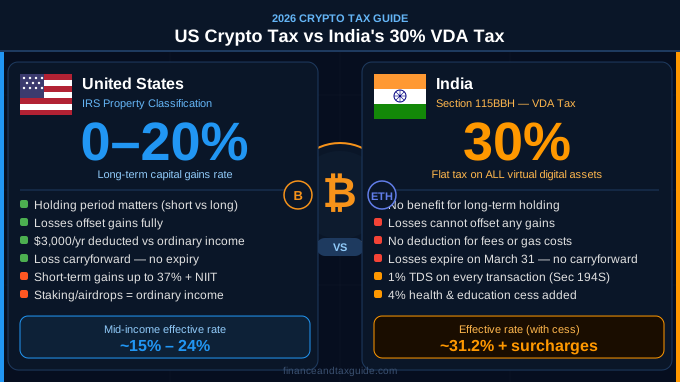
The cryptocurrency market has matured significantly over the past few years, and so have the regulatory frameworks governing it. If you’re a crypto investor operating across borders or considering your options in 2026, understanding how the United States and India approach digital asset taxation is no longer optional—it’s essential. Two major markets. Two completely different philosophies. One dramatic difference in tax outcomes. While the US has evolved a more nuanced system over the past decade, India took a harder line in 2022 and has maintained a strict, flat-rate approach ever since. For someone holding digital assets or trading cryptocurrency on both sides of the world, this comparison matters—sometimes to the tune of hundreds of thousands of rupees or dollars. This guide breaks down exactly how each system works, explores the gaps between them, and helps you understand what 2026 really means for your crypto portfolio if you’re navigating both jurisdictions. India’s Crypto Tax Framework – The 30% VDA Tax Regime The Indian Approach: Simplicity Through Rigidity India’s crypto taxation system, solidified through the Finance Act 2022, operates on a principle that sounds straightforward but proves remarkably inflexible in practice: a blanket 30% tax on all virtual digital asset gains. What is a Virtual Digital Asset (VDA)? Under Section 2(47A) of the Income Tax Act, a VDA is any digitally generated token or code that represents value, can be transferred or traded, and exists electronically. This remarkably broad definition includes: Conspicuously absent: the Indian Rupee and foreign currencies. Also exempt: the RBI’s own Digital Rupee, because it’s legal tender and falls outside the speculative asset framework. The Three Tax Anchors in India: India’s 30% Flat Tax: How It Actually Works The math looks deceptively simple: Gain = Sale Price – Purchase Price, then multiply by 30%. But the devil hides in several details: What You Can Deduct: Only the cost of acquisition. Nothing else. What You Cannot Deduct: A trader who pays ₹5,000 in exchange fees to execute a ₹2,00,000 trade can’t reduce their taxable gain by even a rupee. The system doesn’t recognize transaction friction. The Add-Ons: For most Indian crypto investors, the effective rate lands around 31.2%. For higher earners, it climbs notably higher. The Loss Problem: India’s Most Controversial Rule This is where India’s system generates the most friction. You cannot offset crypto losses against crypto gains. Not even partially. If you make ₹3,00,000 on Bitcoin and lose ₹1,50,000 on Ethereum, you owe tax on the full ₹3,00,000. The loss simply vanishes. Moreover: For active traders who experience inevitable losing trades, this creates a tax burden that feels disproportionate to actual profitability. Tax on Crypto Swaps: A Hidden Tax Event Many investors don’t realize that swapping one cryptocurrency for another—say, ETH for SOL—is treated as a taxable event in India. Why? Because the law defines a “transfer” as any exchange that results in a change of beneficial ownership, regardless of whether cash is involved. So if you swap 2 ETH (worth ₹5,40,000) for SOL: You now owe ₹72,000 in tax… without receiving any cash. For liquidity, you’d need to sell some SOL or other holdings to cover this liability. The 1% TDS Mechanism: Tracking, Not Necessarily Taxation Section 194S mandates a 1% Tax Deducted at Source on crypto transfers. Think of it as a tracking mechanism disguised as a tax. How it works: Important: This 1% is not “extra” tax. It’s an advance payment credited against your final tax liability. Thresholds: Once you cross the threshold, every transaction gets hit with 1% deduction for the rest of that financial year. Filing VDA Income: Schedule VDA When you file your ITR, crypto income gets reported separately in Schedule VDA. The system requires: For active traders with dozens or hundreds of transactions, this becomes tedious but manageable through aggregation. Foreign Assets & Offshore Exchanges: Schedule FA If you use foreign exchanges or hold crypto in offshore wallets, you must declare it in Schedule FA. The stakes here are higher. Non-disclosure triggers penalties under the Black Money Act: This isn’t a slap on the wrist—it’s a serious enforcement mechanism. US Crypto Tax Framework – Complexity Over Simplicity The American Approach: Multiple Rate Brackets, Multiple Asset Types The United States taxes crypto gains far more complexly than India, but arguably more equitably in certain respects. The IRS classifies most cryptocurrencies as “property” for tax purposes, meaning: Short-Term Capital Gains (held ≤ 1 year): Taxed at ordinary income rates: Add 3.8% Net Investment Income Tax (NIIT) if modified adjusted gross income exceeds $200,000 (single) or $250,000 (married filing jointly), and you’re looking at potential rates exceeding 40%. Long-Term Capital Gains (held > 1 year): Much more favorable: For most middle-income Americans, long-term gains are taxed at either 0% or 15%—dramatically lower than short-term rates. The US Advantage: Loss Harvesting Here’s where the US system differs most sharply from India’s: losses are meaningful. In the US: This enables a practice called “tax-loss harvesting”—selling losing positions to offset gains, then sometimes re-entering similar positions (with timing restrictions). A trader experiencing a ₹3,00,000 gain and ₹1,50,000 loss can reduce taxable gain to ₹1,50,000. In India, they’d owe tax on the full ₹3,00,000. Staking Rewards, Airdrops, Mining: Income (Not Capital Gains) The IRS takes a different view on how you acquire crypto: Staking rewards: Taxable as ordinary income at fair market value on the date received. Airdrops: Same—ordinary income at fair market value at the moment of receipt. Mining: Also ordinary income. So if you receive 0.1 BTC worth $4,000 in staking rewards, you recognize $4,000 of income in that tax year, regardless of whether you sell it later. Later, when you sell, that $4,000 becomes your cost basis. Gains above that are capital gains (short or long-term depending on holding period). This creates the possibility of “phantom income”—tax liability on assets you haven’t sold—which complicates cash flow for some investors. DeFi Activities: Complex and Evolving The IRS position on DeFi taxation remains somewhat uncertain, but the prevailing view is: The tax treatment of complex DeFi
How to file income tax return in gujarati
Tax

How to file income tax return in gujarati

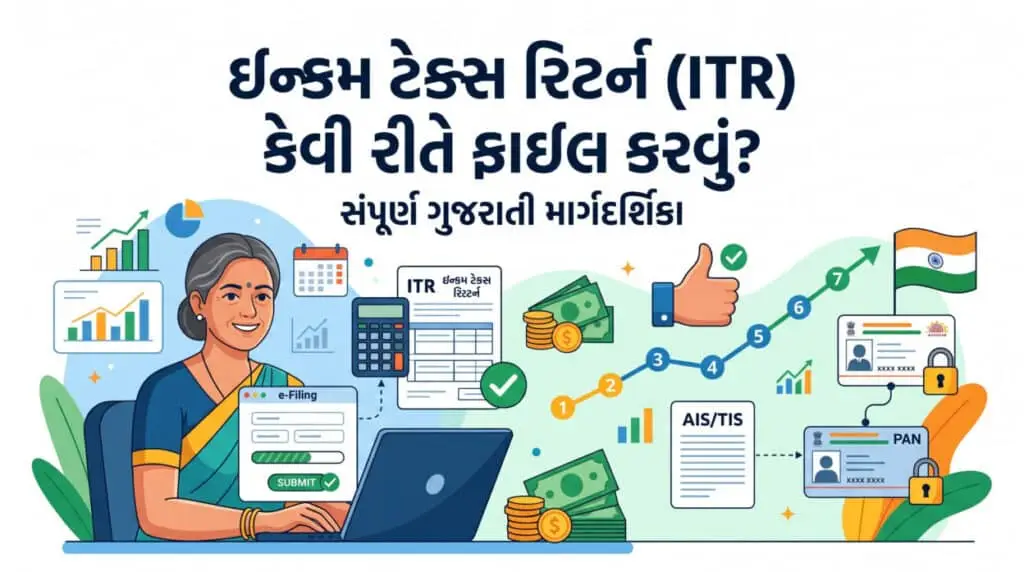
આજના ડિજિટલ યુગમાં ઇન્કમ ટેક્સ રિટર્ન (ITR) ફાઇલ કરવું એ માત્ર એક કાનૂની જવાબદારી નથી, પરંતુ દેશના વિકાસમાં અને તમારી નાણાકીય સ્થિરતામાં એક મહત્વપૂર્ણ પગલું છે. ઘણા લોકોને ટેક્સ રિટર્ન ફાઇલ કરવાની પ્રક્રિયા જટિલ અને અઘરી લાગે છે, પરંતુ જો સાચી માહિતી અને યોગ્ય માર્ગદર્શન હોય, તો આ પ્રક્રિયા ખૂબ જ સરળ બની જાય છે. આજના આ વિસ્તૃત લેખમાં આપણે ઇન્કમ ટેક્સ રિટર્ન એટલે શું, તે શા માટે જરૂરી છે, તેનાથી શું ફાયદા થાય છે અને તેને ઓનલાઇન તથા ઓફલાઇન કેવી રીતે ફાઇલ કરી શકાય તે અંગે સંપૂર્ણ સ્ટેપ-બાય-સ્ટેપ માહિતી ગુજરાતીમાં મેળવીશું. ૧. ઇન્કમ ટેક્સ રિટર્ન (આઇટીઆર) એટલે શું? ઇન્કમ ટેક્સ રિટર્ન (ITR) એ એક નિર્ધારિત ફોર્મ છે જેમાં કરદાતા (Taxpayer) પોતાની વાર્ષિક આવક, કરેલા ખર્ચાઓ, ટેક્સ બચાવવા માટે કરેલા રોકાણો (ડિડક્શન) અને પોતાની ટેક્સ જવાબદારી (Tax Liability) ની સંપૂર્ણ વિગતો આવકવેરા વિભાગ (Income Tax Department) ને દર્શાવે છે. જ્યારે કોઈ વ્યક્તિ, પેઢી કે કંપની આ ફોર્મમાં પોતાની નાણાકીય વિગતો ભરીને આઇટી (IT) વિભાગમાં સબમિટ કરે છે, ત્યારે તેમણે પોતાનું આવકવેરા રિટર્ન ફાઇલ કર્યું છે તેમ કહેવાય છે. કરદાતાની આવકના સ્ત્રોત અને વ્યવસાયના પ્રકારના આધારે આઇટીઆર-૧ (ITR-1) થી લઈને આઇટીઆર-૭ (ITR-7) સુધીના વિવિધ ફોર્મ્સ ઉપલબ્ધ હોય છે. નાણાકીય વર્ષ (Financial Year) અને આકારણી વર્ષ (Assessment Year) ITR ફાઇલ કરતી વખતે આ બે શબ્દો સમજવા અત્યંત જરૂરી છે: પ્રોફેશનલ નોંધ: ડાયરેક્ટ ટેક્સ કોડ (DTC) ૨૦૨૫ ના આગામી ડ્રાફ્ટ અને અપેક્ષિત સુધારાઓ મુજબ, આવનારા સમયમાં આ અલગ-અલગ પારિભાષિક શબ્દો (FY અને AY) ને બદલે વિશ્વ કક્ષાની સિસ્ટમ મુજબ એક સમાન ‘ટેક્સ યર’ (Tax Year) નો ખ્યાલ અમલમાં આવી શકે છે. તેથી, કરદાતાઓએ અને ટેક્સ પ્રોફેશનલ્સે આ નવી પરિભાષા અને ફોર્મ્સના માળખાકીય ફેરફારો માટે માનસિક રીતે સજ્જ રહેવું હિતાવહ છે. ૨. આઇટીઆર (ITR) ફાઇલ કરવાના મુખ્ય ફાયદાઓ ઘણા લોકો માને છે કે જો તેમની આવક ટેક્સ મુક્તિ મર્યાદા (Basic Exemption Limit) કરતા ઓછી હોય, તો રિટર્ન ભરવાની કોઈ જરૂર નથી. પરંતુ ‘નિલ રિટર્ન’ (Nil Return) ભરવાના પણ અનેક લાંબા ગાળાના ફાયદા છે: ૩. ઇન્કમ ટેક્સ રિટર્ન ફાઇલ કરવા માટે જરૂરી ડોક્યુમેન્ટ્સ રિટર્ન ફાઇલ કરવાની શરૂઆત કરતા પહેલા નીચે મુજબના દસ્તાવેજો તમારી પાસે હોવા જરૂરી છે: એકાઉન્ટન્ટ્સ અને ટેક્સ પ્રોફેશનલ્સ માટે મહત્વની સલાહ: ગ્રાહકોનું ડેટા મેનેજમેન્ટ કરતી વખતે ડીપીડીપી એક્ટ (DPDP Act – ડિજિટલ પર્સનલ ડેટા પ્રોટેક્શન એક્ટ) ની જોગવાઈઓનું કડક પાલન કરવું અનિવાર્ય છે. ઉપરાંત, નાણાકીય વર્ષ ૨૦૨૫-૨૬ ના નિયમો મુજબ, એકાઉન્ટિંગ સોફ્ટવેરમાં ફરજિયાત ‘ઓડિટ ટ્રેઇલ’ (Audit Trail) જાળવી રાખવાની જવાબદારી એકાઉન્ટન્ટ્સ પર રહેલી છે, જેથી ડેટામાં છેડછાડ અટકાવી શકાય. ૪. How to file income tax return in gujarati (offline) ઇન્કમ ટેક્સ રિટર્ન ઓનલાઇન (e-Filing) ફાઇલ કરવાની પ્રક્રિયા હવે ઘણી ઝડપી અને યુઝર-ફ્રેન્ડલી બની ગઈ છે. નીચે આપેલા સ્ટેપ્સ અનુસરીને તમે જાતે જ તમારું રિટર્ન ફાઇલ કરી શકો છો: ૫. How to file income tax return in gujarati (online) જો તમને ડાયરેક્ટ ઓનલાઇન પોર્ટલ પર ડેટા ભરવામાં મુશ્કેલી પડતી હોય, તો તમે ઇન્કમ ટેક્સ વિભાગની ઑફલાઇન યુટિલિટી (Excel અથવા Java Utility) નો ઉપયોગ કરી શકો છો: ૬. બિઝનેસ ઇન્કમ, GST સ્લેબ્સ અને ITR નો સીધો સંબંધ જો તમે કોઈ વ્યવસાય કે ઉદ્યોગ ચલાવતા હોવ અને ITR-3 કે ITR-4 ફાઇલ કરી રહ્યા હોવ, તો તમારે તમારા જીએસટી (GST) રિટર્નના આંકડા ઇન્કમ ટેક્સ રિટર્ન સાથે મેચ કરવા ખૂબ જ જરૂરી છે. જો આ બંને ડેટામાં તફાવત હશે, તો ઇન્કમ ટેક્સ વિભાગ તરફથી નોટિસ આવવાની પૂરી સંભાવના રહે છે. ખાસ ધ્યાન રાખો: તાજેતરમાં જીએસટી કાઉન્સિલ દ્વારા જે રીતે જીએસટી સ્લેબમાં સંભવિત ફેરફારો વિચારાયા છે (જેમ કે અગાઉના ૧૨% અને ૨૮% ના સ્લેબને કાઢીને તેને ૫%, ૧૮% અને ૪૦% ના નવા માળખામાં શિફ્ટ કરવાની ચર્ચા), ત્યારે દરેક બિઝનેસમેને પોતાની ઇન્વેન્ટરીનું નવેસરથી પુનઃવર્ગીકરણ કરવું પડશે. આ ઇન્વેન્ટરીનું મૂલ્યાંકન સીધી રીતે તમારા આઇટીઆર ના પ્રોફિટ એન્ડ લોસ એકાઉન્ટ (P&L) ને અસર કરશે, તેથી ક્લોઝિંગ સ્ટોક અને ઇનપુટ સર્વિસ ડિસ્ટ્રીબ્યુટર (ISD) ના નિયમોને ધ્યાનમાં રાખીને જ બેલેન્સ શીટ ફાઇનલ કરવી. ૭. સામાન્ય ભૂલો જે ITR ફાઇલ કરતી વખતે ક્યારેય ન કરવી નિષ્કર્ષ ઇન્કમ ટેક્સ રિટર્ન ફાઇલ કરવું એ હવે પહેલાં જેટલું કઠિન અને સમય માંગી લે તેવું કાર્ય નથી રહ્યું. ઓનલાઇન પોર્ટલની સુવિધાના કારણે કોઈપણ વ્યક્તિ ઘરે બેઠા સરળતાથી પોતાનું રિટર્ન ભરી શકે છે. સમયસર રિટર્ન ભરવાથી તમે દંડથી બચી શકો છો અને તમારા ભવિષ્યના નાણાકીય આયોજનો (જેમ કે લોન કે વિઝા પ્રક્રિયા) સુગમ બનાવી શકો છો. જો તમારો કોઈ મોટો વ્યવસાય હોય કે જટિલ નાણાકીય વ્યવહારો હોય, તો યોગ્ય ચાર્ટર્ડ એકાઉન્ટન્ટ (CA) કે ટેક્સ પ્રોફેશનલની સલાહ લેવી હંમેશા હિતાવહ છે. FAQs (Pro Tip): જો તમે કન્ફ્યુઝ છો કે નવી ટેક્સ રિજીમ પસંદ કરવી કે જૂની, તો રિટર્ન ફાઇલ કરતા પહેલા તમારો ટેક્સ ક્યાં ઓછો આવે છે તે જાતે જ ચેક કરો. અત્યારે જ આ Income Tax Calculator Gujarati ની મદદથી તમારી આવક પર લાગતા ટેક્સની ગણતરી કરો.

income tax calculator hindi
Tax, Calculators

Income Tax Calculator hindi

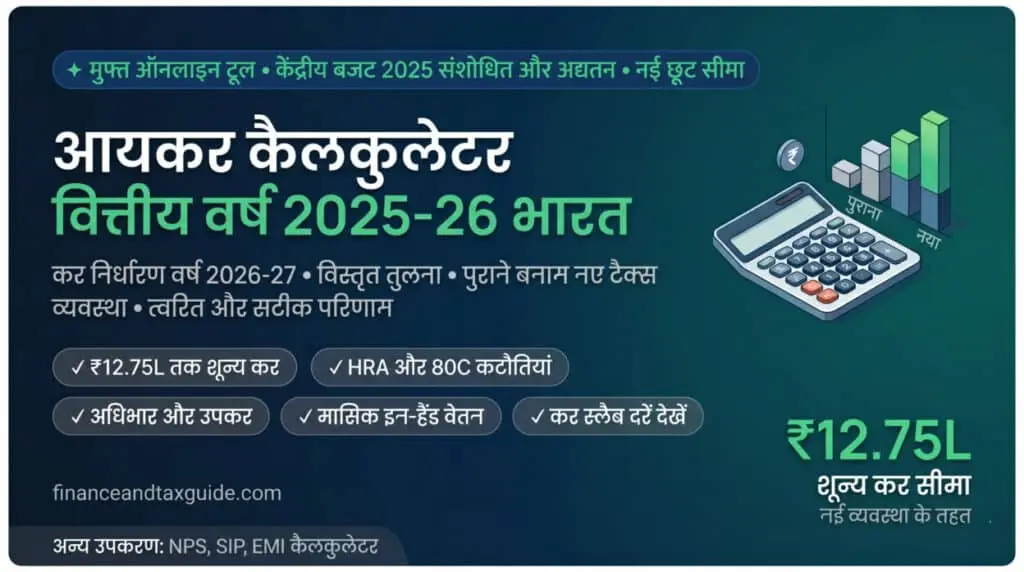
इनकम टैक्स कैलकुलेटर FY 2025-26 (AY 2026-27) | मुफ्त ऑनलाइन टैक्स कैलकुलेटर भारत इनकम टैक्स कैलकुलेटर FY 2025-26 (AY 2026-27) अपना इनकम टैक्स ऑनलाइन मुफ्त में कैलकुलेट करें। पुरानी vs नई टैक्स व्यवस्था की तुरंत तुलना करें, टेक-होम सैलरी जांचें, और स्लैब-वार टैक्स ब्रेकडाउन देखें। बजट 2025 के अनुसार अपडेटेड। ✅ मुफ्त उपयोग ⚡ रियल-टाइम परिणाम 🔄 पुरानी vs नई व्यवस्था 📱 मोबाइल फ्रेंडली 🗓️ बजट 2025 अपडेटेड 1 बुनियादी विवरण 2 आय विवरण 3 कटौतियाँ वित्तीय वर्ष FY 2025-26 (AY 2026-27) FY 2026-27 (AY 2027-28) आयु वर्ग (पुरानी व्यवस्था में टैक्स स्लैब भिन्न होते हैं) 👤 60 से कम सामान्य करदाता 🧓 60 – 80 वर्ष वरिष्ठ नागरिक 👴 80+ वर्ष अति वरिष्ठ नागरिक आगे जारी रखें → वेतन और रोजगार आय वार्षिक सकल वेतन किसी भी कटौती से पहले ₹ किसी भी कटौती से पहले अपना CTC (कंपनी की लागत) या सकल वार्षिक वेतन दर्ज करें। छूट प्राप्त भत्ते (LTA आदि) केवल पुरानी व्यवस्था ₹ अन्य आय ब्याज आय (बचत / FD) वार्षिक ₹ किराया आय (30% मानक कटौती के बाद) ₹ फ्रीलांसिंग / व्यवसाय आय ₹ गृह ऋण ब्याज (किराए पर दी गई संपत्ति) ₹ ← वापस आगे जारी रखें → 💡 नई टैक्स व्यवस्था: नीचे दी गई कटौतियाँ (80C, 80D, HRA आदि) लागू नहीं होतीं। केवल ₹75,000 की मानक कटौती लागू होती है। ये कटौतियाँ केवल पुरानी टैक्स व्यवस्था में लागू होती हैं। धारा 80 कटौतियाँ (पुरानी व्यवस्था) 80C – LIC, PPF, ELSS, PF आदि अधिकतम ₹1,50,000 ₹ 80D – स्वास्थ्य बीमा प्रीमियम स्वयं + माता-पिता ₹ अधिकतम ₹25,000 (स्वयं) + ₹25,000 (माता-पिता) = ₹50,000। वरिष्ठ नागरिक माता-पिता: ₹50,000। HRA छूट (यदि लागू हो) ₹ गृह ऋण ब्याज – स्व-अधिकृत धारा 24, अधिकतम ₹2,00,000 ₹ + अधिक कटौतियाँ (80E, 80G, 80TTA, NPS) ▼ 80E – शिक्षा ऋण ब्याज ₹ 80G – दान (चैरिटी) ₹ 80TTA – बचत बैंक ब्याज अधिकतम ₹10,000 ₹ NPS – 80CCD(1B) स्वयं का योगदान अधिकतम ₹50,000 ₹ अन्य कटौतियाँ (80DD, 80U आदि) ₹ ← वापस ⚡ टैक्स कैलकुलेट करें आपकी वार्षिक आय ₹0 नई व्यवस्था ₹0 कुल टैक्स बनाम पुरानी व्यवस्था ₹0 कुल टैक्स नई व्यवस्था से आप बचाते हैं ₹0 WhatsApp पर शेयर करें 🖨️ प्रिंट करें 🔄 पुनः कैलकुलेट करें नई व्यवस्था ₹0 कुल टैक्स देय सकल आय₹0 मानक कटौती₹0 कर योग्य आय₹0 स्लैब टैक्स₹0 87A छूट₹0 सरचार्ज₹0 सेस (4%)₹0 कुल टैक्स देय₹0 प्रभावी दर0% पुरानी व्यवस्था ₹0 कुल टैक्स देय सकल आय₹0 मानक कटौती₹0 धारा 80 कटौतियाँ₹0 कर योग्य आय₹0 स्लैब टैक्स₹0 87A छूट₹0 सरचार्ज₹0 सेस (4%)₹0 कुल टैक्स देय₹0 प्रभावी दर0% 📅 मासिक ब्रेकडाउन (सर्वोत्तम व्यवस्था के आधार पर) मासिक सकल ₹0 मासिक TDS ₹0 टेक-होम ₹0 प्रभावी दर 0% 📊 स्लैब-वार टैक्स विज़ुअलाइज़र नई व्यवस्था दिखाई जा रही है (आपके लिए अनुशंसित) 🟢 नई व्यवस्था 🟡 पुरानी व्यवस्था आय सीमा दर ₹4 लाख तक शून्य ₹4L – ₹8L 5% ₹8L – ₹12L 10% ₹12L – ₹16L 15% ₹16L – ₹20L 20% ₹20L – ₹24L 25% ₹24L से ऊपर 30% ✅ धारा 87A: ₹12 लाख तक शून्य टैक्स📋 मानक कटौती: ₹75,000 आय सीमा (60 वर्ष से कम) दर ₹2.5 लाख तक शून्य ₹2.5L – ₹5L 5% ₹5L – ₹10L 20% ₹10L से ऊपर 30% * वरिष्ठ नागरिक (60-80): ₹3L तक शून्य | अति वरिष्ठ (80+): ₹5L तक शून्य FY 2025-26 के लिए मुख्य तथ्य 🎉 टैक्स-मुक्त सीमा (नई व्यवस्था) ₹12.75 लाख तक 💰 धारा 87A छूट ₹60,000 (नई) | ₹12,500 (पुरानी) 📋 मानक कटौती ₹75,000 (नई) | ₹50,000 (पुरानी) 📊 स्वास्थ्य एवं शिक्षा सेस कुल टैक्स पर 4% ⬆️ सरचार्ज (₹50L से ऊपर) 10% से 37% 📅 ITR दाखिल करने की अंतिम तारीख 31 जुलाई 2026 पुरानी vs नई व्यवस्था – त्वरित तुलना सुविधा नई पुरानी मानक कटौती ₹75K ₹50K 87A छूट ₹60K ₹12.5K 80C (LIC, PPF…) नहीं हाँ HRA छूट नहीं हाँ गृह ऋण ब्याज नहीं हाँ 80D (स्वास्थ्य बीमा) नहीं हाँ NPS कटौती नियोक्ता पूर्ण डिफ़ॉल्ट व्यवस्था हाँ ✓ नहीं FY 2025-26 (AY 2026-27) के लिए इनकम टैक्स कैलकुलेटर – सम्पूर्ण गाइड हमारा भारत के लिए मुफ्त इनकम टैक्स कैलकुलेटर वित्तीय वर्ष 2025-26 (मूल्यांकन वर्ष 2026-27) के लिए केंद्रीय बजट 2025 में घोषित सभी बदलावों के साथ अपडेट किया गया है। चाहे आप वेतनभोगी कर्मचारी हों, फ्रीलांसर हों, या व्यवसाय स्वामी हों, यह कैलकुलेटर आपको पुरानी टैक्स व्यवस्था बनाम नई टैक्स व्यवस्था की तुरंत तुलना करने और यह जानने में मदद करता है कि कौन सी व्यवस्था आपके लिए अधिक बचत करती है। इस कैलकुलेटर की मुख्य विशेषताएं: टाइप करते समय रियल-टाइम गणना, स्लैब-वार टैक्स ब्रेकडाउन चार्ट, मासिक टेक-होम सैलरी, प्रभावी कर दर, और उच्च आय वालों के लिए सरचार्ज गणना — सब एक जगह। FY 2025-26 और FY 2026-27 के लिए नई टैक्स व्यवस्था स्लैब दरें नई टैक्स व्यवस्था FY 2023-24 से डिफ़ॉल्ट व्यवस्था है। FY 2025-26 और FY 2026-27 के लिए स्लैब दरें समान हैं: इनकम टैक्स स्लैब टैक्स दर स्लैब पर टैक्स ₹4,00,000 तक शून्य ₹0 ₹4,00,001 – ₹8,00,000 5% ₹20,000 ₹8,00,001 – ₹12,00,000 10% ₹40,000 ₹12,00,001 – ₹16,00,000 15% ₹60,000 ₹16,00,001 – ₹20,00,000 20% ₹80,000 ₹20,00,001 – ₹24,00,000 25% ₹1,00,000 ₹24,00,000 से ऊपर 30% शेष राशि पर ℹ️ ₹12 लाख तक शून्य टैक्स: नई टैक्स व्यवस्था के तहत, यदि आपकी कर योग्य आय (मानक कटौती के बाद) ₹12 लाख तक है, तो धारा 87A की ₹60,000 की छूट के कारण आपका प्रभावी टैक्स ₹0 है। ₹12.75 लाख तक सकल वेतन वाले वेतनभोगी कर्मचारी शून्य टैक्स देते हैं (₹12.75L − ₹75K मानक कटौती = ₹12L कर योग्य आय)। FY 2025-26 के लिए पुरानी टैक्स व्यवस्था स्लैब दरें पुरानी टैक्स व्यवस्था हाल के वर्षों में नहीं बदली है। इसमें उच्च कर दरें हैं लेकिन कई कटौतियों और छूटों की अनुमति देती है जो आपकी कर योग्य आय को काफी कम कर सकती हैं। आय स्लैब 60 वर्ष से कम वरिष्ठ (60–80) अति वरिष्ठ (80+) ₹2.5 लाख तक शून्य शून्य शून्य ₹2.5L – ₹3L 5% शून्य शून्य ₹3L – ₹5L 5% 5% शून्य ₹5L – ₹10L 20% 20% 20% ₹10L से ऊपर 30% 30% 30% आप कितना टैक्स देंगे? आय-वार तुलना नीचे दी गई तालिका दिखाती है कि एक वेतनभोगी व्यक्ति (पुरानी व्यवस्था में कोई कटौती नहीं मानते हुए) विभिन्न आय स्तरों पर दोनों

income tax calculator gujarati
Tax, Calculators

Income Tax Calculator Gujarati

આવકવેરા કેલ્ક્યુલેટર FY 2025-26 (AY 2026-27) | મફત ઓનલાઈન ટેક્સ કેલ્ક્યુલેટર ભારત આવકવેરા કેલ્ક્યુલેટર FY 2025-26 (AY 2026-27) તમારો આવકવેરો ઓનલાઈન મફતમાં ગણો. જૂની વિરુદ્ધ નવી ટેક્સ વ્યવસ્થાની ત્વરિત સરખામણી કરો, ટેક-હોમ પગાર તપાસો અને સ્લેબ મુજબ ટેક્સ જુઓ. કેન્દ્રીય બજેટ 2025 અપડેટ. ✅ મફત ⚡ રીઅલ-ટાઇમ 🔄 જૂની vs નવી 📱 મોબાઇલ ફ્રેન્ડલી 🗓️ Budget 2025 1 મૂળભૂત 2 આવક 3 કપાતો નાણાકીય વર્ષ (Financial Year) FY 2025-26 (AY 2026-27) FY 2026-27 (AY 2027-28) ઉંમર જૂથ 👤 60 નીચે સામાન્ય 🧓 60–80 વરિષ્ઠ 👴 80+ અતિ વ. આગળ વધો → પગાર અને આવક વાર્ષિક કુલ પગાર કોઈ કપાત પહેલાં ₹ CTC અથવા Annual Gross Salary દાખલ કરો (કોઈ કપાત પહેલાં). કરમુક્ત ભથ્થાં (LTA વગેરે) માત્ર જૂની વ્યવ. ₹ અન્ય આવક વ્યાજની આવક (બચત / FD) વાર્ષિક ₹ ભાડાની આવક 30% SD બાદ ₹ ફ્રીલાન્સ / વ્યવસાયની આવક ₹ હોમ લોન વ્યાજ (ભાડે આપેલ) ઘટાડ ₹ ← પાછળ આગળ → 💡 નવી ટેક્સ વ્યવ.: 80C, 80D, HRA લાગુ નથી. ફક્ત ₹75,000 સ્ટાન્ડર્ડ કપાત. નીચેની કપાતો જૂની વ્યવ. માટે જ છે. સેક્શન 80 કપાતો (જૂની વ્યવ.) 80C – LIC, PPF, ELSS, PF મહ. ₹1,50,000 ₹ 80D – હેલ્થ ઈન્સ્યો. સ્વ + માતાપિતા ₹ ↑ ₹25K (સ્વ) + ₹25K (માતા-પિ.) = ₹50K. વ.ના. માતા-પિ.: ₹50K. HRA મુક્તિ ₹ હોમ લોન વ્યાજ – Sec 24 મહ. ₹2,00,000 ₹ + વધુ કપાતો (80E, 80G, 80TTA, NPS) ▼ 80E – એજ્યુ. લોન વ્યાજ ₹ 80G – ચેરિટી દાન ₹ 80TTA – સેવિંગ્સ વ્યાજ મહ. ₹10,000 ₹ NPS 80CCD(1B) મહ. ₹50,000 ₹ અન્ય (80DD, 80U વગ.) ₹ ← પાછળ ⚡ ટેક્સ ગણો તમારી વાર્ષિક આવક ₹0 નવી વ્યવ. ₹0 કુલ ટેક્સ VS જૂની વ્યવ. ₹0 કુલ ટેક્સ નવી વ્યવ. સાથે બચત ₹0 WhatsApp 🖨️ પ્રિન્ટ 🔄 ફરીથી નવી વ્યવ. ₹0 કુલ ટેક્સ કુલ આવક— સ્ટાન્ડર્ડ કપાત— કરપાત્ર આવક— સ્લેબ ટેક્સ— 87A રિબેટ— સરચાર્જ— સેસ (4%)— કુલ ટેક્સ — અ. ટેક્સ દર— જૂની વ્યવ. ₹0 કુલ ટેક્સ કુલ આવક— સ્ટાન્ડર્ડ કપાત— અ. કપાતો— કરપાત્ર આવક— સ્લેબ ટેક્સ— 87A રિબેટ— સરચાર્જ— સેસ (4%)— કુલ ટેક્સ — અ. ટેક્સ દર— 📅 માસિક ઇન-હેન્ડ (શ્રેષ્ઠ વ્યવ. આધારે) માસિક કુલ — માસિક ટેક્સ — ટેક-હોમ — ટેક્સ દર — 📊 સ્લેબ ટેક્સ વિભાજન — ટેક્સ સ્લેબ દરો FY 2025-26 (AY 2026-27) નવી વ્યવ. જૂની વ્યવ. આવક ટેક્સ ₹4 લાખ સુધી નીલ ₹4L – ₹8L 5% ₹8L – ₹12L 10% ₹12L – ₹16L 15% ₹16L – ₹20L 20% ₹20L – ₹24L 25% ₹24L+ 30% ✅ ₹12.75L સુધી શૂન્ય ટેક્સ (87A ₹60K + ₹75K SD) આવક (60 નીચે) ટેક્સ ₹2.5 લાખ સુધી નીલ ₹2.5L – ₹5L 5% ₹5L – ₹10L 20% ₹10L+ 30% * ૬૦-80: ₹3L નીલ | 80+: ₹5L નીલ FY 2025-26 મુખ્ય હકીકતો 🎉 ટેક્સ-ફ્રી (નવી) ₹12.75 લાખ સુધી 💰 87A રિબેટ ₹60,000 (નવી) | ₹12,500 (જૂની) 📋 સ્ટાન્ડર્ડ કપાત ₹75,000 (નવી) | ₹50,000 (જૂની) 📊 હ. અ. એ. સેસ 4% (કુલ ટેક્સ પર) ⬆️ સરચાર્જ (₹50L+) 10% – 37% 📅 ITR ફાઇલ ડેડલાઇન 31 જુલાઈ 2026 જૂની vs નવી – ઝડપી સરખામણી વિશ. નવી જૂની Std. Ded. ₹75K ₹50K 87A ₹60K ₹12.5K 80C ના હા HRA ના હા HL વ્યાજ ના હા 80D ના હા ડિફોલ્ટ ✓ ના FY 2025-26 (AY 2026-27) આવકવેરા કેલ્ક્યુલેટર – સંપૂર્ણ માર્ગદર્શિકા ભારત માટે અમારું મફત આવકવેરા કેલ્ક્યુલેટર કેન્દ્રીય બજેટ 2025 ના ફેરફારો સાથે FY 2025-26 (AY 2026-27) માટે અપડેટ છે. ભલે તમે પગારદાર, ફ્રીલાન્સર અથવા વ્યવસાયી હો, આ ટૂલ જૂની vs નવી ટેક્સ વ્યવ. ની ત્વરિત સરખામણી કરે છે. નવી ટેક્સ વ્યવ. – FY 2025-26 સ્લેબ આવકવેરા સ્લેબ ટેક્સ દર સ્લેબ ટેક્સ ₹4,00,000 સુધી નીલ ₹0 ₹4L – ₹8L 5% ₹20,000 ₹8L – ₹12L 10% ₹40,000 ₹12L – ₹16L 15% ₹60,000 ₹16L – ₹20L 20% ₹80,000 ₹20L – ₹24L 25% ₹1,00,000 ₹24L+ 30% બાકી પર ℹ️ ₹12.75L સુધી શૂન્ય ટેક્સ: 87A રિબેટ (₹60,000) + ₹75K SD = ₹12.75L સુધી ₹0 ટેક્સ. જૂની ટેક્સ વ્યવ. – FY 2025-26 સ્લેબ સ્લેબ 60 નીચે 60–80 80+ ₹2.5L સુધી નીલ નીલ નીલ ₹2.5L–₹3L 5% નીલ નીલ ₹3L–₹5L 5% 5% નીલ ₹5L–₹10L 20% 20% 20% ₹10L+ 30% 30% 30% આવક મુજબ ટેક્સ સરખામણી પગાર નવી ટેક્સ જૂની ટેક્સ બચત ₹5 લાખ ₹0 ₹0 ₹0 ₹7.5 લાખ ₹0 ₹46,800 ₹46,800 ₹10 લાખ ₹0 ₹1,17,000 ₹1,17,000 ₹12.75 લાખ ₹0 ₹1,79,400 ₹1,79,400 ₹15 લાખ ₹1,09,200 ₹2,52,000 ₹1,42,800 ₹20 લાખ ₹2,08,000 ₹4,05,600 ₹1,97,600 ₹30 લાખ ₹5,20,000 ₹7,41,000 ₹2,21,000 *4% સેસ સહિત. જૂની: કોઈ કપાત ધારેલ નથી. કઈ ટેક્સ વ્યવ. પસંદ કરવી? નવી ટેક્સ વ્યવ. પસંદ કરો: ₹12.75 લાખ સુધીનો પગાર — ₹0 ટેક્સ ઓછી કપાત (HRA, HL, 80C ઓછા) સરળ ITR ફાઇલિંગ પસંદ જૂની ટેક્સ વ્યવ. પસંદ કરો: HRA ₹1L+ ક્લેમ 80C ₹1.5L રોકાણ HL વ્યાજ Sec 24 ₹2L કુલ કપાત ₹3.75L+ ✅ પ્રો ટીપ: ઉપર Calculator માં ચોક્કસ કપાત ભરો — ₹15L સુધી મોટાભાગને નવી વ્યવ. ફાયદો. 87A રિબેટ ઉદાહરણ 📝 રાહુલ — પગાર ₹12.75 લાખ (નવી) કુલ પગાર ₹12,75,000 − SD −₹75,000 કરપાત્ર ₹12,00,000 ₹4L–₹8L (5%) ₹20,000 ₹8L–₹12L (10%) ₹40,000 સ્લેબ ટેક્સ ₹60,000 − 87A −₹60,000 ચોખ્ખો ટેક્સ ₹0 🎉 વારંવાર પૂછાતા પ્રશ્નો (FAQ) ₹12L સુધી સંપૂર્ણ ટેક્સ-ફ્રી? + હા, નવી ટેક્સ વ્યવ. હેઠળ ₹12L (SD પછી) સુધી 87A (₹60K) ના કારણે ₹0 ટેક્સ. STCG/LTCG આ રિબેટ બહાર છે. કઈ ટેક્સ વ્યવ. ચૂઝ કરવી? + Calculator વાપરો — ₹3.75L+ કપાત = જૂની; ₹12.75L- = નવી. નવી ડિફોલ્ટ છે; જૂની Form 10-IE થી. FY 2025-26 SD કેટલી? + નવી: ₹75,000 | જૂની: ₹50,000 — કોઈ document નથી જોઈતા. 4% સેસ ક્યારે? + ટેક્સ + સરચાર્જ પર 4% = Health & Education Cess. બધા કરદાતા માટે. ITR ડેડલાઇન FY 2025-26? + 31 જુલાઈ 2026 (વ્ય., non-audit). Audit: 31 ઓક. 2026. મોડું: Sec 234F ₹5,000 ફી. ફ્રી અને સચોટ? + હા, Budget 2025 અપડેટ. આ planning estimate છે — ચોક્કસ ITR ફાઇલ માટે CA ની સલાહ લો. ⚠️ ડિસ્ક્લેમર: આ calculator FY 2025-26 ટેક્સ planning માટે estimate આપે છે. Budget 2025 અપડેટ. Professional ટેક્સ advice અને ITR filing માટે CA ની સલાહ લો. Govt/IT Dept સાથે affiliated નથી.

Income Tax Calculator
Calculators

Income Tax Calculator

Income Tax Calculator FY 2025-26 (AY 2026-27) | Free Online Tax Calculator India Income Tax Calculator FY 2025-26 (AY 2026-27) Calculate your income tax free. Instantly compare Old vs New Tax Regime, see take-home salary & slab-wise tax. Updated for Union Budget 2025. ✅ Free ⚡ Real-Time 🔄 Old vs New Regime 📱 Mobile Friendly 🗓️ Budget 2025 1 Basic Info 2 Income 3 Deductions Financial Year FY 2025-26 (AY 2026-27) FY 2026-27 (AY 2027-28) Age Group 👤 Below 60 General 🧓 60 – 80 yrs Senior 👴 80+ yrs Super Senior Continue → Income Details Salary & Employment Annual Gross Salary Before deductions ₹ Enter your CTC or gross salary before any deductions. Exempt Allowances (LTA, etc.) Old Regime only ₹ Other Income Sources Interest Income (Savings / FD) ₹ Rental Income (Net) ₹ Freelance / Business Income ₹ Home Loan Interest (Let-Out Property) ₹ ← Back Continue → Deductions 💡 New Regime: Only ₹75,000 standard deduction applies. All deductions below (80C, HRA, etc.) are for Old Regime only. Section 80 Deductions (Old Regime) 80C – LIC, PPF, ELSS, PF Max ₹1.5L ₹ 80D – Health Insurance Premium Self + Parents ₹ Max ₹25,000 (self) + ₹25,000 parents. Senior citizen parents: up to ₹50,000. HRA Exemption ₹ Home Loan Interest – Sec 24 Max ₹2L ₹ + More Deductions (NPS, 80E, 80G, 80TTA) ▼ NPS – 80CCD(1B) Max ₹50K ₹ 80E – Education Loan Interest ₹ 80G – Charitable Donations ₹ 80TTA – Savings Bank Interest Max ₹10K ₹ Other Deductions (80DD, 80U) ₹ ← Back ⚡ Calculate Tax Your Annual Income ₹0 New Regime ₹0 Total Tax VS Old Regime ₹0 Total Tax You save with New Regime ₹0 Share on WhatsApp 🖨️ Print 🔄 Reset New Regime ₹0 Total Tax Gross Income— Standard Deduction— Taxable Income— Income Tax (Slabs)— Less: 87A Rebate— Surcharge— Health & Edu Cess 4%— Total Tax Payable — Effective Rate— Old Regime ₹0 Total Tax Gross Income— Standard Deduction— Other Deductions— Taxable Income— Income Tax (Slabs)— Less: 87A Rebate— Surcharge— Health & Edu Cess 4%— Total Tax Payable — Effective Rate— 📅 Monthly Take-Home (Best regime) Monthly Gross — Monthly Tax (TDS) — Take-Home / Mo — Effective Rate — 📊 Slab-wise Tax Breakdown How your tax is spread across income slabs Tax Slab Rates FY 2025-26 AY 2026-27 New Regime Old Regime Income Range Rate Up to ₹4 Lakh Nil ₹4L – ₹8L 5% ₹8L – ₹12L 10% ₹12L – ₹16L 15% ₹16L – ₹20L 20% ₹20L – ₹24L 25% Above ₹24L 30% ✅ Zero tax up to ₹12.75L for salaried (87A rebate + ₹75K std. deduction) Income Slab (Below 60) Rate Up to ₹2.5 Lakh Nil ₹2.5L – ₹5L 5% ₹5L – ₹10L 20% Above ₹10L 30% * Senior (60–80): Nil up to ₹3L · Super Senior (80+): Nil up to ₹5L Key Facts FY 2025-26 🎉 Tax-Free Limit (New Regime) Up to ₹12.75 Lakh 💰 Section 87A Rebate ₹60,000 (New) | ₹12,500 (Old) 📋 Standard Deduction ₹75,000 (New) | ₹50,000 (Old) 📊 Health & Edu Cess 4% on total tax ⬆️ Surcharge (above ₹50L) 10% to 37% 📅 ITR Filing Deadline 31 July 2026 Old vs New — Quick Compare Feature New Old Std. Deduction ₹75K ₹50K 87A Rebate ₹60K ₹12.5K 80C (PPF, LIC…) No Yes HRA Exemption No Yes Home Loan Int. No Yes 80D (Health Ins.) No Yes Default Regime Yes ✓ No Income Tax Calculator India FY 2025-26 – Complete Guide Our free Income Tax Calculator for India is updated for FY 2025-26 (AY 2026-27) with all Union Budget 2025 changes. Compare the Old Tax Regime vs New Tax Regime instantly and see which saves you more money. New Tax Regime Slab Rates FY 2025-26 Income Tax Slab Tax Rate Tax on Slab Up to ₹4,00,000 Nil ₹0 ₹4,00,001 – ₹8,00,000 5% ₹20,000 ₹8,00,001 – ₹12,00,000 10% ₹40,000 ₹12,00,001 – ₹16,00,000 15% ₹60,000 ₹16,00,001 – ₹20,00,000 20% ₹80,000 ₹20,00,001 – ₹24,00,000 25% ₹1,00,000 Above ₹24,00,000 30% On balance ℹ️ Zero Tax up to ₹12.75 Lakh: Under New Tax Regime, income up to ₹12L is tax-free via 87A rebate (₹60,000). Salaried employees with ₹75,000 standard deduction pay zero tax up to ₹12.75L gross salary. Old Tax Regime Slabs FY 2025-26 Income Slab Below 60 Senior (60–80) Super Senior (80+) Up to ₹2.5L Nil Nil Nil ₹2.5L – ₹3L 5% Nil Nil ₹3L – ₹5L 5% 5% Nil ₹5L – ₹10L 20% 20% 20% Above ₹10L 30% 30% 30% Income-wise Tax Comparison: Old vs New Regime Gross Salary New Regime Tax Old Regime Tax You Save (New) ₹5 Lakh ₹0 ₹0 — ₹7.5 Lakh ₹0 ₹46,800 ₹46,800 ₹10 Lakh ₹0 ₹1,17,000 ₹1,17,000 ₹12.75 Lakh ₹0 ₹1,79,400 ₹1,79,400 ₹15 Lakh ₹1,09,200 ₹2,52,000 ₹1,42,800 ₹20 Lakh ₹2,08,000 ₹4,05,600 ₹1,97,600 ₹30 Lakh ₹5,20,000 ₹7,41,000 ₹2,21,000 *Includes 4% cess. Old Regime assumes no deductions. Actual tax depends on deductions claimed. New vs Old Tax Regime — Which is Better for You? Choose New Tax Regime if: Your gross salary is below ₹12.75 lakh — zero tax either way You have minimal deductions (investments under ₹1.5L, no HRA or home loan) You prefer simpler tax filing without investment proofs Choose Old Tax Regime if: You pay house rent and claim HRA (₹1 lakh+ per year) You have a home loan and claim Section 24 interest (up to ₹2L) You invest ₹1.5 lakh under 80C (LIC, PPF, ELSS, PF) Total deductions exceed ₹3.75 lakh (break-even threshold) ✅ Pro Tip: Use the calculator above with your exact deductions to find your answer. For most people earning under ₹15 lakh, the New Regime saves more money. How to Use This Income Tax Calculator Step 1 – Basic Info: Select your Financial Year and age group. Step 2 – Income: Enter your gross salary and other income sources. Step 3 – Deductions: Enter 80C, 80D, HRA, home loan interest (Old Regime only). Calculate: Click “Calculate Tax” to see both regimes side by side with monthly take-home salary. What is Section 87A Rebate? Regime Income Limit Max Rebate

Form No 121
Tax

Form No 121 Income Tax Act 2025: What It Is, How to Fill & Download PDF

Form No 121 is a declaration form prescribed under Rule 211 of the Income Tax Rules. It is filed under Section 393(6) to receive certain specified incomes – such as provident fund payouts, insurance commission, rent, mutual fund units, FD interest, life insurance proceeds, and dividends – without deduction of tax (TDS). It is the new-era equivalent of the older Form 15G/15H, now applicable under the Income Tax Bill 2025 framework. What Is Form No 121 in Income Tax? Form No 121 is a statutory declaration form prescribed under Rule 211 of the Income Tax Rules, operative under Section 393(6) of the new Income Tax Code (Income Tax Bill 2025). It is officially titled: “Declaration under section 393(6) for receipt of certain incomes without deduction of tax” In plain terms, Form No. 121 is the document you submit to the person or institution paying you a specified income – your bank, insurance company, mutual fund, employer, or any other payer – to declare that your estimated total income for the tax year is nil or below the taxable threshold, and therefore, no TDS (Tax Deducted at Source) should be deducted from that income. This form is the successor to the old Form 15G and Form 15H under the restructured Income Tax Bill 2025. While Form 15G was for individuals below 60 years and Form 15H was for senior citizens aged 60 and above, Form No. 121 consolidates both into a single unified declaration form with a specific built-in Yes/No condition for those aged 60 or more. Why Does Form No. 121 Matter? When you earn income from fixed deposits, provident fund withdrawals, insurance maturity proceeds, dividends, or mutual fund income, the payer is legally required to deduct TDS before paying you. If your total income for the year is below the taxable limit, this TDS deduction reduces your in-hand money unnecessarily and you have to wait months to claim it back as a refund after filing your ITR. Form No. 121 solves this problem. By submitting it, you declare in advance that your total income is below the taxable threshold (resulting in nil tax), and the payer is legally permitted to release your full amount without cutting any TDS. Who Should File Form No 121? As per the form’s Notes and Section 393(6), Form No. 121 can be filed by: Category 1 – Resident Individual (Section 393(6), Table Sl. No. 1): A resident individual whose estimated total income for the tax year including the income for which the declaration is made will result in nil tax liability. Category 2 – Any Other Person (Section 393(6), Table Sl. No. 2): Any person who is NOT a company, NOT a firm, and NOT a resident individual covered under Sl. No. 1 such as a Hindu Undivided Family (HUF), Association of Persons (AOP), or Body of Individuals (BOI) can also file Form No. 121. You CANNOT file Form No. 121 if: Incomes Covered Under Form No. 121 Form No. 121 applies specifically to the following types of income listed in Note 5 of the form (under Section 393(6)): Sl. Nature of Income Common Real-Life Situation (a) Payment of accumulated balance due to an employee from a Recognised Provident Fund PF withdrawal before completing 5 years of service (b) Insurance commission for soliciting or procuring insurance business including continuance, renewal, or revival of policies Insurance agents earning commission income (c) Rent from a specified person Rental income paid by certain specified category payers (d) Income from (i) units of a mutual fund, (ii) units from the Administrator of a specified undertaking, or (iii) units from a specified company Mutual fund redemptions or income distributions (e) Interest on securities, or interest other than interest on securities by a banking company / co-operative society / post office deposits under notified schemes, or by a specified person FD interest, savings interest from banks, cooperative banks, post offices (f) Payment in respect of life insurance policy including bonus allocated on such policy Life insurance maturity proceeds (g) Dividend (including dividend on preference shares) declared by a domestic company Dividend income from equity or preference shares Most Common Use Case: The vast majority of Form No. 121 filings are for FD interest income from banks (category (e) above) by individuals and senior citizens with income below the taxable threshold who want their bank to pay full interest without TDS deduction. Form No 121 vs Form 15G vs Form 15H – Key Differences Feature Form No. 121 (New) Form 15G (Old) Form 15H (Old) Applicable Law New Income Tax Code, Section 393(6), Rule 211 Income Tax Act 1961, Section 197A Income Tax Act 1961, Section 197A(1C) Who Can File Resident individuals + certain non-individual entities Resident individuals below 60 Resident individuals aged 60+ Age Distinction Single form with a Yes/No field for age 60+ Below 60 only 60 and above only Tax Liability Condition Total estimated tax must be nil Total estimated tax must be nil Tax on estimated income must be nil Income Limit for Below-60 Income from specified sources must not exceed basic exemption limit Same condition Not applicable Senior Citizen Exception Yes, income limit condition does not apply for age 60+ Not applicable No income limit condition Unique Identification Number Yes, mandatory; payer must allot UIN and report in quarterly TDS statement No No Quarterly TDS Reporting Mandatory for payer Payer files separate statement Payer files separate statement Current Status Applicable under new Income Tax Code Being phased out Being phased out How to Download Form No 121 PDF Method 1: Official Income Tax India Website Method 2: From Your Bank’s Branch or Website Banks that are required to accept this form provide it for customers: Major banks providing it: SBI, HDFC Bank, ICICI Bank, PNB, Bank of Baroda, Canara Bank, Axis Bank, Kotak Mahindra Bank Method 3: From Your Employer (for PF Withdrawals) If you are filing Form No. 121 in connection with a provident fund payout, your HR department or the PF trust administrator

TDS TCS Master Table FY 2026-27
Tax

TDS TCS Master Table FY 2026-27 | New Income Tax Act 2025

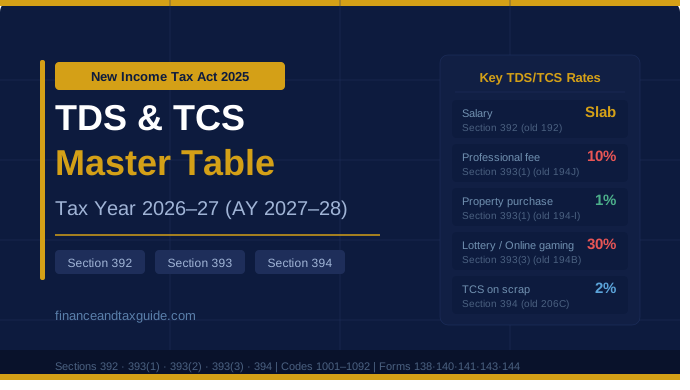
The New Income Tax Act 2025 has completely overhauled India’s TDS (Tax Deducted at Source) and TCS (Tax Collected at Source) framework. Effective from Tax Year 2026-27, all old TDS sections (like 192, 194A, 194C, 194J etc.) are now renumbered and reorganised under new sections 392, 393, and 394. This is the most comprehensive restructuring of TDS/TCS provisions since the Income Tax Act 1961. In this blog post, we present the complete and updated TDS TCS Master Table FY 2026-27 for Tax Year 2026-27, covering all payment categories, new section numbers, applicable rates, threshold limits, and the new form numbers under the new Income Tax Act 2025. Whether you are a CA, accountant, tax professional, or individual taxpayer — this master reference will help you stay fully compliant. ⚠️  IMPORTANT: This table is based on the New Income Tax Act 2025 (effective Tax Year 2026-27). The old section numbers (192, 194A, etc.) are replaced by new sections (392, 393, 394). Always refer to the official Act for compliance. 1. What is TDS (Tax Deducted at Source)? TDS stands for Tax Deducted at Source. It is a mechanism under the Income Tax Act where the payer (deductor) deducts a specified percentage of tax from the payment made to the payee (deductee) and deposits it with the Government of India. The deductee can claim credit for TDS deducted while filing their Income Tax Return (ITR). TDS applies to a wide variety of payments including salaries, interest, rent, professional fees, contract payments, commission, dividends, lottery winnings, and more. Under the New Income Tax Act 2025, all TDS provisions are now consolidated under Section 392 and 393. What is TCS (Tax Collected at Source)? TCS stands for Tax Collected at Source. Unlike TDS (deducted by payer), TCS is collected by the seller from the buyer at the time of sale of specified goods or services. Common examples include sale of scrap, timber, minerals, motor vehicles above ₹10 lakh, and remittances under Liberalised Remittance Scheme (LRS). Under the new Act, TCS provisions are covered under Section 394. 2. Key Changes in TDS/TCS Under New Income Tax Act 2025 The New Income Tax Act 2025 has introduced sweeping changes to how TDS and TCS are structured. Here are the most critical changes every taxpayer and professional must know: 3. New Section Numbers: Old vs New Mapping Here is a quick reference table mapping old TDS/TCS sections to the new sections under the Income Tax Act 2025: Old Section New Section Category 192 (Salary) 392 TDS on Salary 192A (PF Withdrawal) 392 TDS on PF Withdrawal 193 (Interest on Securities) 393(1) Interest Income 194A (Interest from Banks) 393(1) Interest Income 194C (Contracts) 393(1) Contract Payments 194D (Insurance Commission) 393(1) Commission 194H (Other Commission) 393(1) Commission 194-I (Rent) 393(1) Rent 194-IA (Immovable Property) 393(1) Immovable Property 194J (Professional/Technical) 393(1) Professional & Technical 194K (Mutual Fund) 393(1) Specified Mutual Fund 194M (Contract/Professional – Large Payments) 393(1) Contract/Professional 194N (Cash Withdrawal) 393(3) Payment to any person 194O (TDS by ECO) 393(1) Others 194P (Specified Senior Citizen) 393(1) Others 194Q (Purchase of Goods) 393(1) Others 194R (Perquisite/Benefit) 393(1) Others 194S (VDA/Crypto) 393(1) Others 194T (Payment to Partner) 393(3) Payment to any person 194B (Lottery) 393(3) Payment to any person 194BA (Online Gaming) 393(3) Payment to any person 206C (TCS) 394 TCS 4. TDS Master Table – Salary & PF Withdrawal (Section 392) Salary TDS and PF withdrawal TDS now fall under the umbrella of Section 392 of the new Income Tax Act 2025. The applicable rates remain based on average slab rates for salary, and 10% for PF withdrawal above the threshold. New Section Code Category Nature of Payment Rate Threshold New Form 392 (Old: 192) 1001 TDS on Salary Govt Employee (non-union) Average Rate (Slab) As per slab Form 138 (Old: 24Q) 392 (Old: 192) 1002 TDS on Salary Private Employee Average Rate (Slab) As per slab Form 138 392 (Old: 192) 1003 TDS on Salary Indian Govt Employee Average Rate (Slab) As per slab Form 138 392 (Old: 192A) 1004 TDS on PF Withdrawal PF Withdrawal 10% ₹50,000 Form 140 (Old: 26Q) Key point: For salary TDS, the employer must consider the employee’s regime choice (New or Old Tax Regime) while computing average TDS rate. No change in this process under the new Act. 5. TDS Master Table – Commission & Rent (Section 393(1)) TDS on commission and rent continues with largely the same rates but is now governed by Section 393(1) with new transaction codes. New Section Code Category Nature of Payment Rate Threshold New Form 393(1) [194D] 1005 Commission Insurance Commission 2% ₹20,000 Form 140 393(1) [194H] 1006 Commission Other than Insurance 2% ₹20,000 Form 140 393(1) [194-IB] 1007 Rent – Individual/HUF Rent by Individual/HUF 2% ₹50,000 pm Form 141 393(1) [194-IB] 1008 Rent – Specified Person Plant & Machinery 2% ₹50,000 pm Form 140 393(1) [194-I] 1009 Rent – Specified Person Building 10% ₹50,000 pm Form 140 TDS on Rent – Individual/HUF (Form 141): When an individual or HUF pays rent exceeding ₹50,000 per month, TDS @ 2% is deducted. This is deposited using Form 141 (previously Form 26QC). No TAN required for individuals/HUF paying rent. 6. TDS Master Table – Immovable Property (Section 393(1)) TDS on purchase and transfer of immovable property is an important compliance requirement for homebuyers. The rates and thresholds under the new Act are as follows: New Section Code Category Nature of Payment Rate Threshold New Form 393(1) [194-I] 1010 Immovable Property Transfer of Immovable Property (Non-agricultural) 1% ₹50 Lakh Form 141 (Old: 26QB) 393(1) [194-IA] 1011 Immovable Property Joint Development Agreement 10% No threshold Form 140 393(1) [194-IC] 1012 Immovable Property Compensation / Enhanced Compensation 10% ₹5 Lakh Form 140 Homebuyers Note: If you are buying a property worth ₹50 lakh or more, you must deduct TDS @ 1% from the sale consideration and deposit it using Form 141. The seller’s PAN is mandatory. 7. TDS Master Table – Interest Income (Section 393(1)) TDS on interest income has been

GST Return Filing Due Dates
Tax

GST Return Filing Due Dates for April 2026: Full Schedule

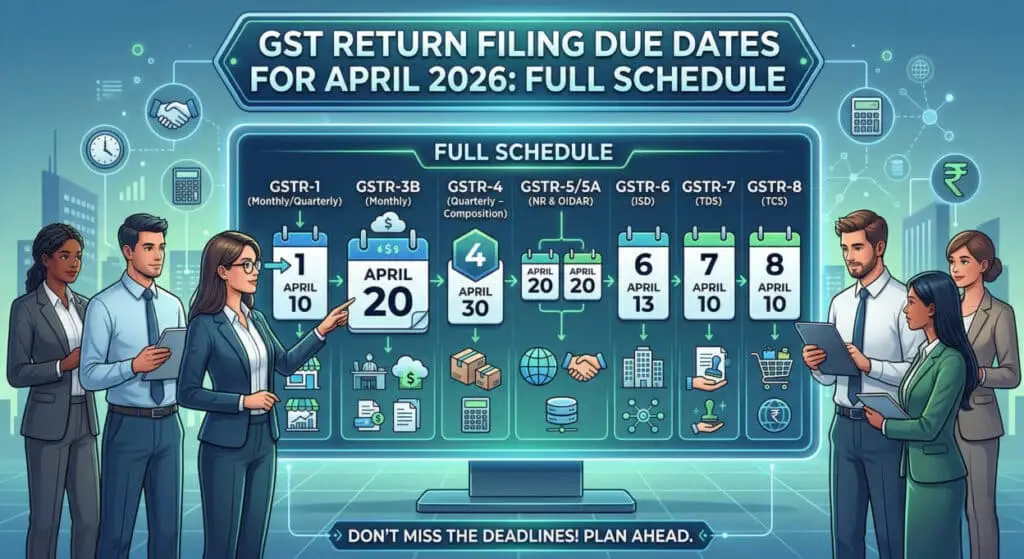
GST compliance is a monthly discipline, and missing a due date — even by a day — means interest and penalties start accumulating. Here’s a complete, clear calendar of all GST return filing due dates for April 2026, so you can plan ahead rather than scramble. April 2026 GST Due Date Calendar Due Date Return Who Files Period 11 April 2026 GSTR-1 Regular monthly taxpayers (turnover >₹5 Cr) March 2026 13 April 2026 GSTR-1 (IFF) QRMP scheme taxpayers (optional B2B upload) March 2026 20 April 2026 GSTR-3B Regular monthly filers (turnover >₹5 Cr) March 2026 22 April 2026 GSTR-3B QRMP category 1 states (turnover up to ₹5 Cr) Q4 FY 2025-26 24 April 2026 GSTR-3B QRMP category 2 states (turnover up to ₹5 Cr) Q4 FY 2025-26 30 April 2026 GSTR-4 Composition scheme taxpayers FY 2025-26 (Annual) 30 April 2026 GSTR-7 TDS deductors under GST March 2026 30 April 2026 GSTR-8 TCS collectors (e-commerce operators) March 2026 Late Filing Penalties Return Late Fee per Day Maximum Late Fee GSTR-1 ₹50 (₹25 CGST + ₹25 SGST) ₹10,000 (₹5,000 each) GSTR-3B ₹50 (₹25+₹25) + 18% interest on tax ₹10,000 (₹5,000 each) GSTR-3B (Nil return) ₹20 (₹10 CGST + ₹10 SGST) ₹500 GSTR-4 ₹50 per day ₹2,000 GSTR-1: What to Include for March 2026 Your GSTR-1 for March 2026 (filed by 11th April) must include all outward supply invoices for March — both B2B and B2C. Given that March is the financial year closing month, it’s crucial that all invoices are correctly entered, especially any last-minute year-end sales or credit notes. GSTR-3B: Key Points for March 2026 Filing March’s GSTR-3B is the most scrutinised filing of the year because it closes out FY 2025-26. Ensure you reconcile GSTR-1 with GSTR-3B, claim any ITC inadvertently missed during the year, and correctly reverse any ITC on credit notes received. Save the Dates, File On Time GST compliance is not just about avoiding penalties — consistent on-time filing builds your credibility as a taxpayer and avoids unnecessary scrutiny. Set calendar reminders today for each of the April 2026 due dates listed here. With March year-end closing taking up your attention, it’s easy to let April deadlines slip. To understand how GST fits into your overall accounting workflow, see our Complete Guide to Accounting in India 2026.

How to File ITR for FY 2025-26
Tax

How to File ITR for FY 2025-26: Step-by-Step Guide for Salaried Employees

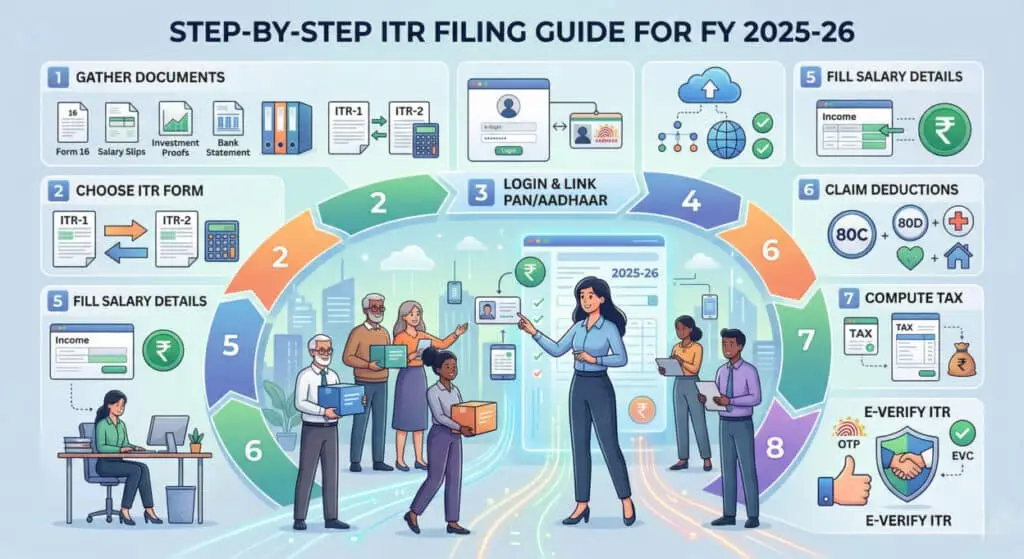
Filing your income tax return doesn’t have to be a stressful, last-minute scramble. If you’re a salaried employee, the process is more straightforward than you think — provided you start early, gather the right documents, and follow the steps in order. Here’s your no-nonsense guide to filing ITR for FY 2025-26. Documents You’ll Need Form 16 — Your employer’s TDS certificate. Most important document. Shows total salary paid and TDS deducted. Form 26AS and AIS — Download from the Income Tax portal. Shows all tax credits associated with your PAN. Bank statements / Interest certificates — Savings account interest is taxable. For FDs, get the interest certificate from your bank. Investment proofs — For deductions under 80C, 80D, etc. Home loan statement — If claiming deductions for principal and/or interest. calculate your income tax on salary before filing Note for FY 2025-26 filers: This ITR will be filed under the Income Tax Act 1961, not the New Income Tax Act 2026. The new Act governs FY 2026-27 onwards. The process and forms remain as you know them. Step-by-Step: Filing ITR on the Portal Step 1: Log in to incometax.gov.in Log in using your PAN (your user ID), password, and OTP sent to your registered mobile. If first time, register using your PAN. Step 2: Download Your Pre-Filled Data Go to e-File > Income Tax Returns > File Income Tax Return. Select Assessment Year 2026-27. Choose Online mode. Step 3: Select the Right ITR Form For most salaried employees with salary income and FD interest: ITR-1 (Sahaj). If you have capital gains or more than one house property, you need ITR-2. Step 4: Choose Your Tax Regime Decide whether to file under old regime (with deductions) or new regime (lower rates, fewer deductions). The portal shows a comparison to help. Step 5: Verify Pre-Filled Details and Add Missing Income Review salary details against Form 16. Add income not pre-filled: savings bank interest, FD interest, freelance income if any. Step 6: Enter Deductions (Old Regime Only) If in old regime, enter 80C investments, 80D premiums, HRA exemption, and other eligible deductions. Step 7: Compute Tax and Check for Refund / Demand Portal computes automatically. If TDS exceeded actual liability, you get a refund. If less, pay self-assessment tax before filing. Step 8: Submit and e-Verify Submit the return, then e-verify immediately. Use Aadhaar OTP (fastest). Without e-verification, your return is considered not filed. Common Mistakes That Cause Notices Not reporting savings account interest — the bank reports this, and if it’s missing from your return, you may get a notice. Not reconciling Form 26AS — if TDS credit in 26AS doesn’t match what you’re claiming, the return gets flagged. Forgetting to e-verify — the most common reason returns go unprocessed. ITR Filing Deadline for FY 2025-26 The last date to file without penalty is 31st July 2026 for most salaried individuals. Belated returns can be filed till 31st December 2026 with a penalty of up to ₹5,000. Early filers get faster refunds. Start Now, Stress Less The ITR filing process for FY 2025-26 is smoother than ever with pre-filled data and the improved portal. The biggest mistake taxpayers make is waiting until July. Start gathering documents now, cross-check your Form 26AS, and you’ll be done in under an hour when the forms open.

Section 80C
Tax

Section 80C Deductions in New Income Tax Act 2026: What Changed?

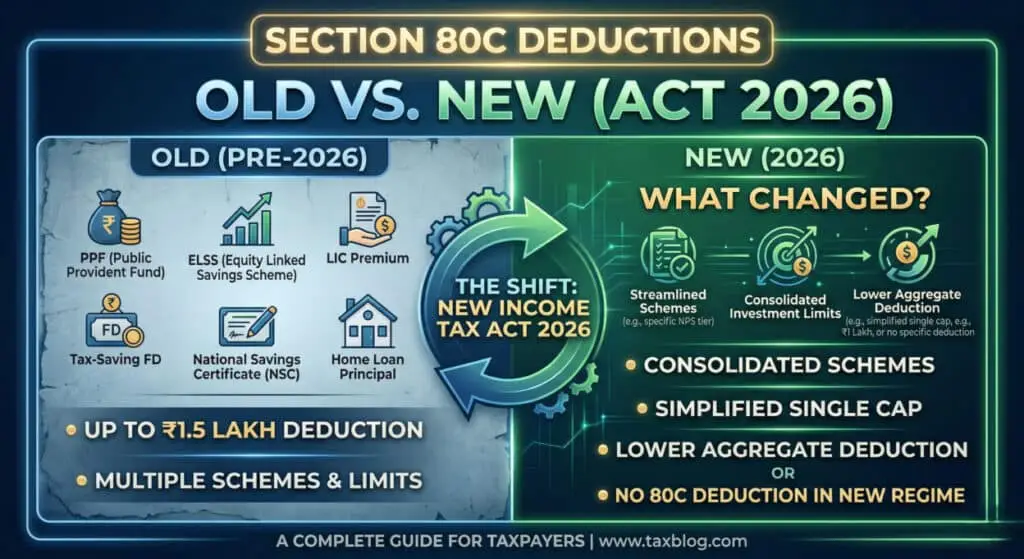
For most Indian taxpayers, Section 80C has been the backbone of tax planning for over two decades. PPF deposits, ELSS investments, life insurance premiums, home loan principal repayment — all neatly packed into a ₹1.5 lakh annual deduction. With the New Income Tax Act 2026 now effective, here’s exactly what’s changed and what remains. Does Section 80C Still Exist? This is the question everyone is asking. The old Act’s Section 80C has been renumbered and restructured in the New Income Tax Act 2026. The label ’80C’ as we know it from the 1961 Act no longer exists as such — but the substance of the deduction for qualifying investments and expenditures largely survives under a new section number within the new Act’s cleaner structure. how 80C reduces your taxable salary income Think of it like this: the phone number changed, but the person on the other end is largely the same. Important: The deduction for qualifying investments (PPF, ELSS, LIC, home loan principal, etc.) continues to exist under the New Income Tax Act 2026. The key change is that it’s available ONLY in the old tax regime — not in the new regime with lower rates. Eligible Investments Under 80C (New Act Equivalent) Investment / Expenditure Status Under New Act Deduction Limit PPF (Public Provident Fund) Continues Within ₹1,50,000 combined limit ELSS Mutual Funds Continues Within ₹1,50,000 limit Life Insurance Premium Continues (revised conditions) Within ₹1,50,000 limit Home Loan Principal Repayment Continues Within ₹1,50,000 limit Employee PF Contribution Continues Within ₹1,50,000 limit NSC (National Savings Certificate) Continues Within ₹1,50,000 limit SSY (Sukanya Samriddhi Yojana) Continues Within ₹1,50,000 limit 5-Year Tax Saver FD Continues Within ₹1,50,000 limit Tuition Fees (2 children) Continues Within ₹1,50,000 limit ULIP (certain plans) Modified conditions Subject to annual premium cap What Has Changed? Life Insurance Premium Conditions Tightened Policies issued after April 2023 where the annual premium exceeds ₹5 lakh: the maturity amount becomes taxable. This condition is now clearly embedded in the new Act’s text rather than buried in an amendment circular. ULIP Rules Clarified ULIPs issued after February 2021 where the annual premium exceeds ₹2.5 lakh are taxable at maturity. The new Act explicitly codifies this. Deadline: Act Before 31st March For FY 2025-26, the deadline to make 80C investments is 31st March 2026. PPF deposits, ELSS purchases, NSC investments — all must be completed before end of business on March 31st. The 80C Deduction Is Alive — But Regime-Dependent The New Income Tax Act 2026 has not killed Section 80C in substance. The deduction survives under a new section number and cleaner language. What the new Act reinforces is the fundamental trade-off: if you want deductions like 80C, stay in the old regime. If you want lower slab rates, move to the new regime and give up most deductions.

Scroll to Top