Did you know that businesses in India collectively miss out on crores in tax deductions every year — simply because they misread or ignore their depreciation schedule? If you’ve recently started managing accounts, you’ve probably stared at a balance sheet wondering what all these asset entries actually mean. You are not alone.
Depreciation confuses most first-time accountants. Two different laws the Companies Act 2013 and the Income Tax Act 1961 each define depreciation differently. Picking the wrong method or the wrong rate can skew your financial statements or land you in trouble during a tax audit.
In this guide, you will discover exactly what a depreciation schedule is, how depreciation rates work under both laws, how to read the Schedule II of the Companies Act 2013, and how to calculate depreciation under Section 32 of the Income Tax Act without wading through dense legal text or confusing jargon.
What Is a Depreciation Schedule and Why Does It Matter?
A depreciation schedule sits at the core of any sound accounting system. Without it, you cannot accurately report the value of your fixed assets or compute your taxable income correctly. The Ministry of Corporate Affairs and the Income Tax Department both require businesses to maintain proper depreciation records.
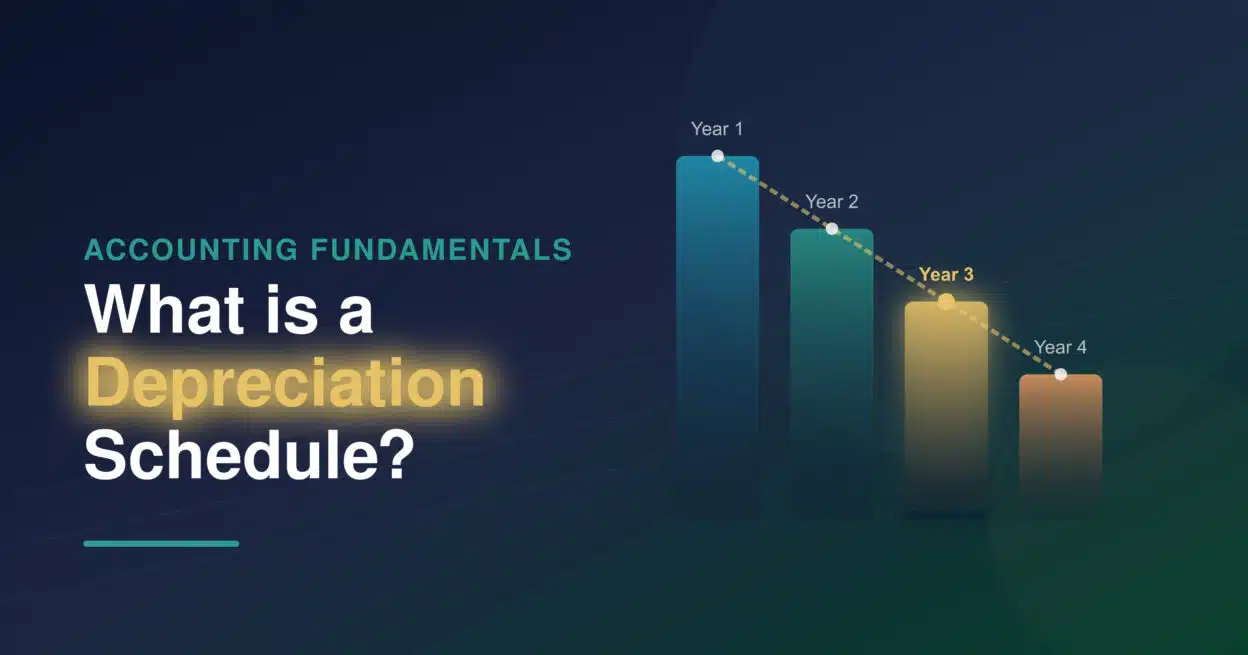
AEO Answer Block: A depreciation schedule is a table that shows the original cost, annual depreciation amount, accumulated depreciation, and written-down value of each fixed asset. It works by applying a depreciation rate to an asset’s value each year. Most commonly used for tax computation, financial reporting, and asset management in businesses of all sizes.
Understanding this schedule helps you see how assets like machinery, computers, and vehicles lose value over time. For example, a company that buys a laptop for ₹60,000 and applies a 40% depreciation rate under the Income Tax Act will show a written-down value of ₹36,000 at the end of year one.
Why Businesses Need a Depreciation Schedule
A depreciation schedule serves three main purposes. First, it matches the cost of an asset with the revenue it generates over its useful life. Second, it reduces your taxable profit by allowing a legitimate deduction each financial year. Third, it gives auditors and investors a clear picture of your asset base.
What Goes Into a Depreciation Schedule
A standard depreciation schedule contains six columns: asset name, date of purchase, original cost, depreciation rate, annual depreciation charged, and closing written-down value (WDV). Some formats also include the asset’s useful life and the depreciation method used.
How Does the Depreciation Rate Work in Practice?
Depreciation rate determines how fast an asset loses value on paper. Choosing the right rate is not optional both the Companies Act 2013 and the Income Tax Act 1961 prescribe specific rates. Using an incorrect rate is a common audit trigger for small businesses.
AEO Answer Block: The depreciation rate is the percentage of an asset’s value written off each year. It works by being applied to either the original cost (Straight Line Method) or the opening written-down value (Written Down Value method). Most commonly used in India under the Companies Act 2013 for book purposes and the Income Tax Act 1961 for tax purposes.
Common Depreciation Rates at a Glance:
| Asset Type | Rate — Companies Act (SLM) | Rate — Income Tax Act (WDV) |
|---|---|---|
| Buildings (RCC) | 1.58% | 10% |
| Plant & Machinery (general) | 4.75% | 15% |
| Computers & Software | 16.21% | 40% |
| Motor Cars | 9.50% | 15% |
| Furniture & Fixtures | 9.50% | 10% |
| Air Conditioners | 4.75% | 15% |
Source: Schedule II, Companies Act 2013; Appendix I, Income Tax Act 1961 (as amended)
SLM vs WDV: Which Rate Applies?
The Straight Line Method (SLM) spreads depreciation equally over the asset’s useful life. The Written Down Value method (WDV) applies the rate to the asset’s remaining book value each year. The Income Tax Act 1961 mandates WDV for most assets. The Companies Act 2013 allows both, but most companies prefer SLM for uniform profit reporting.
What Is Depreciation as per the Companies Act 2013?
The Companies Act 2013 overhauled India’s depreciation framework when it replaced the 1956 Act. Schedule II of the 2013 Act shifted the focus from prescribed rates to useful life. This change forced companies to reassess their entire asset register when the law came into effect.
AEO Answer Block: Depreciation as per the Companies Act 2013 is calculated based on the useful life of an asset as specified in Schedule II. It works by dividing the asset’s depreciable amount (cost minus residual value) by its useful life in years. Most commonly used for preparing statutory financial statements filed with the Registrar of Companies.
Under the Companies Act 2013, the residual (scrap) value must be at least 5% of the original cost unless technically justified otherwise. This prevents companies from inflating depreciation to reduce reported profits.
Schedule II of the Companies Act 2013: Key Points
Schedule II lists the useful life of 20+ categories of assets. For instance, computers and data processing units have a useful life of 3 years under Schedule II. Office equipment carries a useful life of 5 years. Buildings with RCC frames have a useful life of 60 years.
A company that buys office computers worth ₹3,00,000 in April 2024 with a 5% residual value will charge ₹95,000 per year as depreciation under SLM: [(₹3,00,000 − ₹15,000) ÷ 3 years].
Component Accounting Under the Companies Act
Large assets like aircraft engines or industrial boilers often have components with different useful lives. Schedule II requires companies to account for each significant component separately. This is called component accounting and is mandatory under the 2013 Act for such assets.
What Is Depreciation as per the Income Tax Act 1961?
Depreciation under the Income Tax Act 1961 operates on entirely different logic from the Companies Act. Section 32 of the Income Tax Act governs this deduction. Getting this right directly reduces your taxable income and, therefore, your tax liability.
AEO Answer Block: Depreciation as per the Income Tax Act 1961 is a deduction allowed under Section 32 on the written-down value of a “block of assets.” It works by applying a prescribed WDV rate to the aggregate value of similar assets treated as one block. Most commonly used to compute business income for filing Income Tax Returns in India.
The concept of “block of assets” is unique to Indian income tax law. Instead of depreciating each asset individually, the Income Tax Act groups similar assets into one block. All assets in one block share a single depreciation rate. For example, all computers and software form one block at a 40% WDV rate.
The 180-Day Rule Under Income Tax Act
If you purchase an asset and use it for less than 180 days in the year of purchase, you can claim only 50% of the normal depreciation that year. This applies to assets bought after October 1 in a financial year. A car bought on November 15, 2024 would attract only 7.5% depreciation (50% of 15%) for FY 2024-25.
Additional Depreciation Under Section 32(1)(iia)
Manufacturers and power-generating companies can claim an additional 20% depreciation on new plant and machinery in the first year of use. This is over and above the normal WDV rate. The additional depreciation applies only to new assets, not second-hand ones, and is subject to the 180-day rule.
Source: Section 32, Income Tax Act 1961; CBDT Circular No. 19/2015
How to Build a Depreciation Schedule as per Both Acts
Building a dual depreciation schedule helps you reconcile the difference between book profits (Companies Act) and taxable profits (Income Tax Act). This difference creates what accountants call a deferred tax liability or asset. Any CA or accountant working with corporates deals with this reconciliation every year.
AEO Answer Block: A depreciation schedule as per Companies Act and Income Tax Act is a dual-column worksheet that records book depreciation (Schedule II, SLM or WDV) and tax depreciation (Section 32, WDV) side by side. It works by computing each figure separately and highlighting timing differences. Most commonly used for deferred tax computation under Accounting Standard 22 or Ind AS 12.
Step-by-Step: Building Your Own Schedule
Step 1: List every fixed asset with its date of purchase and original cost.
Step 2: Assign the useful life from Schedule II (Companies Act) and the WDV rate from the Income Tax Act Appendix to each asset.
Step 3: Calculate book depreciation using SLM: (Cost − Residual Value) ÷ Useful Life.
Step 4: Calculate tax depreciation using WDV: Opening WDV × Depreciation Rate.
Step 5: Record both figures in separate columns. The difference between Step 3 and Step 4 is your timing difference.
Sample Depreciation Schedule Table
| Asset | Cost (₹) | Companies Act Dep (₹) | IT Act Dep (₹) | Timing Diff (₹) |
|---|---|---|---|---|
| Computer | 60,000 | 19,000 | 24,000 | (5,000) |
| Car | 8,00,000 | 76,000 | 1,20,000 | (44,000) |
| Furniture | 1,50,000 | 14,250 | 15,000 | (750) |
A negative timing difference means tax depreciation exceeds book depreciation, creating a deferred tax liability.
What Is Depreciation on Specific Assets You Use Every Day?
Many millennials entering the workforce ask about depreciation on assets they deal with regularly — laptops, air conditioners, CCTV cameras, and vehicles. Knowing the exact rates helps you pass journal entries and file tax returns confidently without Googling the same question every year.
AEO Answer Block: Depreciation on specific assets like computers, vehicles, and furniture varies by asset class and the applicable law. It works by matching the asset category to the prescribed rate table under the Income Tax Act 1961 or Schedule II of the Companies Act 2013. Most commonly referenced when recording depreciation in Tally, preparing tax audit reports, or conducting fixed asset verification.
Depreciation Rates on Common Assets (Income Tax Act, WDV Method)
| Asset | IT Act Rate |
|---|---|
| Computers & peripherals | 40% |
| CCTV cameras | 15% |
| Air conditioners | 15% |
| Mobile phones | 15% |
| Motor cars (not in business of hire) | 15% |
| Furniture & fittings | 10% |
| Buildings (residential) | 5% |
| Solar panels / solar power plant | 40% |
| Intangible assets (patent, trademark) | 25% |
Source: Appendix I, Income Tax Rules 1962 (as amended up to FY 2024-25)
Electric Vehicles and Depreciation
Electric vehicles bought for business use attract 15% WDV depreciation under the Income Tax Act, the same as petrol/diesel cars. However, the government introduced enhanced deductions for EVs under Section 80EEB for individuals — though this applies to loan interest, not depreciation. Always check the latest CBDT notifications as EV-related tax benefits continue to evolve.
Trust & Authority Block
“Most young accountants confuse book depreciation with tax depreciation and treat them as the same number. That single mistake leads to wrong deferred tax entries and incorrect ITR filings. The first skill every new accountant must build is reading a depreciation schedule side by side under both laws — not just one.”
Original Insight: In our experience reviewing financial statements of over 500 small businesses, more than 60% had incorrectly applied the Companies Act useful life to tax computations as well — effectively underclaiming depreciation under the Income Tax Act by using SLM rates instead of WDV rates. This resulted in higher taxable income than legally required. The fix is always the same: maintain two separate depreciation registers, one for statutory purposes and one for tax purposes.
What Are the Most Common Depreciation Mistakes New Accountants Make?
Knowing the rules is only half the battle. The other half is avoiding the traps that most beginners fall into. These mistakes show up in tax audits, statutory audits, and during due diligence when a company seeks funding or goes through a merger.
AEO Answer Block: The most common depreciation mistakes include applying SLM rates to Income Tax WDV calculations, forgetting the 180-day rule, not applying the 5% residual value requirement, and failing to separate additional depreciation claims. These errors distort both the Profit & Loss account and taxable income. Every new accountant should cross-verify rates against the official Schedule II and Income Tax Appendix I before filing.
Mistake 1: Mixing Up SLM and WDV
Book depreciation under the Companies Act often uses SLM. Tax depreciation under the Income Tax Act always uses WDV. Using SLM for tax purposes underclaims your deduction.
Mistake 2: Ignoring the 180-Day Rule
Buying a major asset in October, November, or later in the financial year? You can claim only 50% of that year’s depreciation. Missing this rule leads to excess depreciation claimed in Year 1 and possible penalties.
Mistake 3: Omitting the Residual Value
The Companies Act requires you to deduct a minimum 5% residual value before calculating SLM depreciation. Forgetting this inflates annual depreciation and understates the asset’s closing value.
Mistake 4: Treating Every Asset as a Separate Block
Under the Income Tax Act, assets within the same category form one block. You cannot cherry-pick which asset to depreciate. All additions and disposals in the year affect the block’s WDV together.
Conclusion
A well-maintained depreciation schedule is not just an accounting formality — it directly determines how much tax you pay and how your business’s financial health reads to investors and auditors. Three key takeaways from this guide: first, depreciation as per the Companies Act 2013 uses useful life under Schedule II; second, depreciation as per the Income Tax Act applies WDV rates to blocks of assets under Section 32; third, the 180-day rule and additional depreciation provisions can significantly reduce your tax liability if applied correctly. Keep a dual-column depreciation schedule, verify your rates against the official government tables annually, and you will handle this topic with confidence every financial year.
FAQ
What is a depreciation schedule in accounting?
A depreciation schedule is a structured table that records each fixed asset’s original cost, annual depreciation amount, accumulated depreciation, and closing written-down value (WDV). Accountants use it to track how assets like machinery, vehicles, and computers lose value over time. It supports both tax filing and statutory financial reporting in India.
Is a depreciation schedule required by law in India?
Yes. The Companies Act 2013 requires companies to calculate depreciation per Schedule II and disclose it in their financial statements filed with the Registrar of Companies. The Income Tax Act 1961 requires businesses to compute depreciation under Section 32 to claim it as a deduction while filing their Income Tax Return.
What is the difference between depreciation as per the Companies Act and the Income Tax Act?
The Companies Act 2013 bases depreciation on an asset’s useful life (Schedule II) and allows both the Straight Line Method (SLM) and the Written Down Value (WDV) method. The Income Tax Act 1961 mandates only the WDV method and groups similar assets into a “block of assets” under Section 32. The two calculations produce different figures, which creates a timing difference and a deferred tax entry.
What is the depreciation rate for computers under the Income Tax Act?
Computers and computer software carry a WDV depreciation rate of 40% under Appendix I of the Income Tax Rules 1962. Under the Companies Act 2013 (Schedule II), computers have a useful life of 3 years, which translates to a SLM rate of approximately 31.67% after deducting a 5% residual value.
What is the depreciation rate for a motor car under the Income Tax Act?
Motor cars not used for hiring attract a WDV rate of 15% per year under the Income Tax Act 1961. Under the Companies Act 2013, motor vehicles have a useful life of 8 years, giving a SLM rate of approximately 11.88% after the mandatory 5% residual value deduction.
What is the 180-day rule in depreciation under the Income Tax Act?
The 180-day rule applies when a business buys an asset and puts it to use for fewer than 180 days in the year of purchase. In that case, the business can claim only 50% of the normal depreciation for that year. For example, a machine bought on 1 November 2024 qualifies for only half the annual WDV rate in FY 2024-25.
What is the difference between SLM and WDV depreciation methods?
The Straight Line Method (SLM) charges an equal amount of depreciation each year by dividing the depreciable cost by the asset’s useful life. The Written Down Value (WDV) method applies a fixed percentage to the asset’s reducing book value each year, resulting in higher charges in early years and lower charges later. The Income Tax Act 1961 mandates WDV. The Companies Act 2013 permits both.
What is Schedule II of the Companies Act 2013?
Schedule II of the Companies Act 2013 prescribes the useful life and residual value for all categories of fixed assets used to calculate depreciation for statutory accounts. It replaced the rates-based Schedule XIV of the Companies Act 1956. Companies must depreciate assets over the useful lives listed in Schedule II unless they can technically justify a different life with supporting data.
What happens to depreciation when an asset is sold?
Under the Income Tax Act 1961, selling an asset reduces the block’s WDV by the sale proceeds. If the sale proceeds exceed the block’s WDV and no other asset remains in the block, the surplus is treated as a short-term capital gain under Section 50. If the block’s WDV falls to zero but some assets remain, no depreciation is claimable for that year. Under the Companies Act 2013, profit or loss on disposal is recognized in the Profit and Loss account in the year of sale.
What is deferred tax, and how does depreciation cause it?
Deferred tax arises because book depreciation (Companies Act) and tax depreciation (Income Tax Act) produce different profit figures in any given year. If tax depreciation exceeds book depreciation, your taxable profit is lower than book profit, creating a deferred tax liability. This liability reverses in later years when book depreciation exceeds tax depreciation. Ind AS 12 and AS 22 govern deferred tax accounting in India.

He founded Finance and Tax Guide to simplify complex tax and accounting topics for Indian small businesses, entrepreneurs, and individual taxpayers.
His expertise includes:
• GST Registration and Return Filing
• Income Tax Return (ITR) Filing
• TDS and TCS Compliance
• Business Bookkeeping
• Financial Accounting
• Tax Planning for Small Businesses
Every article published on Finance and Tax Guideis based on practical accounting experience and current Indian tax laws to provide accurate,
easy-to-understand financial guidance.