Let’s be honest. For most finance leaders, the annual budgeting process is a necessary evil. ( predictive analytics for budget )
It’s a grueling, months-long marathon of wrangling spreadsheets, chasing department heads, and debating assumptions. You and your team spend countless hours meticulously crafting a financial plan for the next 12 months.
And then, by February, it’s already obsolete.
A new competitor enters the market. A critical supply chain link breaks. A sudden shift in consumer behavior or a new piece of legislation throws all your careful assumptions out the window. Your beautifully crafted budget, the one that was supposed to be your company’s North Star, is now nothing more than a historical document.
This is the fundamental failure of traditional budgeting. It’s a static snapshot in a world that is anything but. It’s like trying to navigate a winding mountain road at night by only looking in the rearview mirror.
As we rocket toward 2026, this broken process isn’t just inefficient; it’s a critical business liability. We’re operating in an era of unprecedented volatility. Economic uncertainty, rapid AI disruption, and intense pressure to “do more with less” mean that “what we did last year + 5%” is a recipe for disaster.
Enter predictive analytics.
This isn’t just another tech buzzword. It’s a fundamental shift in how we plan, forecast, and run our businesses. It’s the difference between guessing what’s around the corner and using a high-powered GPS that models the traffic, weather, and road conditions ahead.
This article isn’t just a high-level overview. It’s your comprehensive, 5,000-word playbook for building a smarter, more resilient, and truly predictive 2026 budget. We’ll cover the why, the what, and the how—from the specific models you can use to the real-world challenges you’ll face.
The Great Divide: Why Traditional Budgeting Fails in 2026
Before we build the new, we have to be brutally honest about why the old is broken. The traditional budgeting process, born in an era of relative stability, is fundamentally unequipped for the 21st century. Its flaws are no longer just annoyances; they are anchors holding your business back.
The “Rearview Mirror” Problem
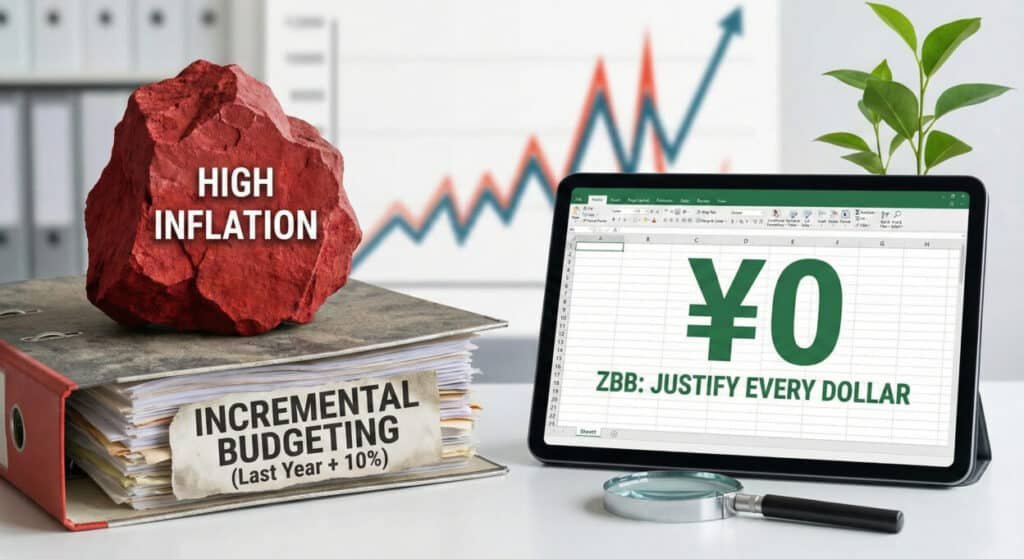
The most glaring flaw in traditional budgeting is its reliance on historical data. The entire process is often a negotiation based on last year’s actuals. “You spent $100,000 on marketing last year, so this year you get $105,000.”
This approach makes one massive, fatal assumption: that the future will look just like the past.
In 2026, that assumption is laughable.
- Market Dynamics: Customer preferences shift in weeks, not years.
- Economic Volatility: Inflation, interest rates, and global events create a constantly changing landscape.
- Competitive Threats: New, agile competitors can emerge and scale faster than ever before.
Basing your 2026 budget on 2025 data is like planning a cross-country trip using a map from 1990. You’re missing all the new highways, all the permanent road closures, and all the new destinations.
The Time and Resource Drain
Let’s talk about the process itself. For most FP&A (Financial Planning & Analysis) teams, “budget season” is a synonym for “misery.”
A 2023 McKinsey study noted that finance teams can spend 20% to 30% of their time just on number-crunching and manual data aggregation.
This is a catastrophic waste of your most valuable asset: your team’s strategic brainpower. Instead of analyzing trends, partnering with business units, and identifying growth opportunities, your best people are stuck in spreadsheet hell, correcting formula errors, and reconciling conflicting versions of the truth.
Human Touch: We’ve all been there. It’s 10 PM on a Tuesday, and you’ve found a #REF! error in a spreadsheet that links to 15 other tabs, and the entire budget is now unbalanced. This manual, error-prone process isn’t just slow; it’s fragile.
The “Set It and Forget It” Trap
After months of work, the budget is finally approved. Everyone breathes a sigh of relief, the document is saved to a shared drive, and… it’s largely ignored.
Because it’s static, the budget becomes a tool for judgment, not a tool for navigation. Departments are measured against a number they all know is wrong. This creates a toxic culture of “hitting the number” rather than “making the right decision.”
When a real-time event happens—say, a 20% spike in raw material costs—the budget is useless. You can’t adjust it. You can’t model the ripple effects. You’re flying blind, forced to make gut-feel decisions. This is where predictive analytics flips the script entirely.
What Is Predictive Analytics, Really? (Beyond the Buzzwords)
Now that we’ve established the “why,” let’s clarify the “what.” “Predictive analytics” sounds complex, but the concept is simple.
Simple Definition: Predictive analytics is the practice of using data (both historical and current) combined with statistical techniques, machine learning (ML), and artificial intelligence (AI) to find hidden patterns and forecast what is likely to happen next.
It’s the engine behind Netflix recommendations (“people who watched this also liked…”), a credit card fraud alert (“this transaction seems unusual…”), and, increasingly, the modern finance department.
How It’s Different from Simple Forecasting
You might be thinking, “We already do forecasting. How is this different?” It’s a great question. The difference is in the complexity and the output.
Traditional Forecasting
- What it does: Typically uses historical, internal data to project a single variable forward.
- The model: Often a simple linear regression or a moving average.
- The question it answers: “Our sales grew 8% per quarter for the last two years. If that trend continues, what will our sales be in Q3?”
- The limitation: It’s a one-dimensional, “all-else-being-equal” view.
Predictive Analytics
- What it does: Uses multiple, complex data sets (internal and external) to model the relationships between variables.
- The model: Uses advanced algorithms like multiple regression, decision trees, and neural networks.
- The question it answers: “What will our Q3 sales be if our main competitor lowers their price 10%, we increase our digital ad spend by 15% in the Northeast, and economic indicators predict a 2% drop in consumer discretionary spending?”
- The power: It doesn’t just give you a single number. It gives you a range of outcomes and identifies the key drivers influencing those outcomes.
Traditional forecasting tells you what might happen. Predictive analytics tells you why it will happen and what you can do to change it.
The “Why”: Unlocking the Tangible Benefits of a Smarter Budget
Moving to a predictive model isn’t just an IT upgrade. It’s a strategic transformation that delivers clear, tangible benefits. This is what you show your CEO and board when you ask for the investment.
Benefit 1: Achieve Surgical Accuracy in Your Forecasts
This is the most obvious win. By analyzing more data points and understanding complex, non-linear relationships, predictive models are simply more accurate than human-driven, spreadsheet-based forecasts.
A retail company, for example, can move beyond simple seasonality. It can build a model that predicts demand for a specific product in a specific store by factoring in:
- Historical sales, yes, but also…
- Local weather forecasts (e.g., umbrella sales spike when rain is predicted 3 days out)
- Competitor promotions
- Local events (e.g., a street festival or a big game)
- Social media sentiment
This level of accuracy, as shown in case studies, can reduce inventory costs by 20% or more and cut stockouts by 30%, directly impacting the bottom line.
Benefit 2: Move from Reactive to Proactive with “What-If” Scenarios
This is where the budget becomes a living tool. Instead of a static number, your 2026 budget becomes a dynamic model. This allows you to run “what-if” analyses in real-time.
- “What if… our cost of goods (COGS) increases by 7% due to a new tariff?” The model can instantly show you the impact on your gross margin and net income.
- “What if… we hire 10 new salespeople in Q2?” The model can project the cost, the likely ramp-up time, and the break-even point for that investment.
- “What if… a recession hits?” You can model a “pessimistic” scenario to understand where you’re most vulnerable and create contingency plans before it happens.
This capability moves the finance team from being “scorekeepers” to “strategic co-pilots,” guiding the business through volatility.
Benefit 3: Optimize Resource Allocation (Stop Guessing, Start Knowing)
Where should you spend your next dollar?
Traditional budgeting often allocates resources based on politics, “squeaky wheel” department heads, or simple historical precedent. Predictive analytics allows you to allocate resources based on data.
A predictive model can identify the drivers of profitability. You might discover that:
- Marketing Channel A has a 4x higher customer lifetime value (CLV) than Channel B, even though its initial cost-per-acquisition (CPA) is slightly higher. Decision: Shift budget from B to A.
- Hiring two senior engineers to fix a key product bottleneck will reduce customer churn by 3%, saving more money than the cost of their salaries. Decision: Approve the headcount.
You stop guessing where the best ROI is and start knowing.
Benefit 4: Identify and Mitigate Risks Before They Happen
Predictive models are, at their core, pattern-recognition engines. They are exceptionally good at spotting anomalies and weak signals that a human analyst might miss.
- Financial Risk: A model can monitor accounts receivable and flag customers whose payment patterns are changing, predicting a potential default before they miss an payment.
- Operational Risk: A model monitoring supply chain data can flag a Tier-2 supplier showing signs of distress, allowing you to find an alternative before your production line shuts down.
- Compliance Risk: AI models can analyze transactions in real-time to detect patterns consistent with fraud or non-compliance.
This transforms risk management from a quarterly review into a 24/7, automated function.
Benefit 5: Reclaim Your Team’s Time (From Data Entry to Strategic Partner)
Let’s go back to that McKinsey stat. When you automate 20-30% of your team’s most manual, soul-crushing work, you don’t just get a happier team (though you will). You get a smarter team.
That reclaimed time is now spent on:
- Strategic Analysis: Why did sales drop in that region?
- Business Partnership: Sitting with the marketing team to model the launch of a new product.
- Future-Proofing: Researching new opportunities and building more sophisticated models.
You elevate the entire function of finance, making it the central hub for data-driven decision-making in the entire organization.
The Core: Your 6-Step Playbook for Implementing Predictive Budgeting
This all sounds great. But how do you actually do it? This isn’t a switch you can flip overnight. It’s a journey. Here is a practical, 6-step playbook to get you from a static 2025 spreadsheet to a dynamic 2026 predictive model.
Step 1: Define Your “Why” (Start with the Problem, Not the Tech)
The most common mistake is to buy an expensive tool without a clear problem to solve. Don’t start by asking, “How can we use AI?” Start by asking, “What is the most valuable question we can’t answer?”
Get your finance, sales, marketing, and operations leaders in a room and find the pain.
- Bad Question: “Can we get a more accurate budget?” (Too vague)
- Good Question: “What are the 5 key drivers of our monthly sales, and how can we model them to get a 95% accurate revenue forecast 90 days out?”
- Bad Question: “How can we reduce expenses?” (Too vague)
- Good Question: “Can we build a model to predict employee churn in our call centers, and what would be the ROI of a 10% reduction?”
Your first project should be specific, high-impact, and measurable. Your goal is to get a quick win that builds momentum and proves the concept.
Step 2: Wrangle Your Data (The 80% Problem)
There’s a famous saying in data science: “80% of the work is data preparation. The other 20% is complaining about data preparation.” This is the hard truth. Your model is only as good as the data you feed it. “Garbage in, garbage out.”
This is the “janitorial” work, and it’s non-negotiable.
Identify Your Data Sources
You need to break down your data silos. A robust model uses data from all over:
- Internal Data:
- ERP/Accounting: Your general ledger, P&L, balance sheet, cash flow statements.
- CRM: Sales pipeline, lead sources, conversion rates, customer interactions.
- Operational: Inventory levels, production schedules, supply chain metrics.
- HRIS: Headcount, salaries, attrition rates, time-to-hire.
- External Data:
- Economic Indicators: GDP, inflation, unemployment, consumer confidence.
- Market Trends: Competitor pricing, industry reports, social media sentiment.
- Other: Weather, shipping rates, commodity prices, search trends.
The “ETL” Process: Clean, Standardize, and Integrate
This is where the magic (and the work) happens.
- Extract: Get the data out of these disparate systems.
- Transform: This is the cleaning part. You must:
- Standardize formats: (e.g., make sure “United States,” “USA,” and “U.S.” are all one category).
- Remove duplicates.
- Handle missing values: Decide whether to fill them in, average them, or discard them.
- Correct inaccuracies.
- Load: Load your newly cleaned and structured data into a single, central repository, like a data warehouse or a data lake.
You cannot skip this step. A 2% error in your historical data can lead to a 20% error in your forecast.
Step 3: Choose Your Weapons (A (Simple) Guide to Predictive Models)
Once you have clean data, you can start building. You don’t need a Ph.D. in statistics, but you do need to know the basic types of models and what they’re good for.
For Getting Started: Time-Series Analysis
- What it is: A model that looks at a single variable over time to find patterns (like seasonality, trends, and cycles).
- Best for: Forecasting stable, mature variables like overall product demand, website traffic, or seasonal expenses.
- Common Method: ARIMA (Autoregressive Integrated Moving Average).
For Understanding Relationships: Regression Models
- What it is: A statistical model that finds the mathematical relationship between variables.
- Best for: Answering “how much” questions.
- Simple Linear Regression: One independent variable (e.g., Ad Spend) and one dependent variable (e.g., Sales). It answers, “For every $1 I spend on ads, how many dollars in sales do I get back?”
- Multiple Regression: This is the sweet spot. Multiple independent variables (e.g., Ad Spend + Sales Team Headcount + Website Traffic) and one dependent variable (e.g., Sales). It answers, “Which lever has the biggest impact on sales?”
For Complex “What-Ifs”: Decision Trees & Random Forests
- What it is: A model that maps out potential outcomes as a series of “if-then” choices, just like a flowchart. A “Random Forest” is just a collection of hundreds of decision trees.
- Best for: Classification problems. “Will this customer churn? (Yes/No)” or “Is this transaction fraudulent? (Yes/No)”. This is incredibly powerful for budgeting expenses related to churn or fraud.
The Heavy Hitters: Machine Learning (ML) & Neural Networks
- What it is: These are advanced, AI-driven models that can find incredibly complex, non-linear patterns that no human ever could. A neural network is designed to “think” like a human brain.
- Best for: Highly complex systems with thousands of data inputs, like high-frequency stock trading, image recognition, or hyper-accurate demand forecasting for a global retailer.
- Note: You likely won’t build this yourself. You’ll use a tool that has this capability built-in.
Step 4: Build, Test, and Validate Your Model
You don’t just build one model and run with it. You build it, and then you attack it to see if it’s right.
- Training: You “train” your model on a chunk of your historical data (e.g., 2020-2023 data). You let it learn the patterns.
- Testing: You then “test” it on a set of data it’s never seen (e.g., 2024 data). You ask it to “predict” 2024 and then compare its predictions to what actually happened in 2024.
- Validation: This comparison tells you the accuracy of your model. A good model might be 95% accurate. If it’s 60% accurate, you go back, tweak the variables, clean your data more, or try a different model.
This iterative process builds confidence that your model can be trusted.
Step 5: Run Your Scenarios (The Fun Part)
Now your model is validated. This is where you bring it into the 2026 budgeting process. You stop asking, “What’s the budget?” and start asking, “What’s our plan?”
You work with department heads to run scenarios:
- Scenario A: The Baseline Budget (Most Likely): Based on the model’s most probable forecast.
- Scenario B: The Optimistic Case: “What if our new product launch is 50% more successful than expected? How much cash will we need to fund that growth? Where do we hire first?”
- Scenario C: The Pessimistic Case: “What if a recession hits and revenue drops 20%? What are our ‘trigger points’ for reducing T&E, pausing hiring, or cutting marketing spend?”
You now have a playbook for multiple futures. When Q2 2026 rolls around and reality unfolds, you’re not panicking. You’re just pulling the right playbook off the shelf.
Step 6: Integrate, Automate, and Evolve
The goal is to make this process continuous. This isn’t a “one and done” annual project.
- Integrate: Your model shouldn’t live in a data scientist’s laptop. It needs to be integrated into your company’s core financial planning (FP&A) software.
- Automate: Set up data pipelines that automatically feed new “actuals” into the model every day, week, or month.
- Evolve: Your model will get smarter over time. The more data it gets, the more accurate it becomes. You should also constantly be testing new external data sources. Did a competitor’s press release move the needle? Let’s add that to the model.
This is how you achieve a rolling forecast—a constantly updated, 12- or 18-month “living” budget that reflects reality.
Overcoming the Hurdles: The 4 Big Challenges and How to Beat Them
If this were easy, everyone would be doing it. It’s important to be realistic about the challenges you’ll face. Forewarned is forearmed.
Challenge 1: “Garbage In, Garbage Out” (The Data Quality Crisis)
As mentioned in Step 2, this is the #1 killer of predictive analytics projects. You will be shocked at how “dirty” your data is once you start looking. Different systems, manual entry, human error, and a lack of data governance create a massive mess.
- How to Beat It: Do not underestimate the time and resources needed for data cleaning. Invest in a data governance strategy. This means creating clear, company-wide rules for how data is entered, stored, and managed. It’s not glamorous, but it’s the foundation for everything.
Challenge 2: The “Black Box” Problem (Building Trust and Adoption)
You may build the world’s most accurate model, but if the Vice President of Sales doesn’t trust it, they won’t use it. If the model says “your top salesperson is going to miss quota by 15%,” but their “gut” says otherwise, the gut will win… unless you can prove it.
- How to Beat It:
- Explainability (XAI): Don’t just give them a number. Show your work. Use models (like Decision Trees) that are easy to visualize. Show which variables are driving the forecast (e.g., “The model is pessimistic because their pipeline has shrunk 20% and their key accounts are in a struggling industry”).
- Start Small: Get that quick win from Step 1. Prove the model’s value on a small scale.
- Involve Them: Build the model with the department heads, not for them. Ask them, “What data do you think drives your business?” Their insights will make the model better and give them a sense of ownership.
Challenge 3: The Talent Gap (Where to Find the “Data People”?)
You need people who can do this work. A traditional accountant may not be a data scientist, and a data scientist doesn’t understand the nuances of financial reporting. You need a blend of skills.
- How to Beat It:
- Upskill Internally: Your finance team is smart. They already have the business and financial acumen. Invest in training them in data analytics, SQL, and BI tools. This “Finance 2.0” skillset is invaluable.
- Hire for the Gaps: You may need to hire one or two “translators”—a Financial Data Analyst who lives at the intersection of finance and data science.
- Lean on Tech: Modern software (see next section) democratizes this. Many new tools have “no-code” or “low-code” AI and predictive capabilities built-in, so your team can leverage the power without having to write Python code.
Challenge 4: Choosing Your Tech (Buy vs. Build)
How do you run these models? Do you build a custom solution from scratch or buy an off-the-shelf platform?
- How to Beat It:
- “Build” (The DIY Route): This involves using open-source tools like Python or R and leveraging libraries like Facebook/Meta’s Prophet. This is powerful, flexible, and cheap (in software costs) but extremely expensive in talent and time. This is for large enterprises with mature data science teams.
- “Buy” (The Platform Route): This is the answer for 95% of businesses. You invest in a modern Corporate Performance Management (CPM) or FP&A platform that has predictive analytics built-in. This dramatically shortens your time-to-value.
The 2026 Predictive Budgeting Tech Stack (Tools of the Trade)
You cannot do this in Excel. Let me repeat that: you cannot do this in Excel. Excel is a fantastic tool, but it is not a database, it cannot handle big data, and its “forecasting” tools are rudimentary.
You need a modern platform. Your options generally fall into two categories.
All-in-One FP&A / CPM Platforms (The Integrated Solution)
These tools are designed to replace your Excel-based budgeting process. They handle data consolidation, workflow, reporting, and predictive forecasting all in one place.
- Anaplan: A powerful, flexible platform known for its “Connected Planning.” It’s great for large, complex enterprises that need to model sales, finance, and operations all at once.
- Vena: This is a popular choice for teams that love Excel. Vena cleverly uses Excel as the “front-end” interface but powers it with a robust, centralized database and analytics engine on the “back-end.” It’s a great bridge from the old world to the new.
- Sage Intacct, Cube, Jirav, Zoho Finance: The market is full of strong competitors in this space, each with different strengths. Many are designed for mid-market businesses and are easier to implement.
Powerful BI & Analytics Platforms (The “Heavy-Lifting” Specialists)
If you already have a good budgeting tool but need to supercharge your analytics, you might look at a dedicated BI (Business Intelligence) platform. You would use this to build your models and then feed the output (the forecast) into your budgeting tool.
- SAP Analytics Cloud (SAC): Integrates planning, BI, and predictive analytics in one place. Its “Smart Predict” feature is designed for business users, not just data scientists.
- SAS Viya: A heavyweight in the analytics world. This is a top-tier, enterprise-grade platform for building highly complex, automated, and scalable AI models.
- Qlik & ThoughtSpot: These are leaders in “no-code” and “ease-of-use.” Their platforms use AI-powered search (you can just ask a question in plain English) to help you find insights and build forecasts.
Real-World Wins: Case Studies in Predictive Budgeting
This isn’t theory. This is happening right now.
Case Study 1: The Retail Giant Slashing Inventory Costs
- The Problem: A large retail chain was constantly struggling with inventory: overstocking in some stores (leading to markdowns) and understocking in others (leading to lost sales). Their “budget” for inventory was a guess.
- The Predictive Solution: They implemented a demand forecasting model that ingested historical sales, plus real-time data on local events, weather, and competitor promotions.
- The Result: The model could predict, at a store/product level, what demand would be. This allowed them to automate and optimize inventory replenishment. They reduced inventory holding costs by 20% and cut stockouts by over 30%, adding millions directly to their gross margin.
Case Study 2: The Tech Startup Scaling Smartly
- The Problem: A fast-growing B2B SaaS (Software-as-a-Service) startup just raised a new round of funding. They needed to decide where to invest it: R&D, Sales, or Marketing? Their old budget was just a “wish list.”
- The Predictive Solution: They built a multiple regression model to understand the drivers of new monthly recurring revenue (MRR). They analyzed data from their CRM and marketing platforms.
- The Result: The model proved that “time-to-close” for a new lead was the single biggest bottleneck. Investing in two new “sales engineers” (an R&D/Sales hybrid) to help with demos would have a 3x higher ROI than hiring 10 new entry-level salespeople. They made the strategic hire, and the 2026 budget reflected this data-driven decision.
Case Study 3: The CPG Giant Automating Variance Analysis
- The Problem: A massive consumer-packaged-goods (CPG) company’s finance team spent the first 10 days of every month just doing variance analysis—manually figuring out why their actuals were different from the budget.
- The Predictive Solution: They implemented an AI-driven decision-support tool. The tool automated the number-crunching and used natural language generation (Gen AI) to provide a first-draft report.
- The Result: The tool would proactively alert them: “Revenue is down 8% in the Northeast. My analysis shows 70% of this variance is due to supply chain delays at Distributor X, and 30% is from a competitor’s new promotion.” This saved the finance team over 25% of their time, which they now spend on forward-looking strategy instead of backward-looking justification.
Conclusion (predictive analytics for budget)
The annual budget is dead. Or at least, it should be.
The 2026 budget cannot be a static, 12-month document that you create once and then curse for the rest of the year. It must be a living, breathing, dynamic model that serves as your strategic co-pilot.
Moving to predictive analytics is not a small step, but it is an essential one. It’s a journey that starts with cleaning your data, asking the right questions, and picking a single, high-impact problem to solve.
The goal is to stop reacting to the past and start anticipating the future. Stop guessing, and start knowing. The tools and the data are finally here. The only remaining questions are: Are you ready to use them?
The time to start was yesterday. The next best time is now.
FAQs
What’s the difference between predictive analytics, AI, and Machine Learning (ML)?
Predictive Analytics is the goal or the practice—using data to predict future outcomes.
Artificial Intelligence (AI) is the broad concept of making machines “smart.”
Machine Learning (ML) is a type of AI and a tool to achieve predictive analytics. ML is the process of “training” an algorithm on data so it can learn patterns without being explicitly programmed for each one.
Think of it this way: You use Machine Learning (a tool) as part of an AI (a concept) to perform Predictive Analytics (a practice).
Do I need a team of data scientists to use predictive analytics for my 2026 budget?
Not anymore. 10 years ago, yes. Today, no. Modern FP&A and BI platforms (like the ones listed above) have “no-code” or “low-code” predictive capabilities built-in. They are designed for finance professionals and business analysts, not Ph.D.s. You still need someone who is data-savvy and analytical, but you no longer need a hardcore coder to get started.
We are a small/medium-sized business (SMB). Is this too complex or expensive for us?
It’s more accessible than ever. While large-scale custom-built models are expensive, many cloud-based FP&A tools are priced for the mid-market. The cost of not being data-driven is often far higher. You can start small. The “Tech Startup” case study is a perfect example. Don’t try to model your entire business. Start by modeling one thing: Your sales pipeline, your cash flow, or your inventory.
How long does it take to implement a predictive budgeting system?
This depends entirely on the (1) scope of your project and (2) the cleanliness of your data.
If your data is a mess and in 20 different systems, it could take 6-9 months just to get your data warehouse in order.
If your data is relatively clean and you’re using a modern, out-of-the-box FP&A tool, you could have your first predictive model for a single department (like sales) up and running in 8-12 weeks.
What is the very first step I can take today (without buying anything)?
Start a “Data Audit.” Get your finance, sales, and ops leads in a room for one hour. Ask two questions:
“What is the single most important number for our 2026 budget that we are least confident in?” (e.g., revenue forecast, material costs, customer churn).
“Where does the data live that could help us make a better prediction?”
You will walk out of that meeting with a list of data sources and a clear “Problem #1” to solve. That is your starting point.