Section 10(14) of the Income Tax Act helps people save money by excluding certain allowances from their taxable income. This means, if your employer gives you extra money for specific work-related reasons (like rent or travel), you don’t have to pay tax on that amount!
Let’s break it down in simple terms.
Tax-Free Allowances Under Section 10(14) Income Tax
In simple words, Section 10(14) says that some allowances (extra money) your employer gives you are not taxed if they are meant for specific work purposes. This means you don’t have to pay tax on that money, which helps you save!
What Are These Allowances?
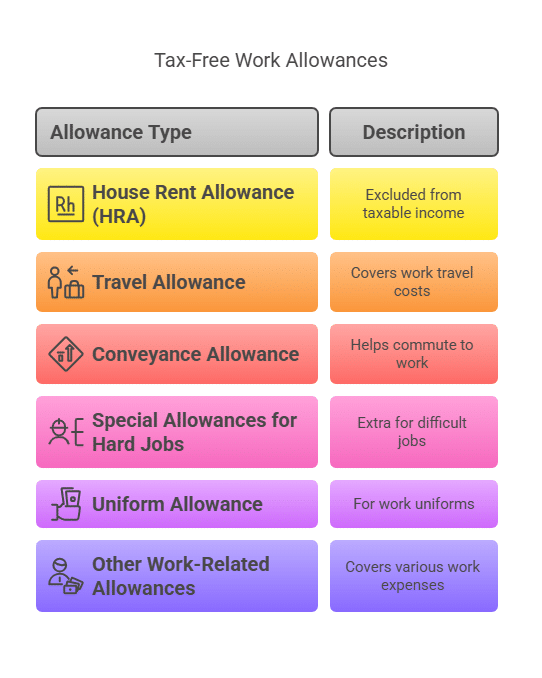
Here are some common work-related allowances that are tax-free under Section 10(14):
House Rent Allowance (HRA): 🏠
If you live in a rented house, your employer may give you HRA to help pay your rent. Under Section 10(14), you can exclude this amount from your taxable income (which means you don’t pay tax on it!).
Travel Allowance: 🚗✈
If you need to travel for work, your employer may give you money to cover the travel costs. The money you use for work-related travel is tax-free!
Conveyance Allowance: 🚆🚶♂
This is money your employer gives you to help you get to and from work. If you use this money for travel to work, it won’t be taxed.
Special Allowances for Hard Jobs: ⚒
If you work in difficult or remote areas, your employer may give you extra money. These allowances are tax-free as long as you meet the conditions.
Uniform Allowance: 👚👖
If you need to wear a uniform for work and your employer gives you money to buy or clean it, this money is tax-free!
Other Work-Related Allowances: 💼
If your employer gives you money for things like overtime, lunch, or other work expenses, you may be able to exclude these from your taxes if they’re used for work-related purposes.
Why Is This Important? 💡
Section 10(14) helps you save money on taxes by not taxing certain allowances that are meant to cover your work expenses. This means more of your salary stays with you, which is great, right?
For example
if your employer gives you ₹10,000 for travel expenses, and you actually use ₹8,000 for work-related travel, you won’t have to pay tax on that ₹8,000! The ₹2,000 that you don’t use may be taxed, though.
How Do You Get This Benefit?
To get the tax-free benefit under Section 10(14), you need to meet a few simple conditions:
- Work-Related Purpose: The money must be used for work-related expenses (like rent, travel, or uniform). If the money is for something else, it won’t be tax-free.
- Proof of Expenses: You may need to show receipts or proof of how you used the money. For example, if you get travel allowance, keep your travel tickets safe.
- Limitations on Some Allowances: Some allowances, like HRA, have limits on how much you can exclude from tax. So, it’s important to check the rules.
Things to Keep in Mind ⚠
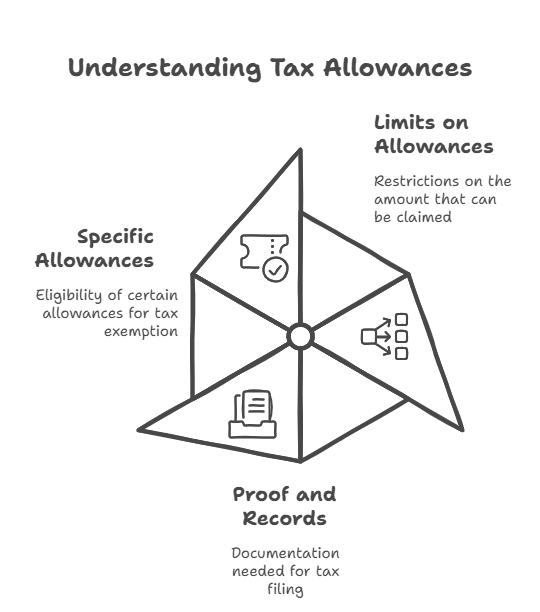
Limits on Allowances: 💡
Some allowances, like HRA, have limits on how much you can claim. For example, if you get ₹15,000 HRA, but only ₹10,000 meets the conditions, you can only exclude ₹10,000 from your taxes.
Proof and Records: 🧾
Make sure to keep records of how you use these allowances (like rent receipts, travel tickets, etc.). You might need them when filing taxes.
Only Specific Allowances: ✅
Not all allowances are tax-free. Only specific work-related ones qualify under Section 10(14). For example, if you get a random allowance not related to work, it will be taxed.
Conclusion
Section 10(14) is great because it helps you save taxes on certain work-related allowances like HRA, travel allowance, and more. It makes sure you don’t pay tax on money that’s meant to cover your work expenses, so you can keep more of your salary in your pocket! 💸
Just remember, the money must be used for work, and you might need to show proof of how you spent it. So, make sure to keep your receipts and documents safe!