In a world grappling with climate change, social inequality, and corporate scandals, a new investment philosophy is gaining momentum, one that looks beyond balance sheets and profit margins. Welcome to the world of Environmental, Social, and Governance (ESG) investing. This is not just another fleeting trend; it’s a fundamental shift in how we perceive value, a recognition that sustainable and ethical practices are not just good for the planet and its people, but also for the bottom line.
This comprehensive guide will walk you through everything you need to know about ESG investing. We’ll explore its core principles, uncover its myriad benefits, and equip you with the knowledge to build your own ESG-aligned investment portfolio. So, whether you’re a seasoned investor or just starting, prepare to embark on a journey towards a more sustainable and prosperous future.
Part 1: Understanding the ESG Revolution
What is ESG Investing?
At its heart, ESG investing is a strategy that considers a company’s performance on environmental, social, and governance factors, alongside traditional financial metrics, when making investment decisions. It’s about investing in companies that are not only financially sound but also committed to making a positive impact on the world.
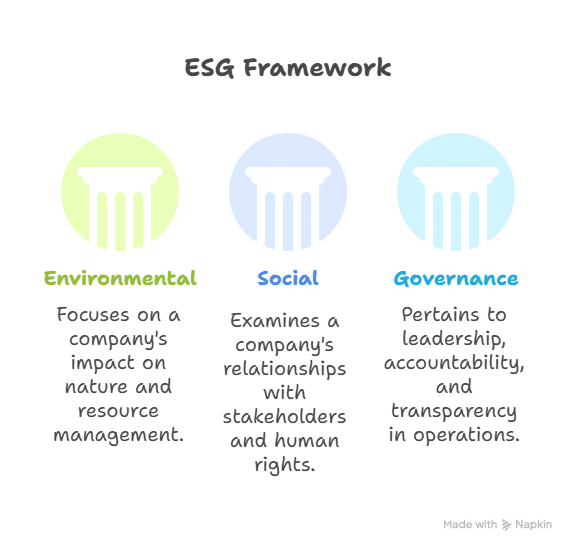
Let’s break down the three pillars of ESG:
Environmental (E)
This pillar examines a company’s impact on the natural world. Key considerations include:
- Climate Change: A company’s carbon footprint, its commitment to reducing greenhouse gas emissions, and its transition to renewable energy sources.
- Resource Management: How a company manages its use of natural resources like water, land, and raw materials. This includes its efforts in waste reduction, recycling, and pollution control.
- Biodiversity: A company’s impact on ecosystems and biodiversity, and its efforts to protect and restore natural habitats.
Social (S)
The social pillar focuses on a company’s relationships with its stakeholders, including its employees, customers, and the communities in which it operates. Key considerations include:
- Labor Practices: A company’s commitment to fair labor practices, including employee health and safety, diversity and inclusion, and fair wages.
- Product Safety and Quality: A company’s commitment to producing safe and high-quality products, and its transparency with customers.
- Community Engagement: A company’s involvement in and support for the local communities in which it operates.
Governance (G)
The governance pillar examines how a company is managed and led. Key considerations include:
- Board of Directors: The composition and independence of the board, as well as its oversight of executive compensation and corporate strategy.
- Shareholder Rights: A company’s commitment to protecting shareholder rights and ensuring transparency in its financial reporting.
- Business Ethics: A company’s commitment to ethical business practices, including its policies on bribery, corruption, and political contributions.
Why is ESG Investing Gaining Popularity?
The rise of ESG investing is driven by a confluence of factors:
Growing Awareness:
There is a growing awareness of the pressing environmental and social challenges facing the world, from climate change to income inequality. Investors are increasingly looking for ways to align their investments with their values and contribute to a more sustainable future.
Changing Demographics:
Millennials and Gen Z, who are more socially and environmentally conscious than previous generations, are entering their prime investing years. They are demanding more from companies than just financial returns.
Financial Performance:
There is a growing body of evidence that suggests that companies with strong ESG performance tend to outperform their peers over the long term. This is because strong ESG practices can lead to improved risk management, enhanced brand reputation, and increased innovation.
Regulatory Tailwinds:
Governments and regulators around the world are increasingly introducing policies and regulations that support sustainable finance and ESG investing. This is creating a more favorable environment for ESG investors.
Part 2: The Benefits of ESG Investing
ESG investing is not just about doing good; it’s also about doing well. By integrating ESG factors into your investment process, you can unlock a range of benefits, both for your portfolio and for the world.
For Investors
Enhanced Financial Returns
Contrary to the misconception that ESG investing means sacrificing returns, a growing body of research shows that companies with strong ESG performance can deliver superior financial results. This is because:
- Improved Risk Management: ESG analysis can help identify companies that are better prepared to manage long-term risks, such as climate change, resource scarcity, and regulatory changes.
- Increased Innovation: Companies that are focused on sustainability are often at the forefront of innovation, developing new technologies and business models that can drive long-term growth.
- Stronger Brand Reputation: Companies with strong ESG credentials tend to have stronger brand reputations, which can lead to increased customer loyalty and sales.
Long-Term Value Creation
ESG investing is a long-term strategy that is focused on creating sustainable value. By investing in companies that are committed to responsible practices, you can build a portfolio that is resilient to market shocks and positioned for long-term growth.
Alignment with Personal Values
For many investors, ESG investing is a way to align their financial goals with their personal values. It’s a way to invest in a future that you believe in, a future that is more just, equitable, and sustainable.
For Companies
Improved Financial Performance
Companies that embrace ESG principles can unlock a range of financial benefits, including:
- Lower Cost of Capital: Companies with strong ESG performance are often seen as less risky by investors, which can lead to a lower cost of capital.
- Increased Sales and Customer Loyalty: Consumers are increasingly looking to buy from companies that are committed to sustainability.
- Attraction and Retention of Talent: Employees, especially younger generations, want to work for companies that are making a positive impact on the world.
Enhanced Brand Reputation and Trust
In an age of increased transparency and social media, a company’s reputation is more important than ever. By demonstrating a commitment to ESG, companies can build trust with their customers, employees, and investors.
Greater Innovation and Adaptability
ESG challenges, such as climate change and resource scarcity, are forcing companies to innovate and adapt their business models. Companies that are proactive in addressing these challenges are better positioned for long-term success.
Part 3: Building Your ESG Investment Portfolio
Now that you understand the what and why of ESG investing, let’s dive into the how. Here’s a step-by-step guide to building your own ESG investment portfolio.
Step 1: Define Your ESG Priorities
The first step is to define what ESG issues are most important to you. Are you passionate about climate change? Do you want to invest in companies that are promoting diversity and inclusion? Or are you focused on good corporate governance?
Once you have a clear understanding of your ESG priorities, you can start to look for investments that align with your values.
Step 2: Choose Your ESG Investment Strategy
There are several different ways to approach ESG investing. Here are some of the most common strategies:
Exclusionary Screening
This is the simplest ESG strategy. It involves excluding companies or industries that are involved in activities that you consider to be harmful, such as tobacco, weapons, or fossil fuels.
Inclusionary Screening
This strategy involves actively seeking out companies that are leaders in ESG performance. This could involve investing in companies that are developing renewable energy technologies, promoting sustainable agriculture, or have strong records on diversity and inclusion.
Impact Investing
Impact investing is a strategy that aims to generate a positive, measurable social and environmental impact alongside a financial return. This could involve investing in social enterprises, microfinance institutions, or green bonds.
Step 3: Research and Select ESG Investments
Once you’ve chosen your ESG strategy, it’s time to start researching and selecting investments. There are a variety of resources available to help you with this, including:
- ESG Ratings and Reports: There are a number of firms that provide ESG ratings and reports on companies, such as MSCI, Sustainalytics, and a growing number of financial data providers. These ratings can be a good starting point for your research, but it’s important to do your own due diligence as well.
- ESG-Focused Mutual Funds and ETFs: There is a growing number of mutual funds and exchange-traded funds (ETFs) that are focused on ESG investing. These funds can be a good option for investors who want to diversify their portfolio and don’t have the time or expertise to research individual companies.
- Robo-Advisors: Some robo-advisors now offer ESG-focused portfolios, which can be a good option for investors who want a low-cost, automated way to invest in ESG.
Step 4: Monitor and Rebalance Your Portfolio
Once you’ve built your ESG portfolio, it’s important to monitor it regularly and rebalance it as needed. This will help you to ensure that your portfolio remains aligned with your ESG priorities and is on track to meet your financial goals.
Part 4: The Challenges and Criticisms of ESG Investing
While ESG investing has the potential to be a powerful force for good, it’s not without its challenges and criticisms.
Lack of Standardization
One of the biggest challenges facing the ESG industry is the lack of standardized metrics and reporting. This can make it difficult for investors to compare the ESG performance of different companies and to know whether a company is truly living up to its ESG claims.
Greenwashing
Greenwashing is the practice of making false or misleading claims about the environmental benefits of a product, service, or company. This is a major concern for ESG investors, as it can be difficult to distinguish between companies that are genuinely committed to sustainability and those that are simply trying to capitalize on the growing demand for ESG investments.
Performance Concerns
While there is a growing body of evidence that suggests that ESG investing can lead to superior financial returns, some investors are still skeptical. They worry that by excluding certain companies or industries from their portfolio, they may be sacrificing potential returns.
Part 5: The Future of ESG Investing
Despite the challenges, the future of ESG investing looks bright. Here are some of the key trends that are shaping the future of the industry:
Increased Standardization and Regulation
There is a growing push for greater standardization and regulation in the ESG industry. This will help to address the problem of greenwashing and make it easier for investors to compare the ESG performance of different companies.
Greater Focus on Impact
Investors are increasingly looking for ways to measure the real-world impact of their investments. This is leading to a growing demand for impact investing and other strategies that are focused on generating a positive, measurable social and environmental impact.
Integration of ESG into Mainstream Investing
ESG is no longer a niche investment strategy. It is increasingly being integrated into mainstream investing, as investors recognize that ESG factors can have a material impact on a company’s financial performance.
How beginner start with ESG investing?
Starting is easier than ever. For beginners, the most accessible routes are:
- ESG ETFs and Mutual Funds: You can invest in a diversified basket of ESG-screened companies through Exchange-Traded Funds (ETFs) or mutual funds. Look for funds with “ESG,” “Sustainable,” or “Socially Responsible” in their names.
- Robo-Advisors: Many automated investment platforms now offer specific ESG portfolios that align with your risk tolerance and values.
- Direct Stock Purchases: If you prefer picking individual stocks, you can use ESG rating reports from firms like MSCI or Sustainalytics to research companies’ ESG scores before investing.
Conclusion: A Call to Action for a Sustainable Future
ESG investing is more than just a way to make money; it’s a way to make a difference. By investing in companies that are committed to sustainability, we can help to create a more just, equitable, and prosperous future for all.
So, as you embark on your own ESG investing journey, remember that you are not just building a portfolio; you are building a better world. You are part of a growing movement of conscious capitalists who are using their financial power to create positive change. And that is a legacy worth investing in.
FAQs
What is ESG investing in simple terms?
ESG investing is an investment approach that goes beyond traditional financial analysis. It involves choosing to invest in companies that score highly on three key factors: Environmental (how they protect the planet), Social (how they treat people, including employees and customers), and Governance (how the company is run and led). Essentially, it’s about using your money to support businesses that are not only profitable but also responsible and sustainable.
Do I have to sacrifice financial returns to invest in ESG?
This is a common myth. A growing body of evidence and numerous studies suggest that you do not have to sacrifice returns. In fact, companies with strong ESG practices often manage long-term risks better, attract top talent, and innovate more effectively. Over the long run, this can lead to financial performance that is competitive with, and sometimes even better than, traditional non-ESG investments.
What’s the difference between ESG investing and Socially Responsible Investing (SRI)?
While related, they are slightly different. Socially Responsible Investing (SRI) is often associated with “negative screening”—that is, excluding companies or entire sectors based on ethical or moral values (e.g., no tobacco, weapons, or fossil fuels). ESG investing is generally broader. It uses “positive screening” to proactively identify companies that are leaders in environmental, social, and governance practices, believing these factors are crucial for long-term performance.
How can a beginner start with ESG investing?
Starting is easier than ever. For beginners, the most accessible routes are:
1. ESG ETFs and Mutual Funds: You can invest in a diversified basket of ESG-screened companies through Exchange-Traded Funds (ETFs) or mutual funds. Look for funds with “ESG,” “Sustainable,” or “Socially Responsible” in their names.
2. Robo-Advisors: Many automated investment platforms now offer specific ESG portfolios that align with your risk tolerance and values.
3. Direct Stock Purchases: If you prefer picking individual stocks, you can use ESG rating reports from firms like MSCI or Sustainalytics to research companies’ ESG scores before investing.
What is “greenwashing” and how can I avoid it?
“Greenwashing” is when a company makes misleading claims about its environmental or social practices to appear more sustainable than it actually is. To avoid it, look beyond marketing claims. Check for detailed sustainability reports from the company, look at scores from reputable third-party ESG rating agencies, and see if the company has set clear, measurable, and transparent ESG targets. Diversifying through a well-managed ESG fund can also help mitigate this risk.
Does ESG investing actually make a real-world impact?
Yes, it does. When a large number of investors channel their capital towards companies with strong ESG performance, it creates a powerful incentive. It signals to corporate boards that sustainability matters. This pressure can lead companies to improve their environmental footprint, enhance labour standards, and strengthen their governance, contributing to positive real-world change over time. Your investment becomes a vote for a more sustainable future.