The Chief Financial Officer who believes their job is to simply close the books, manage budgets, and report on last quarter’s history is a relic. That CFO is not just outdated; they are a liability.
We are in a new age. The finance function is no longer the quiet back office; it is the strategic nerve center of the entire enterprise. Today’s CFO is fighting a war on three fronts, each one capable of fundamentally making or breaking the company:
- The AI Revolution: Generative AI and machine learning are not just tools; they are tectonic shifts, automating the “what” (reporting, accounting) and placing an unprecedented premium on the “why” (strategy, insight).
- The ESG Mandate: Environmental, Social, and Governance (ESG) criteria have moved from a public relations talking point to a core driver of capital allocation, investor relations, and long-term value.
- Constant Tax Reform: The idea of a “stable” tax code is a memory. We now live in an age of “perma-change,” with global initiatives like Pillar 2, digital services taxes, and constant domestic reforms (like India’s recent Direct Tax Code changes) turning the tax department from a compliance cost-center into a high-stakes strategic risk and opportunity function.
To survive this, the CFO must evolve. To thrive, they must transform.
The future-proof CFO is not just a financial expert. They are an integrator, a strategist, a technologist, and a communicator. They have traded their green eyeshade for a crystal ball—one powered by data.
Based on this new reality, three core, non-negotiable skills have emerged. This isn’t about knowing Excel better. It’s about a fundamental redefinition of the role. The future-proof CFO must become a Strategic Technologist, an Integrated Value Champion, and a Proactive Risk Navigator.
Let’s break down exactly what these are and how to build them.
Core Skill 1: The Strategic Technologist & Data Savant
The first and most immediate disruption is Artificial Intelligence. For decades, CFOs have been the primary consumers of data. Now, they must become the primary strategists for how data and AI create value. The CFO who delegates all “tech” to the CIO is already ten steps behind.
Why? Because AI’s impact is threefold: it automates the mundane, predicts the future, and uncovers new risks.
Beyond Automation: From Historical Reporter to Predictive Strategist
The first wave of AI in finance was simple automation: robotic process automation (RPA) for accounts payable, automated journal entries, and faster reconciliations. This was about efficiency—doing the same things, just faster.
Generative AI and advanced machine learning are about effectiveness. They are about doing entirely new things.
The old CFO reported what happened. The new CFO uses AI to predict what will happen and model what we should do about it.
Mastering the New AI Toolkit
The future-proof CFO doesn’t need to code in Python, but they must be “conversationally fluent” in the technology that powers their function. This includes:
- Predictive Analytics: Instead of just a static annual budget, AI models can run thousands of rolling forecasts based on real-time inputs (supply chain disruptions, competitor pricing changes, macroeconomic indicators). The CFO’s job is no longer to “set” the budget but to “curate” the most likely scenarios and advise the CEO on which levers to pull.
- Generative AI for Insights: Imagine asking your finance system, “What were the three biggest drivers of margin erosion in our EU division last quarter, and how did they compare to the APAC region?” GenAI can synthesize terabytes of financial and operational data—from P&L lines to shipping logs—and provide a plain-English narrative. This transforms the CFO from a data-gatherer to an answer-provider.
- Anomaly Detection: AI-driven systems can monitor millions of transactions in real-time, flagging potential fraud, duplicate payments, or compliance breaches far more effectively than any human team. This moves the audit function from a backward-looking “autopsy” to a real-time “health monitor.”
The strategic CFO leverages these tools to change the conversation. The boardroom question stops being, “Are the numbers right?” and becomes, “What are the numbers telling us to do next?”
The New Power Duo: Forging a Strategic Alliance with the CIO
For years, the CFO-CIO relationship was often transactional, even adversarial. The CIO wanted a bigger budget for new tech; the CFO wanted to cut costs.
That dynamic is now a recipe for failure.
In the age of AI, the CFO and CIO must be the tightest strategic partners in the C-suite. Their relationship is no longer “requestor and provider”; it is “co-leader and co-strategist.”
Why This Alliance is Non-Negotiable
- Co-Ownership of AI Strategy: The CFO is now a primary buyer and leader of enterprise-wide AI. Research shows that a huge percentage of CFOs believe they, not the CIO, are in charge of their company’s AI plan. The truth is, it must be a joint effort. The CIO understands the “how” (the infrastructure, the data architecture, the security), while the CFO understands the “where” (where to apply AI for maximum business value and ROI).
- Data Governance is a Financial Imperative: The “garbage in, garbage out” rule is amplified a thousand times with AI. A predictive model built on siloed, unclean, or biased data is not just useless; it’s dangerous. The CFO, as the ultimate owner of the company’s “single source of truth” (the financial data), must partner with the CIO to enforce brutal, enterprise-wide data governance. The integrity of the balance sheet now depends on the integrity of the data pipeline.
- From Cost Center to Value Driver: Together, the CFO and CIO must reframe technology investment. It’s not a “cost” to be “managed.” It’s an “investment” to be “deployed.” This partnership is what builds the business case, measures the true ROI, and holds the organization accountable for delivering the value promised by new tech.
Quantifying the Unquantifiable: The CFO’s Role in AI ROI and Risk
As the financial steward, the CFO is uniquely positioned to answer the two questions everyone on the board is asking: “How much will this AI cost?” and “What is the risk?”
Calculating the True ROI of AI
This is harder than it looks. The “cost” side is easy to see (software licenses, cloud computing, talent). The “return” side is often hidden. A human-centric CFO must look beyond simple headcount reduction (which is a low-value way to think about AI).
The real ROI is in:
- Value Creation: How much new revenue can our AI-powered pricing engine generate?
- Risk Reduction: What is the value of fraud that our new anomaly detection system prevented?
- Speed-to-Insight: How much faster can we make critical capital allocation decisions, and what is the opportunity cost of our old, slower process?
- Talent Upskilling: What is the value of freeing up your brightest finance minds from manual drudgery to focus on high-level strategy? This is an investment in human capital.
The future-proof CFO builds the models that capture this holistic value, justifying AI as a strategic growth engine, not a simple cost-cutting tool.
Managing the New Frontier of AI Risk
With great power comes great risk. The CFO’s domain of risk management just exploded.
- Cybersecurity & Fraud: AI can be used by bad actors to create hyper-realistic “deepfake” phishing scams targeting your finance team, or to manipulate transaction data in ways that are invisible to human auditors.
- Algorithmic Bias: What if your new AI-driven credit-scoring model inadvertently discriminates against a protected class? This is a massive legal, reputational, and ethical liability.
- “Hallucinations” and Data Errors: Generative AI can, quite confidently, make things up. If a CFO bases a major financial decision on an AI “hallucination,” the consequences are catastrophic.
The future-proof CFO doesn’t block AI out of fear. They become the “moral compass” and “chief risk officer” for its implementation, working with the CIO and legal teams to establish robust ethical guidelines, validation processes, and human-in-the-loop controls.
Core Skill 2: The Integrated Value Champion (Holistic Strategist)
The second front in the CFO’s new war is ESG. For a long time, this was seen as “fluffy” stuff—the domain of the marketing or corporate responsibility departments.
Not anymore. Investors, regulators, and a new generation of talent are all demanding one thing: proof that a company’s value is more than just its quarterly earnings per share.
And who is the master of measuring, validating, and reporting value? The CFO.
This is why ESG has landed, with a thud, on the CFO’s desk. The future-proof CFO must evolve from being a Chief Financial Officer to a Chief Value Officer, responsible for stewarding and communicating the company’s total value, both financial and non-financial.
ESG is the New Financial Reporting
Why the CFO? Because the market is tired of “greenwashing”—vague, self-congratulatory sustainability reports with no teeth.
The market is demanding that ESG data have the same rigor, auditability, and reliability as financial data. Stakeholders want to see the “E,” “S,” and “G” on the same level as “Revenue,” “Cost of Goods Sold,” and “Net Income.”
This is, fundamentally, a finance function. It requires:
- Data Integrity: Establishing systems to capture reliable, consistent data on everything from carbon emissions (E) and employee turnover (S) to board independence (G).
- Internal Controls: Building processes to ensure this data is accurate and not subject to manipulation, just like financial controls.
- Assurance & Audit: Preparing this data to be scrutinized and assured by third-party auditors.
The CFO is the only executive with the DNA and a “what gets measured gets managed” mindset to impose this financial-grade discipline on a set of non-financial metrics.
The ‘E,’ ‘S,’ and ‘G’ of Financial Materiality
The strategic CFO’s job isn’t just to report ESG numbers. It’s to understand how they drive the financial numbers. They must be the one to connect the “fluffy” to the “P&L.”
This is about financial materiality—identifying which ESG factors have a direct, tangible impact on business performance.
The ‘E’ (Environmental) as a Financial Risk
This is the most obvious link. The CFO must now be the one to model:
- Climate Risk: What is the financial risk to our supply chain if a key region is hit by more frequent typhoons? What is the balance sheet impact of our coastal properties?
- Transition Risk: What is the cost of new carbon taxes or regulations? What is the capex required to re-tool our factories to be “green”?
- Opportunity: Conversely, what is the ROI on investing in energy-efficient technology? How can we access “green bonds” or other sustainable finance instruments that offer a lower cost of capital?
The ‘S’ (Social) as a Driver of Growth
This has long been considered an “HR issue,” but the future-proof CFO sees it as a primary driver of the P&L.
- Talent as an Asset: What is the financial cost of high employee turnover in our key engineering teams? This is a direct hit to productivity and recruiting costs. What is the ROI of investing in employee wellness or training programs, as measured by retention and engagement?
- Supply Chain Visibility: Does our supply chain use child labor? This isn’t just an ethical question; it’s a massive reputational and legal risk that could destroy brand value overnight.
- Customer Loyalty: Today’s consumers, especially younger ones, will abandon brands that don’t align with their values. The “S” in ESG is a direct driver of top-line revenue.
The ‘G’ (Governance) as the Bedrock of Trust
This has always been in the CFO’s wheelhouse, but the lens is wider now.
- Executive Compensation: Investors are heavily scrutinizing the link between pay and all performance, including ESG targets. The CFO must help design and defend these new compensation models.
- Transparency & Ethics: This is the core of governance. The CFO is the ultimate guardian of transparency, ensuring the company is communicating in good faith with all stakeholders, not just shareholders.
Speaking the Language of Stakeholders: The CFO as Chief Value Communicator
The final piece of the ESG puzzle is storytelling. The CFO is increasingly the “face” of the company to investors, and investors are no longer just analysts from a single investment bank.
The audience now includes:
- Institutional Investors: Who are running ESG-based screens and will divest from your stock if you don’t meet their criteria.
- Lenders: Who are tying interest rates on loans directly to sustainability performance (ESG-linked loans).
- Customers: Who are making purchasing decisions based on your values.
- Employees: Who are choosing employers based on their social and environmental commitments.
The future-proof CFO must be a master communicator, a storyteller who can take this complex, integrated set of financial and non-financial data and weave it into a single, compelling narrative of long-term value creation. They must be able to explain, in plain English, how a new investment in water recycling at a factory is not a “cost” but a “strategic investment” that reduces operational risk, lowers long-term expenses, and strengthens the brand.
Core Skill 3: The Proactive Risk Navigator & Regulatory Pundit
The third and final front is the shifting sands of global regulation, especially tax. If AI is the technological disruption and ESG is the value disruption, then constant tax reform is the structural disruption.
The idea of a five-year tax plan is dead. We are in an era of “perma-change,” and the finance department must be built for agility, not stability.
The traditional CFO was reactive to tax. They hired a Big 4 firm to do the compliance, filed the returns, and tried to keep the effective tax rate (ETR) in a predictable range. The future-proof CFO is proactive. They see the tax function as a high-stakes strategic lever that impacts everything from supply chain design to M&A.
Navigating the ‘Perma-Change’ of Global Tax
The global consensus on taxation has fractured. We have a dizzying array of new, overlapping, and often conflicting reforms:
- BEPS 2.0 (Pillar 1 & 2): This OECD initiative is the biggest global tax shake-up in a century, fundamentally rewriting the rules on where and how much multinationals are taxed. The 15% global minimum tax (Pillar 2) alone is a data and modeling nightmare.
- Digital Services Taxes (DSTs): Individual countries, impatient with global consensus, have rolled out their own taxes on digital revenue, creating a complex patchwork of compliance.
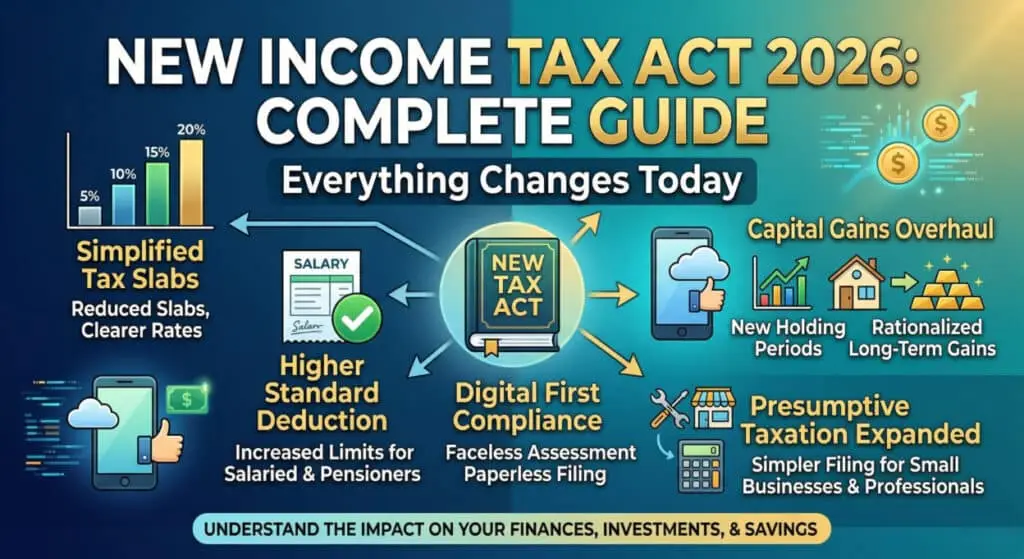
- Constant Domestic Reform: Major economies are constantly overhauling their own codes. India, for example, is in the midst of a massive shift with its Direct Tax Code, aiming to simplify a complex system, change assessment years, and encourage investment.
For the traditional, reactive CFO, this is a compliance headache. For the future-proof CFO, it’s a strategic chessboard.
Tax as a Strategic Weapon, Not a Defensive Shield
A proactive CFO uses tax as a tool to drive business strategy, not just a bill to be paid.
Modeling Tax Impact on Major Decisions
The tax department must have a “seat at the table” before a decision is made, not after. The CFO must be the one asking:
- M&A: We want to acquire this company. But what is its tax profile under Pillar 2? Are we acquiring hidden liabilities? How should we structure the deal to be most tax-efficient under the new rules?
- Supply Chain: We are planning a new factory. Should it be in Vietnam, Mexico, or Poland? The decision used to be based on labor and logistics. Now, the tax implications—from global minimum taxes to local incentives—are a primary driver. The CFO’s team must model the 10-year tax impact of each location.
- Business Model: We are shifting from selling products to selling “as-a-service” subscriptions. How does this change our revenue recognition for tax purposes? Where is that digital revenue “sourced,” and which countries will try to tax it?
Leveraging Tax Incentives for Strategy
Governments around the world are using their tax codes to encourage specific behaviors. The proactive CFO actively hunts for and leverages these incentives to co-fund corporate strategy.
- R&D Credits: Is our R&D spending being properly tracked to maximize tax credits?
- Green-Tech Incentives: The “E” in ESG and Tax are now directly linked. Governments are offering massive tax breaks and grants for capital investments in solar, carbon capture, and green manufacturing. The CFO must be the one to find this “free money” and use it to de-risk the company’s sustainability strategy.
- Investment Allowances: Domestic reforms (like those in India) are often designed to spur capital investment. The CFO must model the precise impact of these new depreciation or allowance rules to decide the optimal timing for new capex.
The Digital Taxman: Why Your Data Integrity is Your New Best Friend
This is where the three skills—AI, ESG, and Tax—all converge.
Tax authorities around the world are done with paper. They are becoming data-driven behemoths. They are implementing “e-invoicing,” “faceless assessments,” and “real-time reporting.” They are using their own AI to scan your data for anomalies.
This means your data must be perfect. All the time.
The future-proof CFO understands this. They know that the same data integrity required for AI models and the same auditability required for ESG reporting is exactly what is now required for tax compliance.
- The Single Source of Truth: You can no longer have one set of data for the P&L, another for the ESG report, and a third messy set of data for the tax return. The system must be integrated.
- Tax-Enabled ERP: The CFO must partner with the CIO to ensure their core ERP and finance systems are configured to capture the data needed for global tax compliance (like Pillar 2) at the transaction level. You can’t “figure it out” at the end of the year. It’s too late.
- Building a Tax-Agile Function: The finance team, super-charged by AI, can now run models in real-time. What happens to our global ETR if France changes this one rule? What if our Irish subsidiary’s profits grow by 5%? This agility allows the CFO to advise the business proactively, not reactively.
The CFO who builds this integrated, data-first finance function is no longer afraid of an audit. They are ready for it, 24/7.
The Conclusion: The Future-Proof CFO is the Chief Integration Officer
The three pillars—Strategic Technologist, Integrated Value Champion, and Proactive Risk Navigator—are not three separate jobs. They are three facets of one new, transformed role.
You cannot be a good ESG leader without the data and AI tools to measure non-financial metrics. You cannot be a good tax navigator without the same data integrity and predictive modeling. And you cannot be a good AI strategist without the risk-management and value-creation lens of the ESG and tax functions.
The future-proof CFO is the ultimate integrator. They are the only executive who sits at the intersection of all three disruptive forces.
The “human” skill that ties all of this together is leadership through storytelling. The future-proof CFO’s greatest skill is the ability to translate this overwhelming complexity into a simple, clear, and compelling narrative for the CEO, the board, and the market.
They are the one who can take a data point from an AI model, connect it to a new ESG mandate, factor in the tax implications, and tell the C-suite the one thing they need to know: “Here is the problem, here is the opportunity, and here is the decision we must make to create long-term, sustainable value.”
The age of the number-counter is over. The age of the strategic integrator has begun.
FAQs
This sounds like three jobs in one. Is the 5,000-word blog post’s vision of the “future-proof CFO” realistic?
It is ambitious, but it is the new reality. The key is that the CFO does not do all of this personally. Their skill is in leading a transformed finance function. This means they must excel at:
Hiring new talent: Bringing in data scientists, ESG specialists, and tax-policy experts.
Upskilling their team: Investing in training to make their traditional accountants “AI-literate” and “ESG-aware.”
Cross-functional leadership: Building the bridges to the CIO, Chief Sustainability Officer, and Head of Tax. The CFO’s job is to be the “conductor of the orchestra,” not to play every instrument.
I’m a mid-level finance manager. How can I start building these CFO core skills now?
For AI: Don’t wait to be told. Volunteer to be on the “pilot team” for any new AI or data analytics tool. Get a certification in data visualization or business analytics. Be the person who translates data into insights for your boss, don’t just deliver the report.
For ESG: Read your company’s sustainability report (if one exists). Ask to be involved in the data-gathering process. In your next capex request, include a small section on the “non-financial” benefits (e.g., “This new equipment also reduces energy use by 20%”).
For Tax: Read the headlines. Understand what Pillar 2 is. Ask your tax department, “How is this going to impact our business?” Show that you are thinking about the entire P&L, including the lines below “Operating Income.”
What is the single biggest mistake a current CFO can make in the face of AI, ESG, and tax reform?
The biggest mistake is inaction driven by a “wait and see” or “not my job” attitude.
Delegating AI entirely to the CIO ensures you will become a “service function” rather than a strategic partner.
Dismissing ESG as “PR” guarantees you will be blindsided when investors divest or your cost of capital rises.
Treating tax as “just compliance” is like ignoring a massive, un-modeled risk (and opportunity) on your balance sheet. The future-proof CFO is, above all, proactive. They embrace the change and lead it.

He founded Finance and Tax Guide to simplify complex tax and accounting topics for Indian small businesses, entrepreneurs, and individual taxpayers.
His expertise includes:
• GST Registration and Return Filing
• Income Tax Return (ITR) Filing
• TDS and TCS Compliance
• Business Bookkeeping
• Financial Accounting
• Tax Planning for Small Businesses
Every article published on Finance and Tax Guideis based on practical accounting experience and current Indian tax laws to provide accurate,
easy-to-understand financial guidance.