Finance and Tax Guide

Accounting

Ind AS updates
Accounting

The Ultimate Guide to GST, Ind AS & Tech in Indian Accounting (2025)

In the dynamic and rapidly accelerating economy of India, the accounting profession isn’t just about crunching numbers anymore. It’s about being a strategic partner, a tech-savvy navigator, and a compliance expert all rolled into one. As we step into 2025, the landscape is more intricate and exciting than ever before. From the pervasive influence of the Goods and Services Tax (GST) to the sophisticated demands of Indian Accounting Standards (Ind AS) and the revolutionary potential of new technologies, staying updated isn’t just an advantage—it’s a necessity. This comprehensive guide is meticulously crafted for accounting professionals, aspiring CAs, diligent business owners, and finance students who want to not just keep pace, but lead the charge in India’s financial future. We’ll peel back the layers of complex regulations, demystify advanced standards, and explore how technology is fundamentally reshaping the way accounting is done across the nation. Explaining Goods and Services Tax (GST) in 2025 The implementation of GST in 2017 was a watershed moment, unifying a fragmented indirect tax regime into a single, cohesive system. Years later, it remains the most searched and discussed topic in Indian accounting, constantly evolving with new notifications, clarifications, and technological integrations. For 2025, a nuanced understanding of GST is more critical than ever. GST Fundamentals Revisited: A Strong Foundation Before diving into the complexities, let’s quickly revisit the core tenets of GST that continue to define its operation. What is GST and Why Does it Matter? At its heart, GST is a consumption-based tax levied on the supply of goods and services. It replaced multiple indirect taxes like excise duty, VAT, and service tax, aiming for a ‘one nation, one tax’ philosophy. Its multi-stage, destination-based nature means tax is collected at each stage of value addition and ultimately borne by the final consumer. For businesses, it streamlined operations, reduced the cascading effect of taxes, and enhanced transparency. Key Components: CGST, SGST, IGST, and UTGST Understanding the different types of GST is crucial: Navigating GST Registration and Compliance in 2025 One of the most frequent queries revolves around GST registration and the labyrinth of compliance requirements. Who Needs to Register for GST? Thresholds and Mandatory Registrations The primary threshold for mandatory GST registration is typically an aggregate turnover exceeding ₹40 lakh for suppliers of goods and ₹20 lakh for service providers (with special category states having lower limits). However, certain businesses must register regardless of turnover, including: The Lifecycle of GST Returns: GSTR-1, GSTR-3B, GSTR-9, and More Filing accurate and timely returns is the backbone of GST compliance. Input Tax Credit (ITC): The Key to Tax Efficiency ITC is arguably the most critical component of GST for businesses, allowing them to offset the tax paid on inputs against the tax payable on outputs. Maximizing eligible ITC reduces tax outflow and improves cash flow. E-Invoicing and E-Way Bills: Digital Pillars of GST The push for digitalization within GST has led to mandatory e-invoicing for a growing number of businesses and the ubiquitous e-way bill system. E-Invoicing: Streamlining B2B Transactions E-invoicing involves electronically generating and authenticating invoices on the Invoice Registration Portal (IRP). This mandates that all B2B and export invoices above a certain threshold (currently ₹5 crore) must be reported to the IRP. E-Way Bill System: Tracking Goods in Transit An e-way bill is an electronic document required for the movement of goods over a certain value (typically ₹50,000) from one place to another. Embracing Global Standards: Indian Accounting Standards (Ind AS) in 2025 While GST focuses on indirect taxation, Ind AS governs how financial transactions are recorded and presented, directly impacting a company’s financial statements. India’s commitment to converging with International Financial Reporting Standards (IFRS) has made Ind AS a critical area for all listed entities and large private companies. The Journey to Ind AS: Why Convergence Matters India adopted Ind AS with a phased approach, aligning its accounting practices with global benchmarks. This move enhances comparability of financial statements across international borders, attracting foreign investment and fostering greater transparency. Key Differences: Ind AS vs. Previous Indian GAAP For many, the transition from the old Indian GAAP (Generally Accepted Accounting Principles) to Ind AS was a significant undertaking. Key differences often revolved around: Crucial Ind AS Standards for 2025: A Deeper Dive Understanding specific Ind AS standards is paramount for accurate financial reporting. Ind AS 115: Revenue from Contracts with Customers This standard provides a comprehensive framework for revenue recognition, moving away from previous rules-based approaches. It involves a five-step model: Ind AS 116: Leases – A Game-Changer Ind AS 116 effectively eliminates off-balance sheet financing for most leases, requiring lessees to recognize a “right-of-use” (ROU) asset and a corresponding lease liability for virtually all leases longer than 12 months. Ind AS 109: Financial Instruments This complex standard covers the recognition, classification, measurement, impairment, and hedge accounting for financial assets and financial liabilities. Key areas include: Recent Amendments and Emerging Issues in Ind AS (2025) Staying abreast of amendments is non-negotiable. The Digital Revolution: Technology Reshaping Indian Accounting in 2025 If GST and Ind AS define what we account for and how we report it, technology dictates how efficiently and accurately we do it. The digital transformation in Indian accounting is not just a trend; it’s the fundamental shift in operational paradigms. The Rise of Accounting Software: From Desktops to the Cloud Gone are the days of purely manual ledgers. Modern accounting software is the bedrock of efficient financial operations. Tally Prime: The Enduring Champion for Indian Businesses For decades, Tally has been synonymous with accounting software in India. Tally Prime continues this legacy, offering robust features for: Cloud Accounting Platforms: Zoho Books, QuickBooks Online, and Beyond The shift to cloud-based accounting solutions is gaining unprecedented momentum. ERP Systems: The Integrated Powerhouse For larger enterprises, Enterprise Resource Planning (ERP) systems like SAP and Oracle NetSuite integrate accounting with other critical business functions such as supply chain management, human resources, and customer relationship management. This provides a holistic view of the organization, eliminating data silos and enhancing

Future of Accounting in India
Accounting

Will AI Replace Your Accountant? The Future of Accounting in India(2025)

The question, “Will AI Replace Your Accountant? The Future of Accounting in India,” has become the central topic of discussion as the buzz around Artificial Intelligence (AI) grows impossible to ignore. From chatbots to self-driving cars, AI is reshaping industries, and accounting is no exception. In India, a country with millions of accountants and a booming digital economy, this query has evolved from a speculative headline into a critical examination of the profession’s immediate future. The quick, reassuring answer often given is “no.” But that single word barely scratches the surface of the profound shift that is occurring. The reality is far more nuanced, exciting, and challenging. AI will not be a simple replacement; it will be a catalyst for the greatest evolution the accounting profession has seen since the invention of the spreadsheet. For some, this will present an existential threat. For the prepared, it represents an unprecedented opportunity. This article is not just another brief overview. It is a deep dive into the heart of this transformation. We will dissect the impact of AI on Indian accounting, explore the specific technologies at play, analyze the changing role of the Chartered Accountant (CA), and provide a strategic roadmap for students, professionals, and firms to not only survive but thrive in the age of AI. The question isn’t if AI will change accounting, but how you will change with it. The Story of Accounting in India: From Bahi-Khata to the Cloud To understand where we are going, we must first appreciate where we have come from. The history of accounting in India is a story of evolution, perfectly mirroring the nation’s own economic journey. The Age of Manual Ledgers For centuries, the backbone of Indian commerce was the Bahi-Khata, the traditional ledger with its distinct red cloth cover. Accountants, or Munims, were masters of manual bookkeeping. Their skills were in meticulous handwriting, flawless arithmetic, and an encyclopedic knowledge of trading customs and tax laws. This was a world of physical records, where the speed of business was limited by the speed of a pen. Trust was paramount, and the accountant was the trusted keeper of financial secrets. The First Disruption: Computerization and Tally The 1980s and 90s brought the first seismic shift: the personal computer. Indian businesses slowly began to digitize their records. This era was defined by one name that became synonymous with accounting in India: Tally. For the first time, ledgers were digital, calculations were instant, and generating a balance sheet didn’t take days of manual effort. This transition was not without fear. Many traditional accountants feared that computers would make their skills redundant. But what happened? The profession adapted. The demand for accountants who could use Tally and other software exploded. The core principles of accounting remained the same, but the toolset changed. This historical precedent is the most important lesson for the current AI revolution: technology doesn’t eliminate the need for expertise; it changes the nature of that expertise. The GST and Digital India Catalyst The 21st century, particularly the last decade, has seen an acceleration of this digital trend. The “Digital India” initiative, widespread internet penetration, and the landmark implementation of the Goods and Services Tax (GST) in 2017 created a digital-first compliance ecosystem. The GST Network (GSTN) is a massive digital infrastructure that mandates online filing, invoice matching, and real-time data reporting. This has forced businesses of all sizes to go digital, creating an enormous volume of structured financial data—the perfect fuel for Artificial Intelligence. AI in Action: How AI is Fundamentally Rewiring Indian Accounting Today AI is no longer a futuristic concept; it’s a present-day reality being deployed in accounting departments and CA firms across India. It operates primarily through a set of powerful technologies: Here’s a detailed breakdown of how these technologies are changing the game. The End of Repetitive Tasks: The Automation Revolution The most immediate and visible impact of AI is the automation of manual, rules-based, and time-consuming tasks that have traditionally bogged down accounting professionals. The Death of Manual Data Entry This is the lowest-hanging fruit for AI. Consider the process of booking a purchase invoice. Manually, an accountant would read the invoice, identify the vendor name, GSTIN, invoice number, date, item descriptions, quantities, rates, and GST amounts, and then type this information into Tally, Zoho Books, or an ERP system. This is tedious, prone to error, and offers zero strategic value. AI-powered systems completely transform this workflow. The result? A process that took several minutes and significant human effort is now completed in seconds with near-perfect accuracy. This frees up thousands of hours for accounting teams to focus on analysis rather than data input. Mastering the Beast: GST and Tax Compliance The Indian GST regime is notoriously complex. The monthly, quarterly, and annual compliance requirements—GSTR-1, GSTR-3B, GSTR-9, and the constant reconciliation between GSTR-2A/2B and purchase records—are a massive drain on resources for businesses. This is a perfect use case for AI. Streamlining Accounts Payable (AP) and Accounts Receivable (AR) Cash flow is the lifeblood of any business. AI is bringing new levels of efficiency to managing it. The Unseen Workhorse: Flawless Bank Reconciliation Reconciling bank statements with the company’s books is a classic accounting task. For a company with thousands of transactions, this can be a nightmare. AI-powered software automates this by ingesting bank feeds and using sophisticated algorithms to match transactions with incredible speed and accuracy, leaving only a few exceptions for human review. Beyond Automation: The Era of Intelligent Insights While automation is powerful, it’s just the beginning. The true revolution lies in AI’s ability to analyze data and provide predictive and prescriptive insights that were previously impossible to obtain. The Accountant as a Strategic Business Advisor With routine tasks automated, the accountant’s role elevates from a historical record-keeper to a forward-looking strategic partner. AI provides the tools for this transformation. The Digital Watchdog: Advanced Fraud Detection and Risk Management Internal fraud and external threats are a major concern for Indian companies. AI provides a

State Goods and Services Tax
Accounting

Discover 7 Facts About SGST– Benefits, Challenges & Compliance

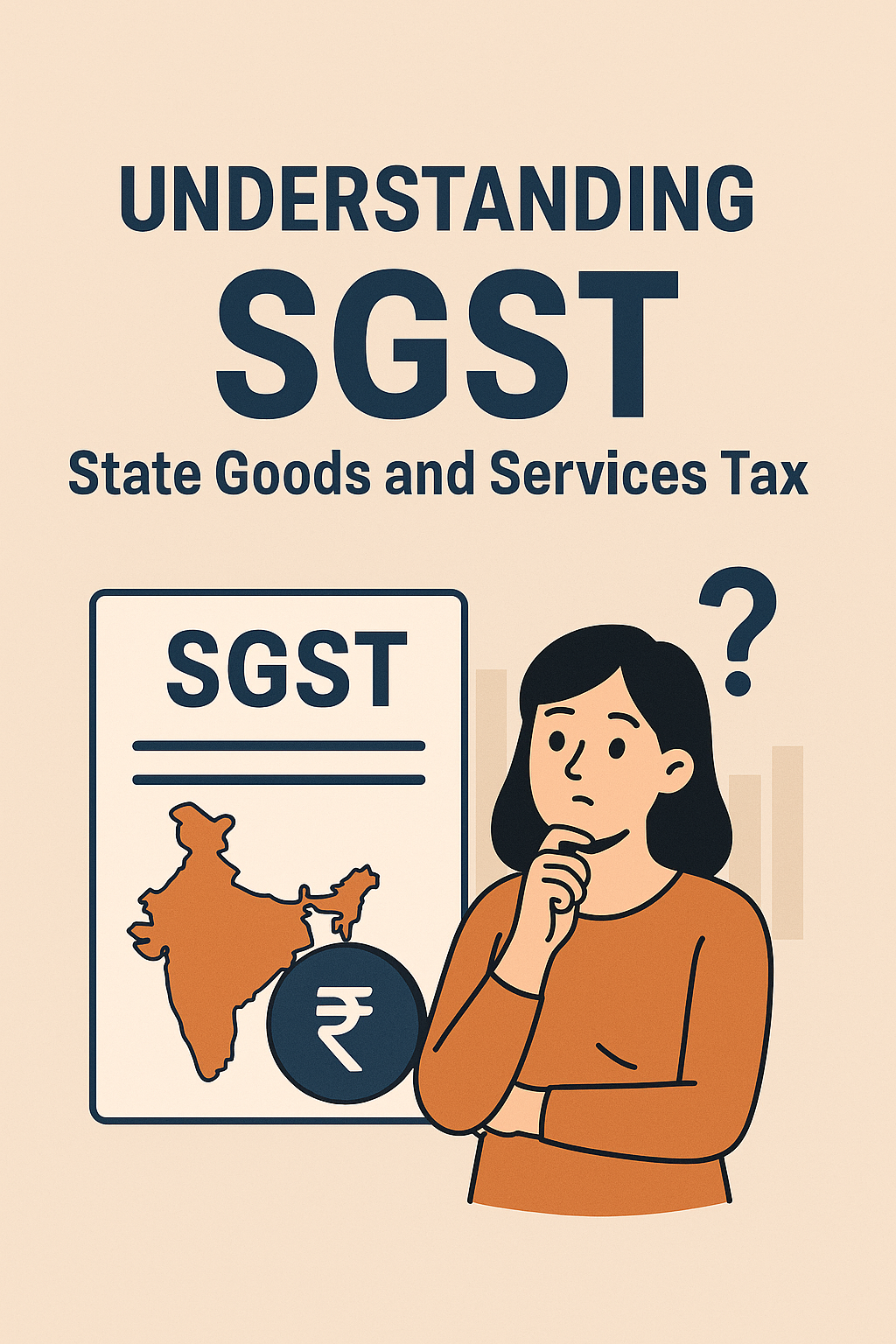
SGST (State Goods and Services Tax) is an important component of India’s dual GST structure and has a direct impact on intra-state trade. Whether you are a business owner, accountant, or finance student, knowing SGST is critical for tax compliance and strategic decision-making. In this post, we’ll look at 7 must-know facts about SGST, including its benefits, problems, and compliance requirements. Types of GST in India What is SGST?  SGST (State Goods and Services Tax) is a part of India’s GST system, introduced in 2017. It is levied by the State Government on intra-state (within the same state) transactions of goods and services. Key Features of SGST: ✅ Collected by the State Government✅ Applicable on supply of goods and services within a state✅ Shared with CGST (Central GST) in intra-state sales✅ Replaced state taxes like VAT, Entertainment Tax, etc. 🔹 Example: If a Bengaluru-based retailer sells goods worth ₹10,000 to a customer in Bengaluru, SGST and CGST will apply. How Does SGST Work?  Under GST, intra-state transactions are taxed under SGST + CGST, while inter-state transactions fall under IGST. SGST Flow Example: The Tamil Nadu Govt. gets ₹3,000 (SGST) and the Central Govt. gets ₹3,000 (CGST). Difference Between SGST, CGST, and IGST  Tax Type Collected By Applicable When Example SGST State Govt. Intra-State Sale Sale within Kerala CGST Central Govt. Intra-State Sale Sale within Gujarat IGST Central Govt. Intra-State Sale Sale from Punjab to Odisha 🔹 Example: Intra-State Sale (SGST + CGST): Inter-State Sale (IGST): Who Needs to Pay SGST?  ✅ Businesses with annual turnover above ₹40 lakhs (₹20 lakhs for some states)✅ E-commerce sellers✅ Service providers (like consultants, restaurants) ⚠️ Exemptions: SGST Rates and Examples  SGST rates are the same as CGST (half of the total GST rate). Category SGST Rate Total GST (SGST+CGST/IGST) Example Products 0% 0% 0% Rice, Wheat, Curd 5% 2.5% 5% Footwear (< ₹1,000), Coal 12% 6% 12% Butter, Packed Coconut Water 18% 9% 18% Hair Oil, Restaurants (AC) 28% 14% 28% Luxury Goods, Cigarettes 🔹 Example: How to Calculate SGST?  Formula: text SGST Amount = (Price × SGST Rate) / 100  Total GST = SGST + CGST (for intra-state)  🔹 Example Calculation: Input Tax Credit (ITC) Under SGST  Businesses can claim credit for SGST paid on purchases. 🔹 Example: ✅ Conditions for ITC: Input Tax Credit (ITC) in SGST Businesses can claim ITC (Input Tax Credit) on SGST paid, but it can only be used in the following order: Benefits of SGST Filing SGST Returns  Same as CGST filings: ⚠️ Late Fees: ₹50/day (₹20 for nil returns) Conclusion SGST ensures state governments get revenue while simplifying tax compliance. By understanding rates, ITC, and filing, businesses can avoid penalties and save money. 📌 Pro Tip: Use GST software for easy return filing! 🔗 Share this guide to help others understand SGST! 📢 FAQs

Central Goods and Services Tax
Accounting

Understanding CGST: India’s Central Goods and Services Tax

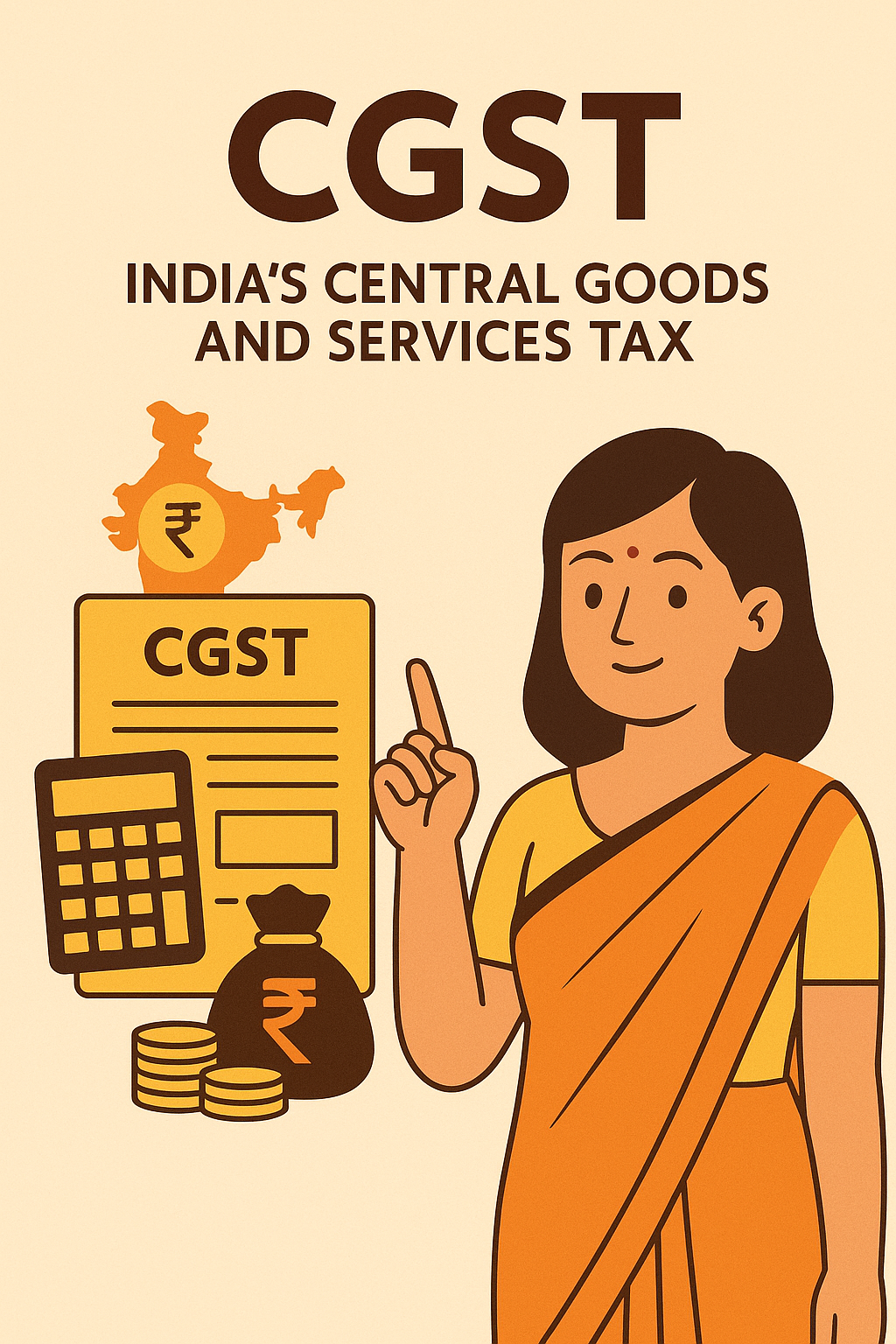
Central Goods and Services Tax : The CGST is one of the tax types which are a part of India’s new taxation system which came into existence after the implementation of Good and Services Tax (GST). Created to simplify the system of indirect taxation and to ensure greater compliance, CGST is charged by the Central Government on intra-state supplies of goods and/or services. What is CGST?  CGST (Central Goods and Services Tax) is a part of India’s GST (Goods and Services Tax) system, introduced in 2017 to simplify indirect taxation. It is levied by the Central Government on intra-state (within the same state) transactions of goods and services. Key Features of CGST ✅ Collected by the Central Government✅ Applicable on supply of goods and services within a state✅ Shared with SGST (State GST) in intra-state sales✅ Replaced multiple central taxes like Excise Duty, Service Tax, etc. 🔹 Example: If a Mumbai-based company sells goods worth ₹10,000 to a customer in Mumbai, CGST and SGST will apply. How Does CGST Work?  Under GST, transactions are taxed in two ways: Transaction Type Tax Applicable Government Share Intra-State (Within State) CGST + SGST Central + State Govt. Inter-State (Between States) IGST Central Govt. (shared with states) CGST Flow Example Difference Between CGST, SGST, and IGST Tax Type Collected By Applicable When Example CGST Central Govt. Intra-State Sale Sale within Maharashtra SGST State Govt. Intra-State Sale Sale within Karnataka IGST Central Govt. Intra-State Sale Sale from UP to Tamil Nadu Example Intra-State Sale (CGST + SGST) Inter-State Sale (IGST) Who Needs to Pay CGST? ✅ Businesses with annual turnover above ₹40 lakhs (₹20 lakhs for some states)✅ E-commerce sellers (even small sellers)✅ Importers of goods/services✅ Casual taxable persons (occasional sellers) ⚠️ Exemptions: CGST Rates and Examples Category CGST Rate Total GST (CGST+SGST/IGST) Example Products 0% 0% 0% Milk, Fresh Fruits, Books 5% 2.5% 5% Tea, Coffee, Edible Oil 12% 6% 12% Mobile Phones, Processed Foods 18% 9% 18% Electronics, Soaps, AC Restaurants 28% 14% 28% Luxury Cars, Tobacco, Aerated Drinks Example: How to Calculate CGST? text CGST Amount = (Price × CGST Rate) / 100  Total GST = CGST + SGST (for intra-state)  CGST = (Value of Supply × CGST Rate) Example Calculation: Input Tax Credit (ITC) Under CGST What is Input Tax Credit (ITC)? Businesses can claim credit for taxes paid on purchases and reduce their tax liability.  Example: Conditions for ITC: Filing CGST Returns  Businesses must file monthly/quarterly returns: ⚠️ Late Fees: ₹50/day (₹20 for nil returns) Penalties for Non-Compliance ⚠️ Offense Penalty Late GST filing ₹50/day (Max ₹5,000) Tax evasion 100% of tax due Fraudulent claims Jail up to 5 years Benefits of CGST ✅ ✔️ Removes cascading effect (tax on tax)✔️ Uniform tax rates across India✔️ Easier compliance with online filing✔️ Boosts business transparency Common Misconceptions About CGST ❌ “CGST is an additional tax” → No, it replaces old taxes.❌ “Small businesses don’t need GST” → Required if turnover > ₹40 lakhs.❌ “GST increases prices” → Actually reduces tax burden due to ITC. Conclusion CGST is a simplified, transparent tax system benefiting businesses and consumers. By understanding rates, ITC, and compliance, taxpayers can avoid penalties and maximize savings FAQs Pro Tip:  Use GST calculators and consult a CA for complex transactions! 📢 Need Help with GST Filing? Contact a Finance and Tax Expert Today! 🚀 This guide simplifies CGST for beginners & businesses. Hope it helps! 👍 Contact Us 🔗 Share this page to spread tax awareness! 📢

GST Returns
Financing, Accounting

Ultimate Guide to 10 GST Returns: Types, Due Dates, Penalties & Forms

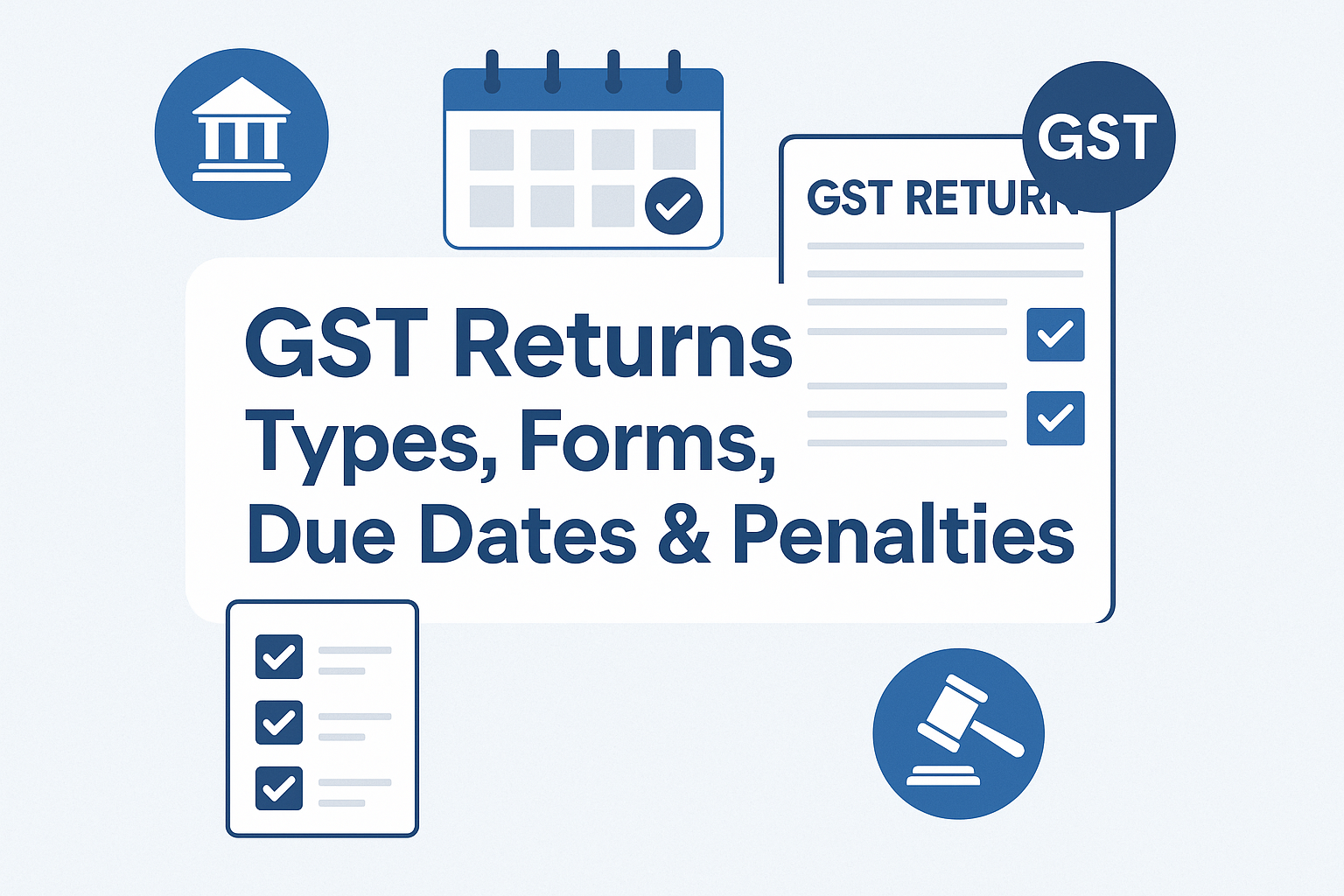
Under the Goods and Services Tax (GST) system in India, filing GST returns is a crucial compliance requirement for all registered taxpayers. In addition to guaranteeing seamless business operations, submitting the accurate return form by the deadline also helps prevent fines and interest. Knowing the many GST return types, forms, and dates is essential whether you’re a regular taxpayer, composition dealer, e-commerce operator, or non-resident taxable person. Every GST return, from GSTR-1 to GSTR-9C, is broken down in this comprehensive guide, along with the deadlines, goals, frequency of filing, and penalties for late filing. With this streamlined explanation of all GST return requirements, you can stay educated and in compliance. What Are GST Returns? A GST return is a document filed by registered taxpayers to report their sales, purchases, tax collected, and tax paid. These returns enable the government to assess tax liabilities and ensure compliance. Filing your GST returns on time is essential for staying compliant and avoiding penalties. Here’s a complete and easy-to-understand breakdown of all GST returns, including auto-generated forms like GSTR-2A, 2B, and more! Why Filing of GST returns is important? The importance of filing GST returns is several, including For the Return Filer For the Government Who Should you File GST Returns? Based on their turnover, taxpayers are categorized under the GST Act. The GSTR filing requirements for the following companies are listed below: Various Types of GST Returns  1. GSTR-1 – Outward Sales Details 2. GSTR-3B – Summary Return & Tax Payment 3. GSTR-4 – Annual Return for Composition Dealers 4. CMP-08 – Quarterly Return for Composition Scheme  5. GSTR-5 – Non-Resident Taxpayer Return 6. GSTR-6 – Input Service Distributor (ISD) Return 7. GSTR-7 – TDS Return under GST 8. GSTR-8 – TCS Return by E-commerce Operators 9. GSTR-9 – Annual Return for Regular Taxpayers 10. GSTR-9C – Reconciliation Statement & Audit GST Return Filing Due Dates Return Type Frequency Due Date GSTR-1 Monthly 11th of the following month GSTR-3B Monthly 20th of the following month GSTR-4 Annually 30th April of the following financial year GSTR-5 Monthly 20th of the following month GSTR-6 Monthly 13th of the following month GSTR-7 Monthly 10th of the following month GSTR-8 Monthly 10th of the following month GSTR-9 Annually 31st December of the following financial year GSTR-9C Annually 31st December of the following financial year GSTR-10 Once Within 3 months of cancellation/surrender GSTR-11 Monthly 28th of the following month Note: Due dates may vary based on government notifications. Penalties for Late Filing of GST Returns Note: For GSTR-9 and GSTR-9C, late fees and penalties may differ based on turnover and specific conditions. Tips to Ensure Timely GST Compliance Other Important Auto-Generated GST Forms These are not filed manually but help you reconcile and verify data. GSTR-1A – Amendment of Sales (⛔ Obsolete) GSTR-2A – Auto-Drafted Purchase Data (Dynamic) GSTR-2B – Static ITC Statement Quick Tips to Stay Compliant FAQs

Accounting Principle: The Backbone of Every Financial Story
Accounting

Accounting Principle: The Backbone of Every Financial Story

Introduction to Accounting Principles Think of accounting principles like the rules of the road. Without them, driving would be absolute chaos. That’s exactly how businesses would function without accounting rules — a mess of numbers with no meaning. Whether you’re a small business owner or just curious about how companies track their money, understanding accounting principles is a game-changer. What Are Accounting Principles? In simple words,accounting principles are the standard rules and practices that guide how accountants document and present financial information. They bring structure, logic, and uniformity to financial statements so that everyone — from CEOs to investors — can understand what’s going on. Why Do They Matter? Imagine trying to compare two company reports if each used a different method of tracking revenue. Total confusion, right? These principles ensure every company speaks the same financial language. These standards cultivate trust and enable stakeholders to make well-researched monetary decisions. Fundamental Accounting Principles Let’s take a closer look at some of the big players — the fundamental principles that every accountant lives by. Accrual Principle According to this principle, income and expenses must be documented at the time they occur, regardless of when the cash is actually received or paid. It gives a clearer picture of a company’s real financial position. Revenue Recognition Under accrual accounting, revenue is booked at the point of fulfillment rather than payment receipt. So, if you completed a job in January but got paid in February, January’s books get the credit. Matching Concept This principle requires that expenses be recorded in the same accounting period as the revenues they help generate. If you sell a product in March, you also record the cost of that product in March. Consistency Principle Businesses should maintain the same accounting approach over time to ensure reliable financial performance analysis across different periods. Imagine switching recipes every time you bake a cake — consistency is key to knowing what works. Going Concern Principle This assumes the business will keep running for the foreseeable future unless there’s proof it won’t. It affects how assets are valued and how liabilities are treated. Economic Entity Assumption This principle separates personal and business finances. Just because you own the business doesn’t mean your vacation in Bali belongs on the company’s books. Monetary Unit Assumption Only financial transactions that can be measured in money get recorded. Emotional value, goodwill, or employee morale? Important — but they don’t go in the ledger. Additional Accounting Principles These principles dig deeper, helping refine how financial data is handled. Historical Cost Principle Assets should be recorded at their original cost — not what they’re worth today. So if your office building has tripled in value, your balance sheet still shows what you paid for it. Full Disclosure Principle If there’s something that could affect how someone interprets your financial statements, you need to disclose it. No hiding skeletons in the financial closet. Conservatism Principle Accountants are taught to play it safe. If there’s uncertainty, pick the option that’s less likely to overstate profits or assets. Materiality Principle Not everything needs to be reported — only the stuff that could influence decisions. Lost a pen worth $2? Not material. Lost a shipment worth $20,000? Definitely material. Time Period Assumption Businesses report results in consistent time frames — like monthly, quarterly, or annually — so performance can be measured and compared easily. Understanding GAAP and Its Role What Is GAAP? The Generally Accepted Accounting Principles (GAAP) establish the regulatory foundation for American accounting methods. It ensures that all companies follow the same rules, which is critical for transparency. GAAP vs IFRS: What’s the Difference? GAAP is used in the U.S., while IFRS (International Financial Reporting Standards) is used globally. GAAP’s rule-oriented system contrasts with IFRS’s reliance on professional interpretation. Think of it like the difference between strict instructions and flexible guidelines. How These Principles Play Out in Real Life In Business Strategy and Decisions Accounting principles help businesses make smart choices — from where to invest money to when to launch a product. Accurate records are the foundation of every big move. In Financial Statements Financial statements including cash flow reports and balance sheets are grounded in these rules, providing investors with reliable metrics to judge company performance. In Audits and Compliance Auditors check whether businesses are following accounting rules. If a company tries to fudge the numbers, it’s the auditors’ job to call them out. What Happens When Rules Are Broken Financial Consequences Breaking accounting principles can lead to inaccurate reports, investor backlash, fines, or worse — total business collapse. Just look at companies that have faced accounting scandals (Enron, anyone?). Legal and Ethical Risks Not following accounting rules isn’t just bad practice — in many cases, it’s illegal. Plus, it kills your reputation faster than a bad Yelp review. What’s Next for Accounting Principles Embracing Tech and AI New tools like AI and cloud accounting software are reshaping the industry. But no matter how advanced the tech gets, the principles remain the foundation. Reinforcing Trust and Transparency In an era of digital business and global investments, people want transparency. Following accounting principles helps build trust — which is worth more than gold in today’s market. Conclusion Accounting principles might sound technical, but they’re the glue that holds financial reporting together. They make the chaotic world of numbers understandable and trustworthy. Whether you’re managing a side hustle, running a company, or just trying to make smarter money decisions — understanding these principles puts you ahead of the game. FAQs 1. What are the 5 basic principles of accounting? They include the revenue recognition principle, matching principle, historical cost principle, full disclosure principle, and objectivity principle. 2. Why is consistency important in accounting? It ensures that financial data can be compared across different periods, making trends and changes easier to identify. 3. How does the accrual principle benefit businesses? It gives a more accurate picture of a company’s performance by recording income and expenses when they occur, not just when

Process of GST Registration
Accounting

Process of GST Registration and who are Free from GST Registration

Sub-category 2: Checking Eligibility for GST Registration NormalCategoryStates/UT whoopted for a newlimit of Rs.40lakh NormalCategoryStates whochoose statusquo SpecialCategoryStates/UT whoopted for newlimit of Rs.40lakh SpecialCategoryStates/UT whoopted for newlimit of Rs.20lakh Kerala,Chhattisgarh,Jharkhand,Delhi, Bihar,Maharashtra,Andhra Pradesh,Gujarat,Haryana, Goa,Punjab, UttarPradesh,HimachalPradesh,Karnataka,MadhyaPradesh,Odisha,Rajasthan, TamilNadu, WestBengal,Lakshadweep,Dadra andNagar Haveliand Daman andDiu, Andamanand NicobarIslands andChandigarh Telangana Jammu andKashmir, Ladakhand Assam Puducherry,Meghalaya,Mizoram,Tripura,Manipur, Sikkim,Nagaland,ArunachalPradesh andUttarakhand GST Registration GST Registration Process : Once the Business exceeds the turnover in a state, it is liable to mandatorily register itself at the GST portal and obtain a GST Registration Number, after applying for the Registration, the Business will obtain a 15 Digit Number Called “Goods and Services Tax Identification Number” otherwise referred as GSTIN. For the purpose of computation of such Turnover, following criteria are set who are Free from GST Registration: Section 23 Provisions for persons not liable for registration i However such persons (in points c and d) have to obtain a PAN and have generatedan e-way bill.

What is Journal Entry?
Accounting

What is Journal Entry? | Essential 3 Rules

Today, let’s break down how financial transactions are recorded using journal entries thefirst step in the accounting cycle! What is a Journal? 1. Definition A journal is a book of original entry where financial transactions are recorded inchronological order using the double-entry system. 2. Purpose of a Journal ✅ Keeps a systematic record of financial transactions 📋✅ Helps track business activities for financial reporting 📊✅ Ensures transactions are recorded accurately before posting to ledgers 🏦 What is a Journal Entry? A journal entry is a record of a financial transaction that follows the debit-credit rules in thedouble-entry system. Each journal entry includes: Golden Rules of Accounting Rules for Journal Entries: (i) Personal Account Rule ✔ Debit the Receiver 🧾✔ Credit the Giver 💰 Example: (ii) Real Account Rule ✔ Debit what comes in 📥✔ Credit what goes out 📤 Example: (iii) Nominal Account Rule ✔ Debit all expenses & losses 📉✔ Credit all incomes & gains 📈 Example: Common Transactions & Their Journal Entries (A) Capital & Loan Transactions 1. Owner Invests Capital (₹2️1️,00,000 in Cash):💰 Cash A/c Dr. ₹2️1️,00,000📈 Capital A/c Cr. ₹2️1️,00,000 2.Business Takes a Loan (₹2️50,000 from Bank):💰 Cash A/c Dr. ₹2️50,000🏦 Loan Payable A/c Cr. ₹2️50,000 (B) Asset Purchases ️1. Purchased Furniture for ₹2️0,000 (Paid in Cash):🧾 Furniture A/c Dr. ₹2️0,000💵 Cash A/c Cr. ₹2️0,000 2. Purchased Machinery for ₹1️,00,000 on Credit from XYZ Ltd.:🏭 Machinery A/c Dr. ₹1️,00,000🏢 XYZ Ltd. A/c Cr. ₹1️,00,000 (C) Sales & Revenue 1. Sold Goods for ₹2️2️5,000 in Cash:💰 Cash A/c Dr. ₹2️2️5,000🏬 Sales A/c Cr. ₹2️2️5,000 2. Sold Goods for ₹40,000 on Credit to ABC Ltd.:🏢 ABC Ltd. A/c Dr. ₹40,000🏬 Sales A/c Cr. ₹40,000 (D) Expenses & Payments 1. Paid Rent ₹2️5,000:🏠 Rent Expense A/c Dr. ₹2️5,000💰 Cash A/c Cr. ₹2️5,000 2. Paid Electricity Bill ₹2️1️,500:⚡ Electricity Expense A/c Dr. ₹2️1️,500💵 Cash A/c Cr. ₹2️1️,500 (E) Receipts & Collections 1. Received ₹2️30,000 from ABC Ltd. for Previous Credit Sale:💰 Cash A/c Dr. ₹2️30,000🏢 ABC Ltd. A/c Cr. ₹2️30,000 2. Received Interest Income ₹2️3,000:💰 Cash A/c Dr. ₹2️3,000📈 Interest Income A/c Cr. ₹2️3,000 Steps to Record Journal Entries Step 1️: Identify the transaction. 🔍Step 2️: Determine the accounts involved. 📝Step 3: Apply the Golden Rules of Accounting. 🔢Step 4: Decide which account to debit and credit. 💰Step 5: Record the entry in the journal with a narration. ✍ Importance of Journal Entries & Key Takeaways Importance of Journal Entries ✔ Helps maintain accurate financial records 📋✔ Ensures every transaction is properly classified 📊✔ Forms the foundation for ledger accounts & financial statements 📖✔ Prevents fraud & errors through systematic recording 🔍 Key Takeaways ✔ Journal Entries are the first step in recording financial transactions. 📜✔ Every transaction follows the Golden Rules of Accounting. 📖✔ Debits & Credits ensure books remain balanced. ⚖️✔ Common transactions involve capital, purchases, sales, and expenses. 💰

Scroll to Top