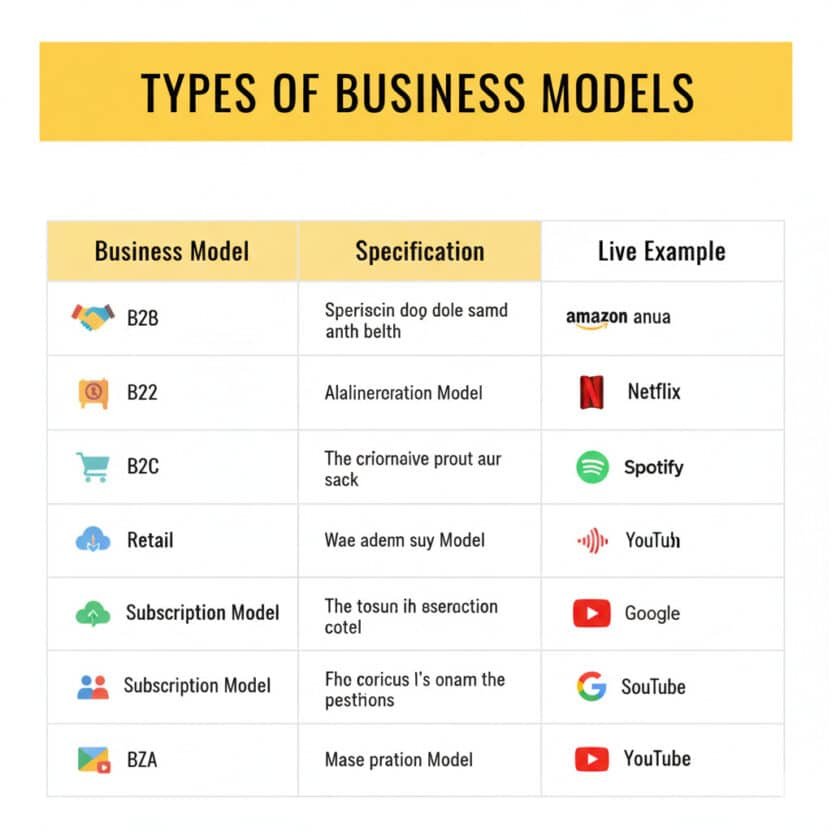
Choosing the right business model can decide the success or failure of your business. A strong model helps you identify how you create value, who you serve, and how you generate profit. Whether you’re building a startup or scaling a brand, understanding the different types of business models will help you make smarter business decisions. Below is a comprehensive guide to the most popular business model types along with real-world examples. Revenue-Focused Business Models These models focus on how the company generates recurring or primary revenue. 1. Subscription Model 2. Freemium Model 3. Ad-Based Model 4. Licensing Model 5. Affiliate Model 6. Brokerage Model Core Transactional Business Models Business Model Specification Live Example B2B (Business to Business) One business sells products/services to another business. Salesforce, Shopify B2C (Business to Consumer) Business sells directly to consumers. Amazon, Flipkart, Netflix C2C (Consumer to Consumer) Consumers sell to other consumers. OLX, eBay, Facebook Marketplace C2B (Consumer to Business) Individuals offer products/services to businesses. Upwork, Fiverr D2C (Direct to Consumer) Manufacturer sells directly to consumers without intermediaries. Mamaearth, boAt, Lenskart Type of Business Models 1. B2B (Business-to-Business) Model A B2B model involves selling products or services directly to other businesses.Examples: Salesforce, ShopifyKeywords to rank for: B2B business model, B2B examples 2. B2C (Business-to-Consumer) Model The B2C model focuses on selling to everyday consumers.Examples: Amazon, NetflixKeywords: B2C model, consumer-based business model 3. C2C (Consumer-to-Consumer) Model In a C2C model, consumers sell to other consumers, usually through an online platform.Examples: eBay, OLX, Facebook MarketplaceKeywords: peer-to-peer business model, C2C examples 4. C2B (Consumer-to-Business) Model Consumers offer services or products to businesses.Examples: Fiverr, UpworkKeywords: C2B model, freelancer platforms 5. D2C (Direct-to-Consumer) Model Manufacturers sell directly to customers with no middlemen.Examples: Lenskart, boAt, MamaearthKeywords: D2C business model, direct-to-consumer brands 6. Subscription Model Customers pay a recurring monthly or yearly fee for continued access.Examples: Netflix, Spotify, Amazon PrimeKeywords: subscription revenue model, recurring revenue model 7. Freemium Model Businesses offer free basic services and charge for premium features.Examples: Canva, Dropbox, LinkedInKeywords: freemium model, SaaS business models 8. Marketplace Model A platform that connects buyers and sellers and earns commission per transaction.Examples: Amazon, Meesho, UberKeywords: marketplace business model, platform business model 9. Aggregator Model The company collects services from different providers under one brand.Examples: Zomato, Ola, MakeMyTripKeywords: aggregator model, on-demand platforms 10. Retail Model Retailers buy in bulk and sell in smaller quantities to consumers.Examples: Walmart, Big BazaarKeywords: retail business model, brick-and-mortar model 11. Franchise Model Businesses license their brand and operations to franchise owners.Examples: Domino’s, McDonald’sKeywords: franchise model, franchise examples 12. Manufacturing Model Companies produce goods and sell them to wholesalers or directly to consumers.Examples: Tata Motors, SamsungKeywords: manufacturing business model 13. Dropshipping Model Sellers list products online, but suppliers ship directly to customers.Examples: Shopify dropshipping storesKeywords: dropshipping business model, low-investment business 14. Ad-Based Model Platforms earn money by displaying ads to users.Examples: Facebook, Google, YouTubeKeywords: ad-based revenue model, digital advertising model 15. Licensing Model Companies earn revenue by licensing their intellectual property.Examples: Microsoft, DolbyKeywords: licensing business model, IP licensing 16. Razor and Blade Model Sell a core product at a low price and earn through consumables or accessories.Examples: Gillette, HP printersKeywords: razor and blade model, consumable-based business 17. Affiliate Model Earn commissions for promoting other companies’ products.Examples: Bloggers, influencers, Amazon AssociatesKeywords: affiliate marketing model, commission-based model 18. Brokerage Model A business earns commissions by connecting buyers and sellers.Examples: Zerodha, Angel Broking, AirbnbKeywords: brokerage business model, commission-based revenue 19. On-Demand Model Customers receive goods or services instantly when they request them.Examples: Swiggy, Uber, ZeptoKeywords: on-demand business model, instant delivery model 20. Hybrid Model A combination of two or more models to maximize revenue streams.Examples: Amazon (B2C + Marketplace + Subscription)Keywords: hybrid business model, multi-revenue business model Business Model Specification Example B2B (Business to Business) One business sells products/services to another business Combination of two or more business models B2C (Business to Consumer) Business sells directly to consumers Amazon, Netflix C2C (Consumer to Consumer) Consumers sell to other consumers OLX, eBay C2B (Consumer to Business) Individuals offer products/services to businesses Upwork, Fiverr D2C (Direct to Consumer) Manufacturer sells directly to consumers without intermediaries Mamaearth, boAt, Lenskart Subscription Model Customers pay a recurring fee for access Netflix, Spotify, Amazon Prime Premium Model Basic services are free; premium features cost money Canva, Dropbox, LinkedIn Marketplace Model Platform connects buyers and sellers, earns commission Amazon, Meesho, Uber Aggregator Model Platform offers services from various providers under one brand Zomato, Ola, MakeMyTrip Retail Model Buying from wholesalers and selling to consumers Walmart, Big Bazaar Franchise Model Licensing brand and operations to third-party operators McDonald’s, Domino’s Manufacturing Model Producing goods and selling to wholesalers/retailers/consumers Tata Motors, Samsung Dropshipping Model Seller takes orders; supplier ships directly to customers Shopify dropship stores Ad-Based Model Revenue from displaying ads to users/viewers Google, Facebook, YouTube Licensing Model Sell rights to use intellectual property Microsoft, Dolby Labs Razor and Blade Model Sell a core product cheaply, profit from consumables Gillette, HP Printers Affiliate Model Earn commission by promoting others’ products Influencers, Bloggers Brokerage Model Charge commission for connecting buyers and sellers Zerodha, Airbnb On-Demand Model Instant goods/services on customer request Swiggy, Uber, Zepto Hybrid Model Combination of two or more business models Amazon How to Choose the Right Business Model for Your Startup Before finalizing your model, ask: ✔ Who is your target audience? (Businesses, consumers, or both?) ✔ What value are you offering? (Convenience, affordability, uniqueness?) ✔ How will you generate revenue? (Subscriptions, ads, commissions, sales?) ✔ What are your startup resources? (Time, budget, technology?) ✔ Can the model scale easily? (Does revenue grow without huge costs?) Choosing a model that aligns with your product, audience, and long-term goals is critical for growth. Conclusion There are many business model types, and the best companies often mix several models to stay competitive. Whether you’re building a new startup or optimizing an existing company, choosing the right model can give you a major strategic advantage. FAQs