In the dynamic and rapidly accelerating economy of India, the accounting profession isn’t just about crunching numbers anymore. It’s about being a strategic partner, a tech-savvy navigator, and a compliance expert all rolled into one. As we step into 2025, the landscape is more intricate and exciting than ever before. From the pervasive influence of the Goods and Services Tax (GST) to the sophisticated demands of Indian Accounting Standards (Ind AS) and the revolutionary potential of new technologies, staying updated isn’t just an advantage—it’s a necessity.
This comprehensive guide is meticulously crafted for accounting professionals, aspiring CAs, diligent business owners, and finance students who want to not just keep pace, but lead the charge in India’s financial future. We’ll peel back the layers of complex regulations, demystify advanced standards, and explore how technology is fundamentally reshaping the way accounting is done across the nation.
Explaining Goods and Services Tax (GST) in 2025
The implementation of GST in 2017 was a watershed moment, unifying a fragmented indirect tax regime into a single, cohesive system. Years later, it remains the most searched and discussed topic in Indian accounting, constantly evolving with new notifications, clarifications, and technological integrations. For 2025, a nuanced understanding of GST is more critical than ever.
GST Fundamentals Revisited: A Strong Foundation
Before diving into the complexities, let’s quickly revisit the core tenets of GST that continue to define its operation.
What is GST and Why Does it Matter?
At its heart, GST is a consumption-based tax levied on the supply of goods and services. It replaced multiple indirect taxes like excise duty, VAT, and service tax, aiming for a ‘one nation, one tax’ philosophy. Its multi-stage, destination-based nature means tax is collected at each stage of value addition and ultimately borne by the final consumer. For businesses, it streamlined operations, reduced the cascading effect of taxes, and enhanced transparency.
Key Components: CGST, SGST, IGST, and UTGST
Understanding the different types of GST is crucial:
- Central Goods and Services Tax (CGST): Levied by the Central Government on intra-state supplies.
- State Goods and Services Tax (SGST): Levied by the State Government on intra-state supplies.
- Integrated Goods and Services Tax (IGST): Levied by the Central Government on inter-state supplies and imports.
- Union Territory Goods and Services Tax (UTGST): Replaces SGST in Union Territories without a legislature.
Navigating GST Registration and Compliance in 2025
One of the most frequent queries revolves around GST registration and the labyrinth of compliance requirements.
Who Needs to Register for GST? Thresholds and Mandatory Registrations
The primary threshold for mandatory GST registration is typically an aggregate turnover exceeding ₹40 lakh for suppliers of goods and ₹20 lakh for service providers (with special category states having lower limits). However, certain businesses must register regardless of turnover, including:
- Inter-state suppliers.
- Casual taxable persons.
- Non-resident taxable persons.
- E-commerce operators.
- Those liable to pay tax under the Reverse Charge Mechanism (RCM).
- Input Service Distributors (ISD).
The Lifecycle of GST Returns: GSTR-1, GSTR-3B, GSTR-9, and More
Filing accurate and timely returns is the backbone of GST compliance.
- GSTR-1 (Details of Outward Supplies): Reports all sales/outward supplies for a period. It’s crucial for recipients to claim Input Tax Credit.
- GSTR-3B (Summary Return): A consolidated summary of outward supplies, inward supplies, and ITC claimed, along with tax payment.
- GSTR-9 (Annual Return): An annual consolidation of all monthly/quarterly returns. It offers a comprehensive overview of a taxpayer’s activities.
- GSTR-9C (Reconciliation Statement): Filed by taxpayers whose aggregate turnover exceeds ₹5 crore, requiring reconciliation of audited annual financial statements with the annual return.
- Other Specific Returns: Including GSTR-4 for composition dealers and GSTR-5 for non-resident taxable persons.
Input Tax Credit (ITC): The Key to Tax Efficiency
ITC is arguably the most critical component of GST for businesses, allowing them to offset the tax paid on inputs against the tax payable on outputs. Maximizing eligible ITC reduces tax outflow and improves cash flow.
- Eligibility Criteria: ITC can only be claimed if you have a tax invoice, have received the goods/services, have paid the supplier, and the supplier has paid the tax and filed their returns.
- Matching Concept (2A/2B): The auto-populated GSTR-2A and GSTR-2B statements are vital. Businesses must reconcile their purchase register with these statements to ensure they claim only eligible ITC. Any discrepancies need to be addressed promptly with suppliers.
- Restrictions and Blocked Credit: Certain goods and services (e.g., motor vehicles for personal use, food and beverages for employees in many cases) are subject to blocked credit, meaning ITC cannot be claimed. Understanding these restrictions is paramount.
E-Invoicing and E-Way Bills: Digital Pillars of GST
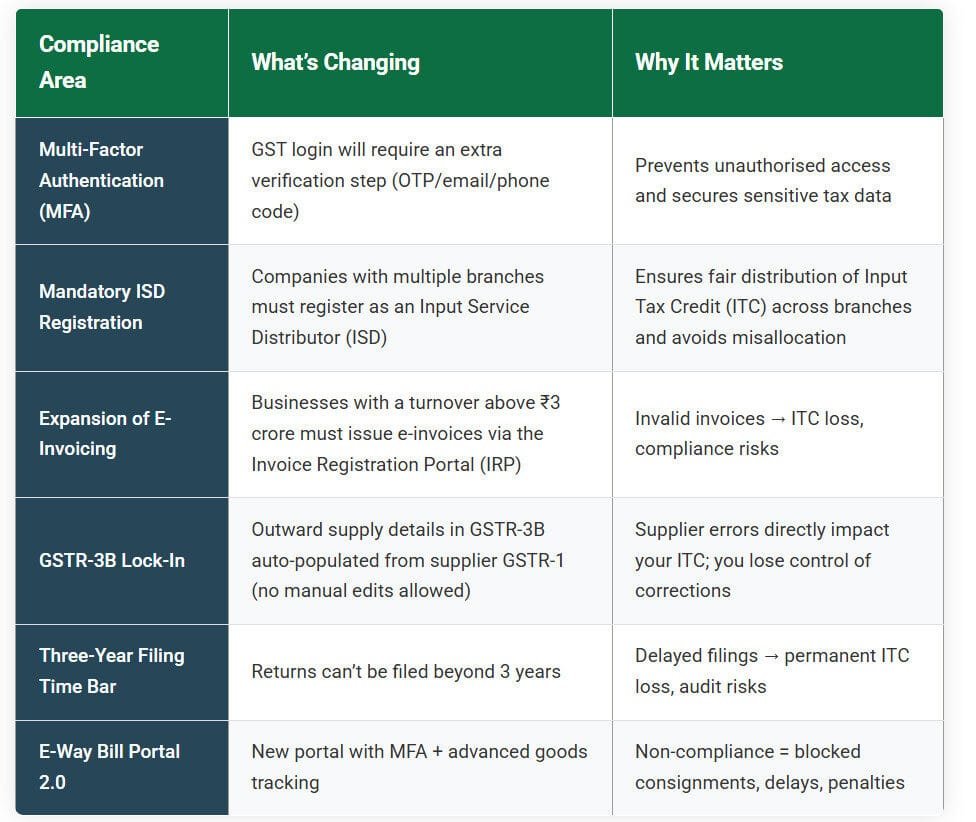
The push for digitalization within GST has led to mandatory e-invoicing for a growing number of businesses and the ubiquitous e-way bill system.
E-Invoicing: Streamlining B2B Transactions
E-invoicing involves electronically generating and authenticating invoices on the Invoice Registration Portal (IRP). This mandates that all B2B and export invoices above a certain threshold (currently ₹5 crore) must be reported to the IRP.
- Benefits: Reduces manual errors, improves compliance, speeds up ITC reconciliation, and enables auto-population of GST returns.
- Implementation: Businesses need to integrate their accounting or ERP systems with an IRP via GSPs (GST Suvidha Providers) or APIs.
E-Way Bill System: Tracking Goods in Transit
An e-way bill is an electronic document required for the movement of goods over a certain value (typically ₹50,000) from one place to another.
- Purpose: Prevents tax evasion and ensures transparency in goods movement.
- Generation and Validity: Generated through the GST portal, it includes details of consignor, consignee, goods, and transporter. Validity depends on the distance travelled.
Embracing Global Standards: Indian Accounting Standards (Ind AS) in 2025
While GST focuses on indirect taxation, Ind AS governs how financial transactions are recorded and presented, directly impacting a company’s financial statements. India’s commitment to converging with International Financial Reporting Standards (IFRS) has made Ind AS a critical area for all listed entities and large private companies.
The Journey to Ind AS: Why Convergence Matters
India adopted Ind AS with a phased approach, aligning its accounting practices with global benchmarks. This move enhances comparability of financial statements across international borders, attracting foreign investment and fostering greater transparency.
Key Differences: Ind AS vs. Previous Indian GAAP
For many, the transition from the old Indian GAAP (Generally Accepted Accounting Principles) to Ind AS was a significant undertaking. Key differences often revolved around:
- Fair Value Accounting: Ind AS mandates fair value accounting for several assets and liabilities, a departure from the historical cost principle prevalent in old GAAP.
- Component Accounting: Under Ind AS, separate components of an asset (like an aircraft engine) might be depreciated individually.
- Revenue Recognition (Ind AS 115): A more principles-based approach to recognizing revenue, focusing on distinct performance obligations.
- Leases (Ind AS 116): A revolutionary change requiring lessees to recognize almost all leases on the balance sheet as a ‘Right-of-Use’ asset and a corresponding lease liability.
Crucial Ind AS Standards for 2025: A Deeper Dive
Understanding specific Ind AS standards is paramount for accurate financial reporting.
Ind AS 115: Revenue from Contracts with Customers
This standard provides a comprehensive framework for revenue recognition, moving away from previous rules-based approaches. It involves a five-step model:
- Identify the contract(s) with a customer.
- Identify the performance obligations in the contract.
- Determine the transaction price.
- Allocate the transaction price to the performance obligations.
- Recognize revenue when (or as) the entity satisfies a performance obligation. This standard has significant implications for companies with complex contracts, long-term projects, and bundled sales.
Ind AS 116: Leases – A Game-Changer
Ind AS 116 effectively eliminates off-balance sheet financing for most leases, requiring lessees to recognize a “right-of-use” (ROU) asset and a corresponding lease liability for virtually all leases longer than 12 months.
- Impact on Financial Ratios: This significantly impacts debt-to-equity ratios, EBITDA, and other financial metrics, requiring careful communication with stakeholders.
- Practical Challenges: Identifying lease components, determining lease term, calculating lease liability, and managing subsequent measurements are ongoing challenges.
Ind AS 109: Financial Instruments
This complex standard covers the recognition, classification, measurement, impairment, and hedge accounting for financial assets and financial liabilities. Key areas include:
- Expected Credit Loss (ECL) Model: A forward-looking approach to recognizing impairment losses on financial assets, requiring significant judgment and data.
- Classification and Measurement: Determining whether financial instruments are measured at amortized cost, fair value through other comprehensive income (FVOCI), or fair value through profit or loss (FVTPL).
Recent Amendments and Emerging Issues in Ind AS (2025)
Staying abreast of amendments is non-negotiable.
- Supplier Finance Arrangements: Recent amendments focus on enhanced disclosures for supplier finance arrangements (reverse factoring), aiming to improve transparency about how such financing impacts a company’s liabilities and cash flows.
- Pillar Two Income Tax: With the global movement towards a minimum corporate tax rate (Pillar Two), amendments to Ind AS 12 (Income Taxes) are crucial for accounting for deferred taxes arising from these new rules. This requires significant analysis and estimation.
- ESG Reporting Linkages: While not directly Ind AS, the increasing demand for Environmental, Social, and Governance (ESG) reporting often necessitates underlying accounting data and systems to track and disclose non-financial metrics, blurring lines between financial and sustainability reporting.
The Digital Revolution: Technology Reshaping Indian Accounting in 2025
If GST and Ind AS define what we account for and how we report it, technology dictates how efficiently and accurately we do it. The digital transformation in Indian accounting is not just a trend; it’s the fundamental shift in operational paradigms.
The Rise of Accounting Software: From Desktops to the Cloud
Gone are the days of purely manual ledgers. Modern accounting software is the bedrock of efficient financial operations.
Tally Prime: The Enduring Champion for Indian Businesses
For decades, Tally has been synonymous with accounting software in India. Tally Prime continues this legacy, offering robust features for:
- GST Compliance: Seamless generation of GST invoices, e-way bills, and direct filing of GST returns.
- Inventory Management: Comprehensive tracking of stock, sales, and purchases.
- Payroll Processing: Integrated solutions for managing employee salaries and deductions.
- Customization: Flexibility to adapt to diverse business requirements. Its deep roots in the Indian market, coupled with continuous updates, make it an indispensable tool for countless SMEs.
Cloud Accounting Platforms: Zoho Books, QuickBooks Online, and Beyond
The shift to cloud-based accounting solutions is gaining unprecedented momentum.
- Accessibility: Access financial data anytime, anywhere, on any device.
- Real-time Insights: Up-to-the-minute view of cash flow, profitability, and expenses.
- Collaboration: Easy sharing of data with accountants, partners, and team members.
- Scalability: Solutions that grow with your business, from startups to larger enterprises.
- Security: Reputable cloud providers offer advanced data encryption and backup solutions. Zoho Books, QuickBooks Online, Busy Accounting Software, and others are leading this charge, especially appealing to startups and digitally native businesses.
ERP Systems: The Integrated Powerhouse
For larger enterprises, Enterprise Resource Planning (ERP) systems like SAP and Oracle NetSuite integrate accounting with other critical business functions such as supply chain management, human resources, and customer relationship management. This provides a holistic view of the organization, eliminating data silos and enhancing strategic decision-making.
Emerging Technologies: The Future of Accounting
Beyond traditional software, cutting-edge technologies are poised to redefine the accounting profession.
Artificial Intelligence (AI) and Machine Learning (ML)
AI and ML are moving beyond buzzwords to tangible applications in accounting.
- Automated Data Entry: AI-powered tools can extract data from invoices, receipts, and bank statements, dramatically reducing manual input and errors.
- Fraud Detection: ML algorithms can analyze transaction patterns to identify anomalies and potential fraudulent activities with greater accuracy.
- Financial Forecasting: AI can process vast amounts of historical data and external factors to generate more precise financial forecasts and predictions.
- Reconciliation: Automating bank reconciliations and inter-company reconciliations, saving countless hours.
Robotic Process Automation (RPA)
RPA involves using software robots to automate repetitive, rule-based tasks that typically require human interaction.
- Automated Report Generation: RPA bots can compile and generate routine financial reports.
- Vendor Invoice Processing: Automating the matching of purchase orders to invoices and expediting payment processes.
- Data Migration: Efficiently moving data between different systems.
Blockchain and Distributed Ledger Technology (DLT)
While still in nascent stages for mainstream accounting, blockchain holds immense promise.
- Enhanced Audit Trails: Immutable and transparent ledgers could revolutionize auditing, providing real-time verification of transactions.
- Smart Contracts: Self-executing contracts stored on a blockchain could automate payments and performance obligations, reducing disputes.
- Improved Supply Chain Finance: Tracking goods and payments across complex supply chains with unprecedented transparency.
Data Analytics and Business Intelligence (BI)
Accountants are increasingly becoming data scientists.
- Actionable Insights: Moving beyond mere reporting to extracting meaningful insights from financial data to inform strategic business decisions.
- Visualization: Using tools like Tableau or Microsoft Power BI to create compelling dashboards and visual representations of financial performance.
- Risk Management: Identifying financial risks, cash flow bottlenecks, and opportunities for cost optimization.
The Evolving Role of the Indian Accountant in 2025
With so much changing, the accountant’s role is undergoing a profound transformation. The focus is shifting from transactional processing to strategic advisory.
Beyond Bookkeeping: Becoming a Strategic Advisor
The automation of routine tasks frees up accountants to focus on higher-value activities.
Key Advisory Services
- Financial Planning & Analysis (FP&A): Providing insights into budgeting, forecasting, and performance analysis.
- Risk Management: Identifying and mitigating financial, operational, and compliance risks.
- Tax Strategy: Optimizing tax structures and ensuring compliance with evolving tax laws.
- Business Valuation: Assisting with mergers, acquisitions, and investment decisions.
- Sustainability Reporting: Guiding businesses in establishing and reporting on ESG metrics.
Essential Skills for the Modern Indian Accountant
To thrive in this new environment, a different skill set is required.
Technical Proficiency with Software and Tools
- Advanced Excel Skills: Still fundamental for data manipulation and analysis.
- Proficiency in Accounting Software: Deep knowledge of Tally Prime, Zoho Books, or relevant ERP systems.
- Data Visualization Tools: Familiarity with Power BI, Tableau, or similar platforms.
- Understanding of Cybersecurity: Protecting sensitive financial data.
Analytical and Problem-Solving Skills
- Critical Thinking: The ability to analyze complex financial data and draw meaningful conclusions.
- Problem Identification: Proactively identifying financial issues and proposing solutions.
- Strategic Mindset: Understanding how accounting impacts overall business strategy.
Soft Skills: Communication, Collaboration, and Adaptability
- Effective Communication: Clearly articulating complex financial information to non-finance stakeholders.
- Collaboration: Working effectively with cross-functional teams (e.g., sales, operations, IT).
- Continuous Learning: The willingness and ability to constantly learn new technologies and regulations.
- Adaptability: Embracing change and evolving practices.
Future-Proofing Your Accounting Practice or Career in India
The journey through GST, Ind AS, and technology is continuous. Here’s how to stay ahead.
Embracing Continuous Learning and Professional Development
The pace of change demands ongoing education.
Certification and Specializations
- GST Practitioner Certification: A great way to deepen expertise in GST.
- Certified Public Accountant (CPA) / ACCA: International certifications that enhance global career prospects.
- Certifications in Forensic Accounting, Data Analytics, or Cyber Security: Niche specializations that are in high demand.
- Online Courses and Webinars: Leveraging platforms like Coursera, Udemy, or professional bodies for short-term skill development in areas like AI in finance or advanced Excel.
Building a Strong Professional Network
Connecting with peers, mentors, and industry experts is invaluable.
Attending Conferences and Workshops
- ICAI Events: The Institute of Chartered Accountants of India (ICAI) regularly hosts seminars and workshops on GST, Ind AS, and technology.
- Fintech & Accounting Tech Summits: Events that showcase the latest technological innovations in finance.
Leveraging Mentorship and Peer Learning
Sharing experiences and learning from seasoned professionals or even peers facing similar challenges can accelerate your growth.
Conclusion
The year 2025 presents both challenges and unparalleled opportunities for the Indian accounting profession. Mastering GST compliance isn’t just about avoiding penalties; it’s about optimizing cash flow and gaining competitive advantage. Understanding Ind AS isn’t merely about statutory reporting; it’s about transparent communication with global stakeholders. And embracing technology isn’t just about automation; it’s about unlocking strategic insights and driving business growth.
The Indian accountant is no longer just a record-keeper but a strategic architect of financial success. By diligently staying abreast of regulatory changes, proactively adopting technological advancements, and continuously refining their skill set, accountants can truly become catalysts for economic progress in India. The future of accounting is bright, dynamic, and undeniably digital – are you ready to shape it?
FAQs
My business turnover is below ₹20 lakh. Do I still need to register for GST?
Generally, if your turnover is below the threshold (₹40 lakh for goods, ₹20 lakh for services), registration isn’t mandatory. However, you must register for GST irrespective of turnover if you sell goods to other states, sell on an e-commerce platform like Amazon or Flipkart, or are a non-resident taxable person.
What is the single most important thing to remember about Input Tax Credit (ITC)?
The most critical rule is reconciliation. You can only claim ITC on expenses for which your supplier has correctly filed their GSTR-1 and paid the taxes to the government. You must diligently check your GSTR-2B statement each month and follow up with suppliers for any missing invoices. Claiming incorrect ITC is a major cause of tax notices.
I run a small business. Do I really need to worry about e-invoicing?
As of late 2025, the e-invoicing threshold applies to businesses with an aggregate annual turnover exceeding ₹5 crore. If your business is below this limit, you don’t need to generate e-invoices. However, it’s crucial to monitor official notifications from the GST Council, as this threshold has been progressively lowered and may change.
What’s the real difference between Ind AS and IFRS? Are they the same?
They are very similar but not identical. Ind AS is based on and converged with the International Financial Reporting Standards (IFRS). However, the Ministry of Corporate Affairs (MCA) has introduced certain “carve-outs” and “carve-ins” to make the standards more suitable for the Indian economic environment. A key example is that Ind AS allows companies to use the previous GAAP carrying amount as the deemed cost for certain assets upon transition, which IFRS does not.
How does Ind AS 116 (Leases) actually affect a company’s financial statements?
Ind AS 116 has a significant impact. It requires companies to show almost all their rental agreements (for offices, machinery, etc.) on the balance sheet. This means your company’s assets and liabilities will appear larger. It also changes the profit and loss statement: instead of a straight-line rent expense, you will now show depreciation on the asset and interest on the liability. This often increases metrics like EBITDA (Earnings Before Interest, Taxes, Depreciation, and Amortization).
Is Ind AS applicable to all companies in India?
No. Ind AS is mandatory for all listed companies and other large public or private companies that meet specific net worth criteria (typically a net worth of ₹250 crore or more). Smaller companies can continue to use the separate Accounting Standards for SMEs.
For a small business in India, what’s better: Tally Prime or a cloud software like Zoho Books?
It depends on your business needs.
Tally Prime is the industry standard in India, incredibly robust for GST compliance and inventory, and most accountants are proficient with it. It’s an excellent offline-first solution.
Zoho Books and other cloud platforms are perfect for businesses that need remote access, real-time collaboration with their accountant, and seamless integration with other online tools (like payment gateways and banking). They are often more user-friendly for non-accountants.
Will Artificial Intelligence (AI) replace the jobs of accountants in India?
AI will not replace accountants; it will redefine their roles. AI is exceptionally good at automating repetitive tasks like data entry, reconciliations, and generating basic reports. This frees up human accountants to focus on strategic activities that require critical thinking, judgment, and advisory skills, such as financial planning, risk analysis, tax strategy, and client relations.
What is the one skill I should learn right now to future-proof my accounting career?
Beyond your core accounting knowledge, the single most valuable skill to learn is data analytics. The ability to use tools like Advanced Excel, Power BI, or Tableau to interpret financial data, identify trends, and create insightful visualizations is what separates a good accountant from a great strategic advisor in today’s market.

He founded Finance and Tax Guide to simplify complex tax and accounting topics for Indian small businesses, entrepreneurs, and individual taxpayers.
His expertise includes:
• GST Registration and Return Filing
• Income Tax Return (ITR) Filing
• TDS and TCS Compliance
• Business Bookkeeping
• Financial Accounting
• Tax Planning for Small Businesses
Every article published on Finance and Tax Guideis based on practical accounting experience and current Indian tax laws to provide accurate,
easy-to-understand financial guidance.